

In short

There is no single “best AI for coding”: there is a good answer for every use case. According to BenchLM (third-party ranking, consulted on 26 August 2026), Claude Opus 5 reaches 96% on SWE-bench Verified, but a benchmark score will not tell you which AI will best help you learn Python or review your project.
The real price of free, as checked on 26 August 2026. GitHub Copilot Free gives 2,000 completions per month and 50 monthly chat requests (Copilot Edits included). ChatGPT Free gives the GPT-5.6 Luna model with unlimited text chats and limited Codex access. Claude Free creates and executes files. Cursor Hobby limits Agent requests. Entry paid tiers range from $10 (Copilot Pro) to $20 (Claude Pro, Cursor Pro); ChatGPT Plus is EUR 23/month and top tiers go up to $200/month (Cursor Ultra).
The trap: starting points. The key to choosing: do you want to learn (ChatGPT), speed up in your editor (Copilot or Cursor), delegate complete tasks (Claude Code) or stay in the Google ecosystem (Antigravity)?
Take the 30-second test with the selector below, or write your next instruction on the Nation AI chat, available free with no sign-up.
“Best AI for coding” is a query that changes its answer every three months. The comparisons at the top of the French Google page, which cover Cursor, Claude, ChatGPT, Copilot, Windsurf or Gemini from a handful of pages, copy each other, often with outdated figures. To see clearly, you need to combine three sources: a recent benchmark on real tasks, the official pricing page of each vendor, and your own usage situation. That is what this article does, with figures dated 26 August 2026 and a selector that replaces the generic ranking with a tailored answer.
Two big families for coding with AI
Before comparing the tools, you need to distinguish two families. They have neither the same gesture, nor the same price, nor the same learning curve:
Conversation and the autonomous agentYou talk to an assistant, or hand it a task, from a chat interface, the web or the terminal. ChatGPT with its Codex agent, Claude with Claude Code, Gemini with Antigravity CLI belong to this family. It is the most educational and the most powerful on complete tasks, but the code reaches your project through copy-paste or through an agent.
The assistant inside the editorThe AI lives directly in your development environment: completion, side chat, an agent that edits files for you. GitHub Copilot, Cursor and Antigravity IDE shine here, with gestures closer to writing code than to chatting.
Some tools cover both families: Cursor offers an agent terminal, Claude Code also works as an editor. So the real question is not “is it the best model?” but “where does my work happen?”: in a conversation, a console or my editor.
What benchmarks say (and what they do not)
Model rankings almost all rely on SWE-bench Verified, a set of real issues from open source repositories (Django, Flask, scikit-learn): a model or an agent receives a ticket and must produce the fix that the tests validate. The BenchLM ranking (third-party ranking, 68 models, page consulted on 26 August 2026) gives the following order:
| Model | Vendor | Score | Nature |
|---|---|---|---|
| Claude Opus 5 | Anthropic | 96% | Closed model |
| Claude Mythos 5 | Anthropic | 95.5% | Closed model |
| Claude Fable 5 | Anthropic | 95% | Closed model |
| Claude Opus 4.8 | Anthropic | 88.6% | Previous model |
| Ornith-1.5-397B | Ornith AI | 86% | Open weights |
| Claude Sonnet 5 | Anthropic | 85.2% | Closed model |
| GPT-5.3 Codex | OpenAI | 85% | Closed model |
| GPT-5.2 | OpenAI | 80% | Previous model |
The existence and release date of Claude Opus 5 rely on Anthropic’s official announcement, published on 24 July 2026 and re-checked on 26 August 2026 (link at the end of the table). By Anthropic’s own measurements, this model sets the record on Frontier-Bench v0.1 and GDPval-AA, scores about three times the best competing model on ARC-AGI 3, and reaches within 0.5% of Fable 5’s peak on CursorBench 3.2 at half the cost per task. These figures come from the vendor, not from an independent evaluator: read them as a trend indicator.
The benchmark trapA 96% score on SWE-bench means the model resolves 96% of the tickets in that corpus. Your project has its own logic, its dependencies, its conventions: the score does not predict your experience, especially if you are a beginner, because a model’s teaching ability appears in no table. Take the benchmark as a signal of power, never as a choice on its own.
The real prices of 26 August 2026: what each official page shows
We consulted on 26 August 2026 the official pricing pages of the five major players: ChatGPT pricing, Anthropic Claude pricing, GitHub Copilot plans, Cursor pricing and the Google Antigravity offer (official links at the end of the table). For ChatGPT, the page consulted displayed prices in euros. Here, for each one, what the free plan really gives and the price of the paid tier. Amounts are in the currency shown by the official page (US dollars for Claude, GitHub Copilot and Cursor; euros for ChatGPT) and they change at any time.
| Tool | The free plan (checked on 26/08/2026) | The paid tier (checked on 26/08/2026) | Best for |
|---|---|---|---|
| ChatGPT (OpenAI) | GPT-5.6 Luna, unlimited text chats (under guardrails), limited image, voice, deep research and Codex access | Go EUR 8/month, Plus EUR 23/month (GPT-5.6 reasoning models, expanded Codex usage), Pro from EUR 103/month (5x or 20x usage, maximum Codex tasks) | Learning, understanding, dialoguing |
| Claude (Anthropic) | Web, mobile and desktop chat, code generation, file creation and code execution | Pro $20/month ($17/month billed annually) with Claude Code included, Max from $100/month (5x or 20x usage) | Delegating, refactoring, complete tasks |
| GitHub Copilot | $0: 2,000 completions and 50 monthly chat requests (Copilot Edits included), CLI included | Pro $10/month ($15 of monthly AI credits), Pro+ $39 ($70), Max $100 ($200); third-party agents Claude Code and Codex (public preview) from the Pro plan | Daily work in VS Code |
| Cursor | Hobby at $0: no credit card, limited Agent requests, access to Composer | Pro $20/month, Pro+ $60/month (3x Pro limits, Grok Bot access), Ultra $200/month (20x), Teams $40/user/month | An agent-first editor |
| Antigravity (Google) | $0: free IDE and CLI, unlimited tab completions and Command requests, basic weekly rate limits; they replaced Gemini CLI and the Code Assist extensions for individuals on 18 June 2026 | Individuals: Google AI Pro or Google AI Ultra (higher limits and AI credits); organisations: offer via Google Cloud (Gemini Enterprise Agent Platform), rolling out progressively, and Gemini Code Assist Standard or Enterprise | The Google ecosystem |
Two remarks before you choose. First, the “free” line moves fast: GitHub restructured its plans around AI credits, Cursor replaced credits with quotas, and Google moved its personal coding tools to Antigravity on 18 June 2026. Second, the monthly price is not the real cost: limits (Agent requests, chat requests, weekly quotas or credits) decide whether the tool holds your daily usage. For tools in French, no sign-up, see the Nation AI tools page.
Which AI to code with: the usage-based selector
Instead of a ranking from scratch, start from your real situation. Answer the four questions and the selector sends you to the tool that matches you, with the figures from the table above.

The AI selector for coding
Four questions, one recommendation. The figures quoted are from the 26 August 2026 check.
Your recommendation
Waiting: answer the four questions then click on Show my recommendation.
At least one answer is missing: complete the four questions to get a recommendation.
The selector bases its answer on five tool sheets, and copies the matching sheet to the screen. Each one matches a real usage situation, not a ranking:
ChatGPT and Codex: the pedagogy of dialogue
You are a beginner, you want to understand what a loop does, or you prefer to ask your questions in French rather than inside an editor. ChatGPT remains the most pedagogical tool of the bunch, with its Codex agent in expanded access from the Plus plan.
- Strength: the free plan exists (GPT-5.6 Luna, unlimited text chats, limited Codex), and step-by-step explanations are above average.
- Honest limit: the free plan limits Codex access and advanced features; expanded Codex usage requires the Plus plan.
- If you work on the web: it is the easiest family to start with today.
Claude Code: the reference for complete tasks
You want to delegate: fix a bug, add a feature, refactor a module, with an agent in the terminal. Claude tops the third-party BenchLM ranking (Opus 5 at 96% on SWE-bench Verified, consulted on 26 August 2026) and Claude Code is included in the Pro plan.
- Strength: the best SWE-bench Verified score right now, and access to the agent from $20/month with no surcharge.
- Honest limit: teaching is not its first strength; you need to know what you are asking for.
- To discover the tool: our Claude Code without programming guide covers the first day.
GitHub Copilot: the VS Code companion
You live in VS Code or JetBrains, and you want reliable completion, a side chat and an agent mode without switching editors. Copilot installs in minutes, and its free plan is enough for light use.
- Strength: $0 with 2,000 completions and 50 monthly chat requests, CLI, agent mode and MCP connectors included, or $10/month for the real daily grind.
- Honest limit: 50 monthly chat requests run out fast; once the day gets busy, moving to the paid tier soon becomes necessary.
- If you organise your tasks on GitHub: it is the most natural integration.
Cursor: the editor built agent-first
You want an editor whose centre is the agent: several files changed at once, a task plan, top models (including Grok for some uses). Cursor ticks the “dev who stays in their tool” box.
- Strength: free Hobby with no credit card, Pro at $20/month, Pro+ at $60/month (3x Pro limits, Grok Bot access), Ultra at $200/month (20x).
- Honest limit: the free tier limits Agent requests; for daily use you need the paid plan.
- If you come from VS Code: the learning curve is immediate, the interface is close.
Antigravity: Google’s agent-first push
You already work in the Google ecosystem (Gemini, Google Cloud) or you prefer a full agent CLI. Antigravity replaced Gemini CLI and the Code Assist extensions for individuals on 18 June 2026.
- Strength: free IDE and CLI with no credit card and basic weekly rate limits; higher limits come with Google AI Pro or Google AI Ultra, and the team offer comes from Google Cloud (Gemini Enterprise Agent Platform) or Gemini Code Assist Standard/Enterprise.
- Honest limit: for sustained use you need Google AI Pro or Google AI Ultra; the free individual version publishes no detailed pricing page, and advanced models and long contexts depend on the plan and on preview channels.
- If you are a Cloud developer or a Gemini user: it is the tool that follows you best.
And where does Nation AI fit in? Nation AI does not code in your editor: it writes the instruction, explains a code block, compares two approaches and drafts your code comments. To write the prompt you will paste into your tool, the Nation AI chat is accessible free, no sign-up, in French.
Five tools put to the test
ChatGPT and Codex: pedagogy first
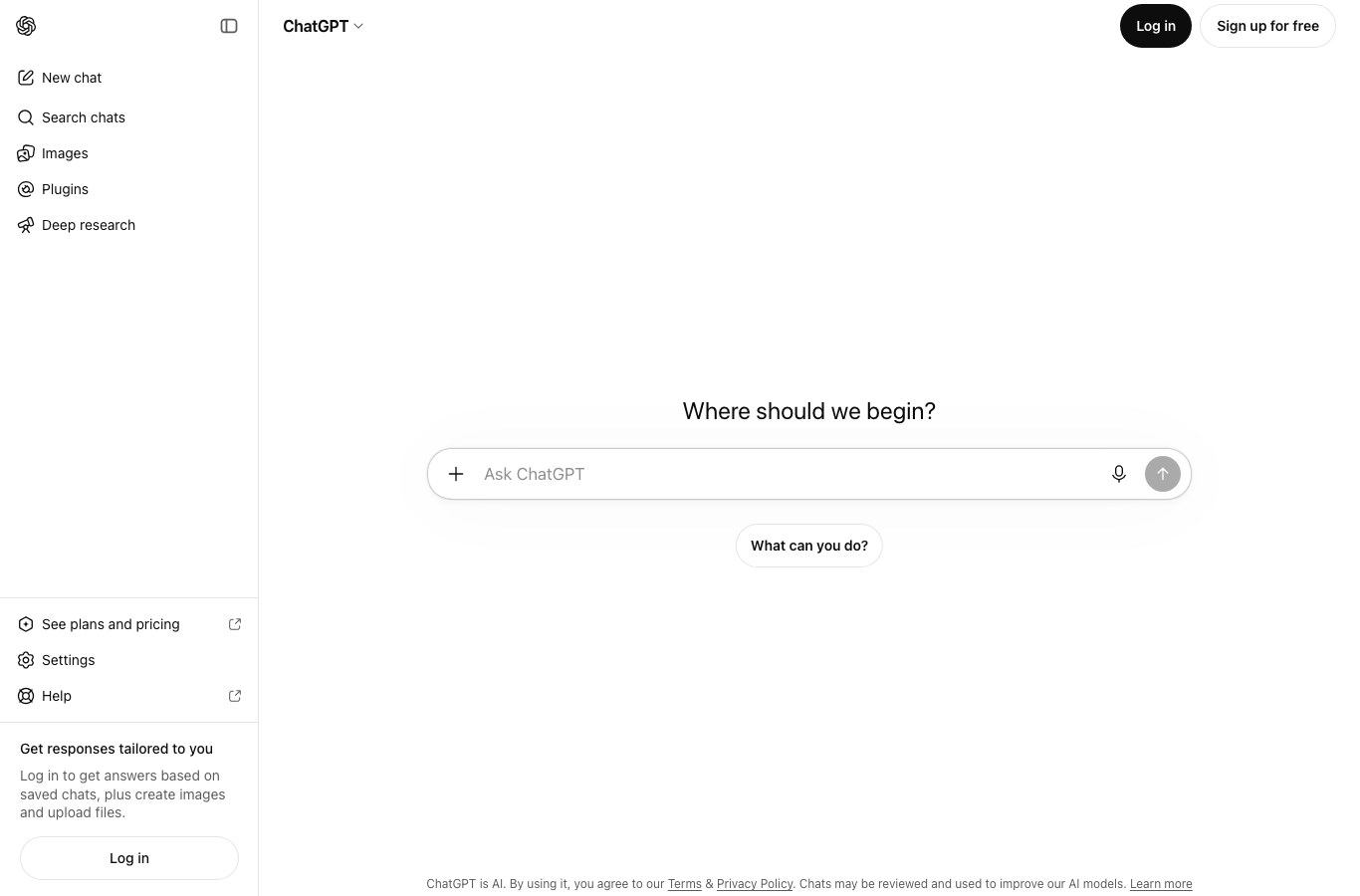
Nobody does learning better. You paste code, you ask “explain it to me”, and you get a step-by-step reasoning instead of a silent fix. The free plan gives the GPT-5.6 Luna model, with unlimited text chats but limited Codex access: enough to learn, not for a whole afternoon of agent work. The Plus plan (EUR 23/month) expands Codex usage and unlocks GPT-5.6 reasoning models: a coherent entry point for assisted programming. According to the third-party BenchLM ranking (page consulted on 26 August 2026), GPT-5.3 Codex reaches 85% on SWE-bench Verified, with GPT-5.2 at 80%: powerful, but behind Claude on the hard tickets.
Claude Code: the reference agent for complete tasks
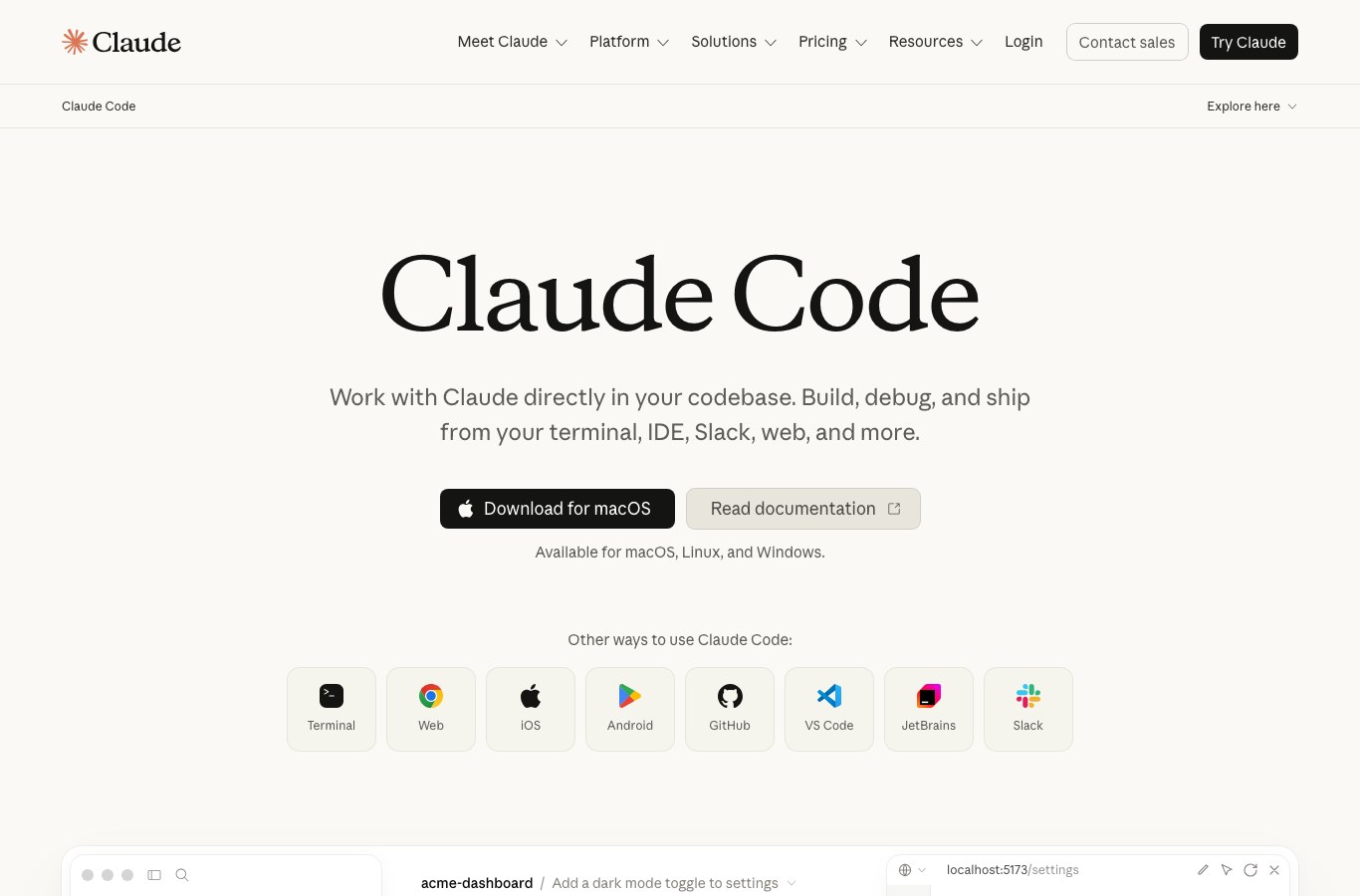
Claude Code works inside your directory: it reads files, proposes patches, runs tests and fixes in a loop. It is the “agent” format that popularised delegation. On billing, the decision is simple: Claude Code is included in Claude Pro at $20/month ($17/month billed annually), with no surcharge or separate account. The Max plan, from $100/month, multiplies usage by 5 or 20. According to the third-party BenchLM ranking (page consulted on 26 August 2026), Opus 5 leads SWE-bench Verified at 96%, ahead of Mythos 5 (95.5%) and Fable 5 (95%).
GitHub Copilot: the companion that does not change your habits
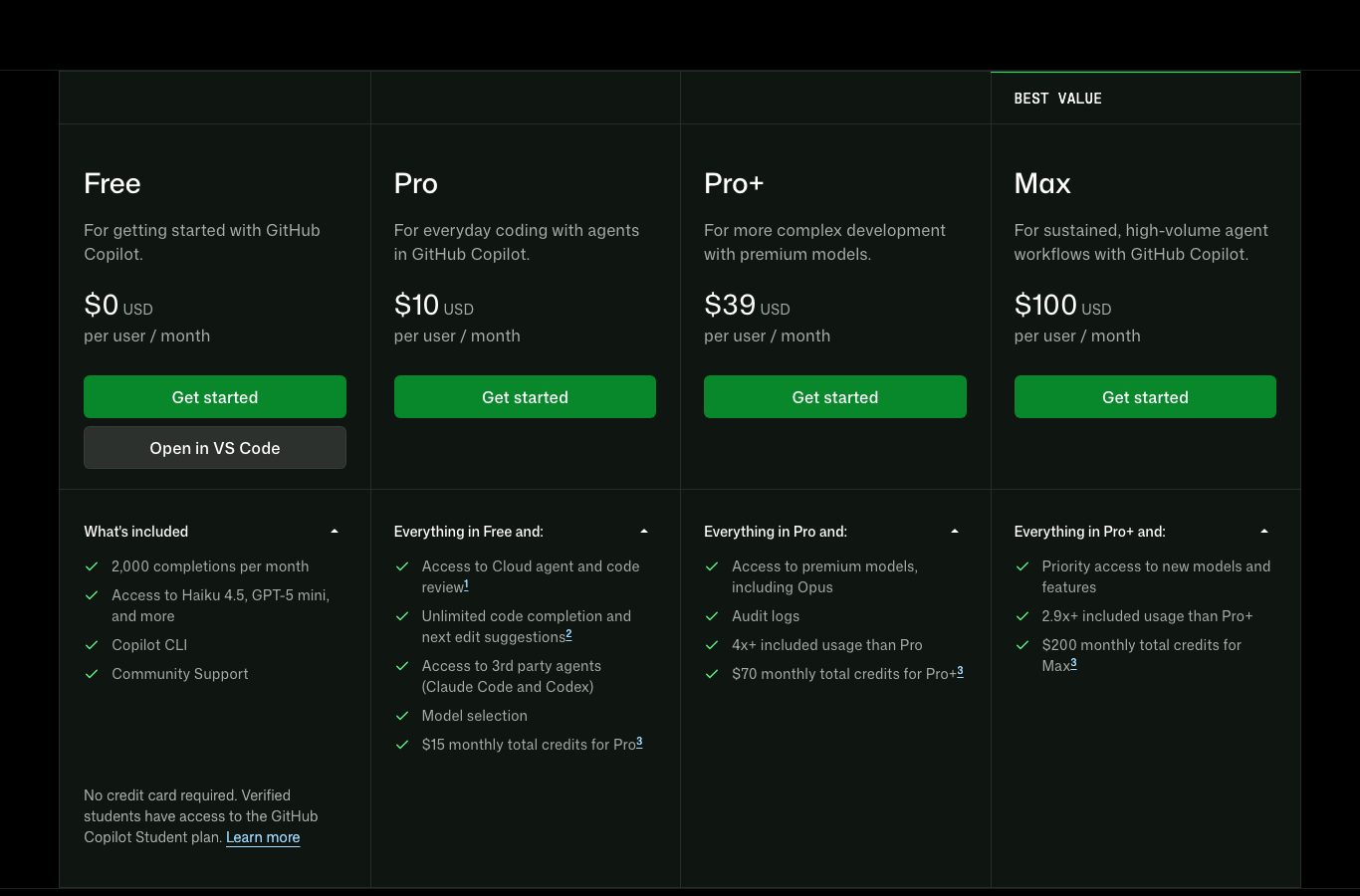
Copilot remains the most widely deployed assistant on the market, and its 2026 grid has become the most readable: Free at $0 with 2,000 completions and 50 monthly chat requests, CLI and MCP connectors included, then Pro at $10/month, Pro+ at $39 and Max at $100. The game-changing novelty: every interaction (chat, agent mode, code review, cloud agent, CLI) consumes “GitHub AI Credits” included in your plan, which makes the limit explicit rather than silent. Another signal: third-party agents Claude Code and Codex (public preview) are available from the Pro plan, according to GitHub documentation consulted on 26 August 2026. For the VS Code developer who stays in their editor and their GitHub repo, it is the least friction option.
Cursor: the editor where the agent is the centre
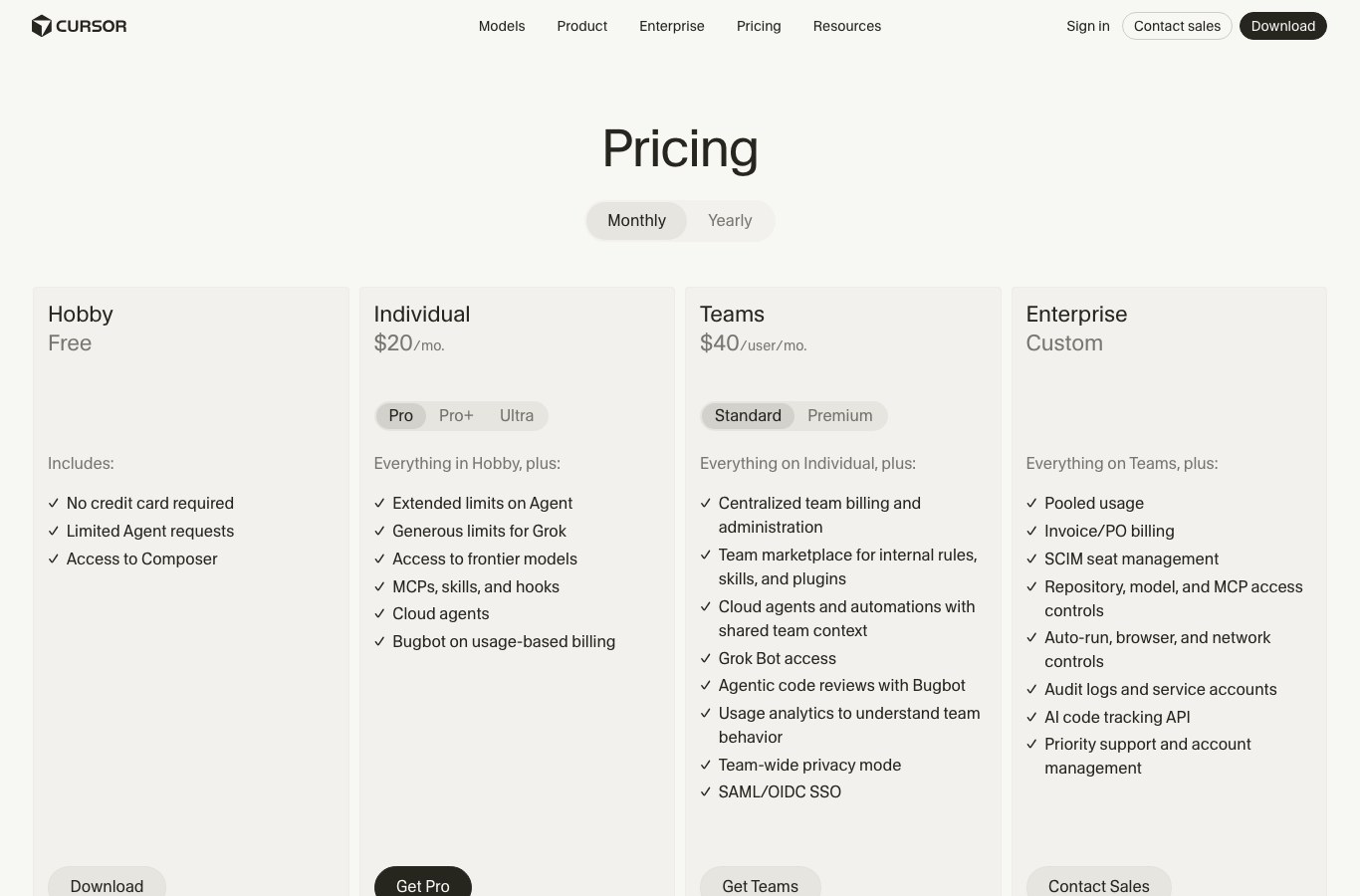
Cursor was one of the first to make the agent the main interface: you describe the outcome, it splits the work across several files, and you review its diffs. In 2026, its grid rests on a free Hobby plan (no credit card, limited Agent requests) and a $20/month Pro plan, with Pro+ at $60/month (3x Pro limits), Ultra at $200/month (20x), and Teams at $40/user/month. Two signals to remember: Grok models are among the frontier models offered, and Bugbot helps review changes automatically.
Antigravity: Google’s agent-first platform
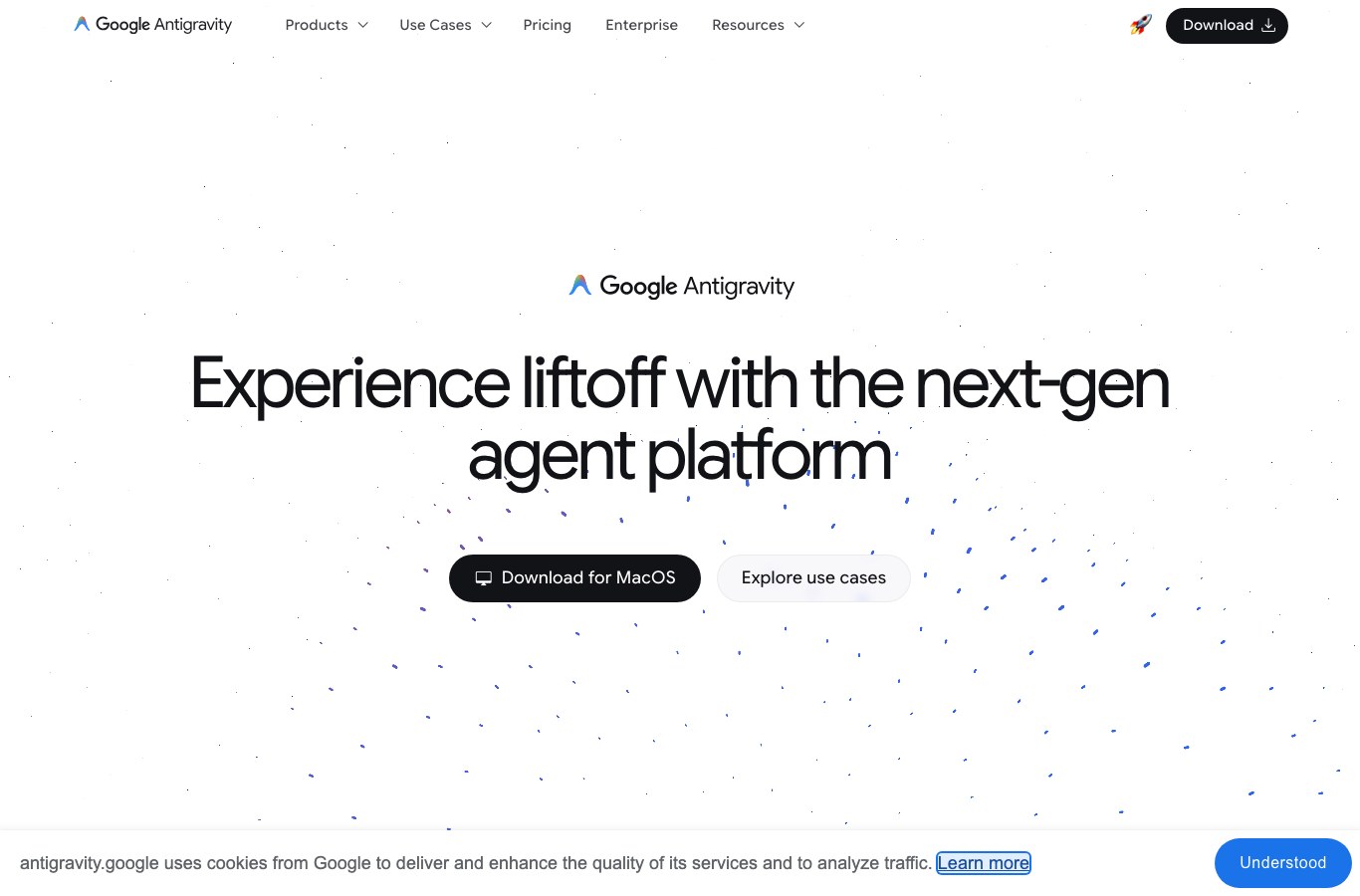
Google reorganised its coding offer in 2026: for individuals, Gemini CLI and the Gemini Code Assist IDE extensions were replaced by Antigravity (IDE, CLI and SDK, now in version 2.0) on 18 June 2026, while the team offer goes through Google Cloud: Gemini Code Assist Standard and Enterprise, and the Gemini Enterprise Agent Platform organisation (rolling out progressively). Long contexts and the most advanced Gemini models are not the same for all users: access depends on the plan (Google AI Pro or Google AI Ultra) and on preview channels, not on the free individual offer. Antigravity presents itself as an “agent-first” platform: it is Google’s big agent, next to the classic Gemini app, and the obvious choice if you already live in the ecosystem.
The method: 5 steps to code with AI
The tool does not do the work: the instruction makes the difference. Here is the sequence that avoids 90% of the pitfalls:

1. Frame the bug or the function
Write the expected outcome in one sentence, the technical context (language, framework, version) and the failing case.
2. Provide the file or the error message
A quality agent works on real code, not a description: paste the full error message, not a summary.
3. Ask for the explanation along with the code
Systematically add “explain what you change and why”: you learn, and you spot dangerous solutions.
4. Restrict the agent’s privileges
Limit the agent to one folder, forbid destructive commands, and review every diff before accepting it.
5. Test before committing
A fix that breaks existing tests is not a fix. The 2026 agents offer to run the test suite: accept.
Take the example of a code review prompt, before and after applying the method:
Before
Write a Python function that validates an ISBN number.
After
You are a senior Python developer. Describe your reasoning, then write a nis_validator function that validates an ISBN-10 and an ISBN-13 (weighted sum algorithm), with no external library. Add test cases for 9780306406157, a valid ISBN-10 and an invalid number.
The second prompt gives the AI a role, a context, a constraint and a success criterion: that is the difference between a generic result and a usable answer. If writing this instruction is your weak point, the Nation prompt generator structures the process in a few clicks.
What the AI will not do for you
Three guardrails to keep in mind, because they avoid the two most common incidents of 2026: fragile code committed with confidence, and sensitive data sent to a third-party server.
The leaking secretAn access token, an API key, customer data in a prompt: every tool sends to its server whatever you paste. The simple rule: nothing confidential in a prompt until the vendor’s data policy is verified. To review logic without sending sensitive code, the Nation AI chat remains your conversational assistant, in French.
FAQ: best AI for coding
What is the best AI to code with in 2026?
According to BenchLM (third-party ranking, consulted on 26 August 2026), Claude Opus 5 tops SWE-bench Verified at 96%, ahead of Mythos 5 (95.5%), Fable 5 (95%) and GPT-5.3 Codex (85%). But the best AI for you depends on your use: ChatGPT to learn, Copilot to stay in VS Code, Cursor for an agent-first editor, Claude Code to delegate complete tasks, Antigravity for the Google ecosystem. Try the selector higher up in the article.
Which free AI for coding in 2026?
The five major players all have an $0 plan, all checked on 26 August 2026: ChatGPT Free (GPT-5.6 Luna, unlimited text chats, limited Codex access), Claude Free (file creation and execution), GitHub Copilot Free (2,000 completions and 50 monthly chat requests, CLI included), Cursor Hobby (limited Agent requests), Antigravity (basic free weekly quota). The word “free” is exact, the limit is not: check the ceiling that matches your usage before adopting one.
Is ChatGPT free for coding?
Yes, with limits: the free plan gives access to the GPT-5.6 Luna model, with unlimited text chats and limited Codex access, enough to learn or for a one-off question. Expanded Codex usage requires the Plus plan (EUR 23/month), according to the official pricing page consulted on 26 August 2026.
Cursor or Copilot: which one should you choose?
Copilot installs into your existing VS Code, with a usable free plan and $10/month billing for daily use. Cursor is a different editor, built around the agent, with a $20/month Pro plan, Pro+ at $60/month (3x Pro limits) and Ultra at $200/month (20x). If you do not want to change anything in your environment, Copilot; if you want an agent-first editor, Cursor.
Will AI replace developers?
In 2026, AI writes more code than before, but it does not decide the architecture, does not know your business, and does not take responsibility for a fix that breaks production. Roles are shifting towards specification, review and testing. Developers who work with AI go faster; those who ignore the guardrails (review, secrets, tests) take more risks.
Can Nation AI help me code?
Nation AI does not code in your editor: it helps you write the instruction, understand a code block, compare two approaches and review your logic, all in French, no sign-up. It is the conversational complement to your coding assistant, not a competitor: the Nation AI chat is available free right now.
Conclusion: the right AI exists, it depends on you
The question “what is the best AI to code with” has an honest answer: the one that matches your starting point. Benchmarks give a signal (Claude Opus 5 at the top of SWE-bench Verified according to the third-party BenchLM ranking, consulted on 26 August 2026), pricing pages give the truth about free (checked on 26 August 2026), and your way of working gives the decision. Learning? ChatGPT. Staying in VS Code daily? Copilot. An agent in the editor? Cursor. Delegating complete tasks? Claude Code. All Google? Antigravity. And for the instruction, the explanation or the review in French: Nation AI.
Write your next instruction with Nation AI
The Nation AI chat guides you in French, free and without sign-up. Describe the problem, compare the approaches, then paste the result into the tool of your choice.
To go further: start with our How to use ChatGPT guide, discover the top 5 French AI assistants, or browse the full list on the Nation AI tools page.