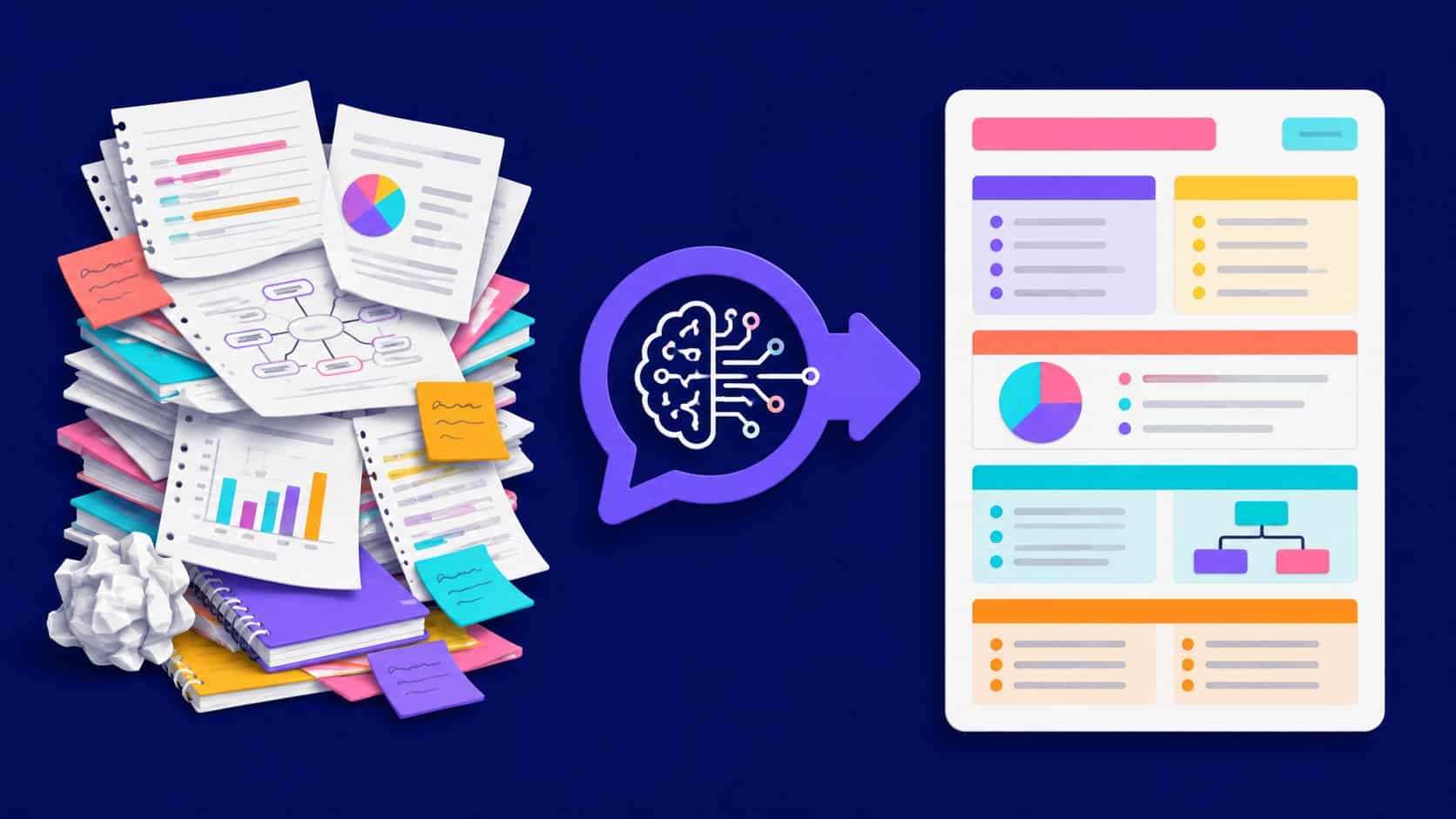
ChatGPT creates excellent revision sheets, as long as you give it a good prompt: a role, your subject and your level, your pasted course notes, the format you want (summary, flashcards, multiple-choice quiz, mind map…) and a length constraint.
This page brings together a library of 42 ready-to-copy prompts, sorted by format and by subject (law, medicine, maths, biology, history, languages…), filterable and with a “Copy” button.
To skip the “prompt” step and get a clean sheet directly from a PDF or a photo of your notes, the Nation AI revision sheet generator does the job in two clicks.
Rereading a course ten times without retaining anything, recopying whole pages “neatly”, ending up with sheets that are just the course in miniature: it’s the most common method, and the least effective. Used well, ChatGPT turns any course into a clear, testable sheet in minutes. It all comes down to the prompt : here’s the method, then 42 copy-paste templates.
Can ChatGPT really make revision sheets?
Yes, and it’s even one of its best uses for studying. A revision sheet is smart compression : you reduce a long course to a short, structured version that’s easy to reread. That’s exactly what a language model knows how to do: it spots the definitions, the main ideas, the dates and the formulas, then puts them back in order in the format you ask for.
In practice, ChatGPT saves you time on formatting, spots key concepts you might have overlooked, automatically generates self-assessment questions and produces several formats (summary, flashcards, multiple-choice quiz, mind map) from the same course. All adapted to your actual level, from secondary school to university.
The limit to be aware of: AI can get it wrong. ChatGPT can invent a date or an author’s name, or miss an exception, especially on specialised topics (a legal exception, a physics formula). Treat the generated sheet as a working draft: reread it, cross-check the points that matter (dates, formulas, official definitions) against your course, then correct it. This checking reflex is, in itself, a revision step.
Is it allowed? Using AI to create your own sheets, practise with quizzes or rephrase things to understand them better is part of your personal working method, just like a textbook. The problem is having AI write a graded assignment and handing it in as is.
The method: 5 ingredients of a good prompt
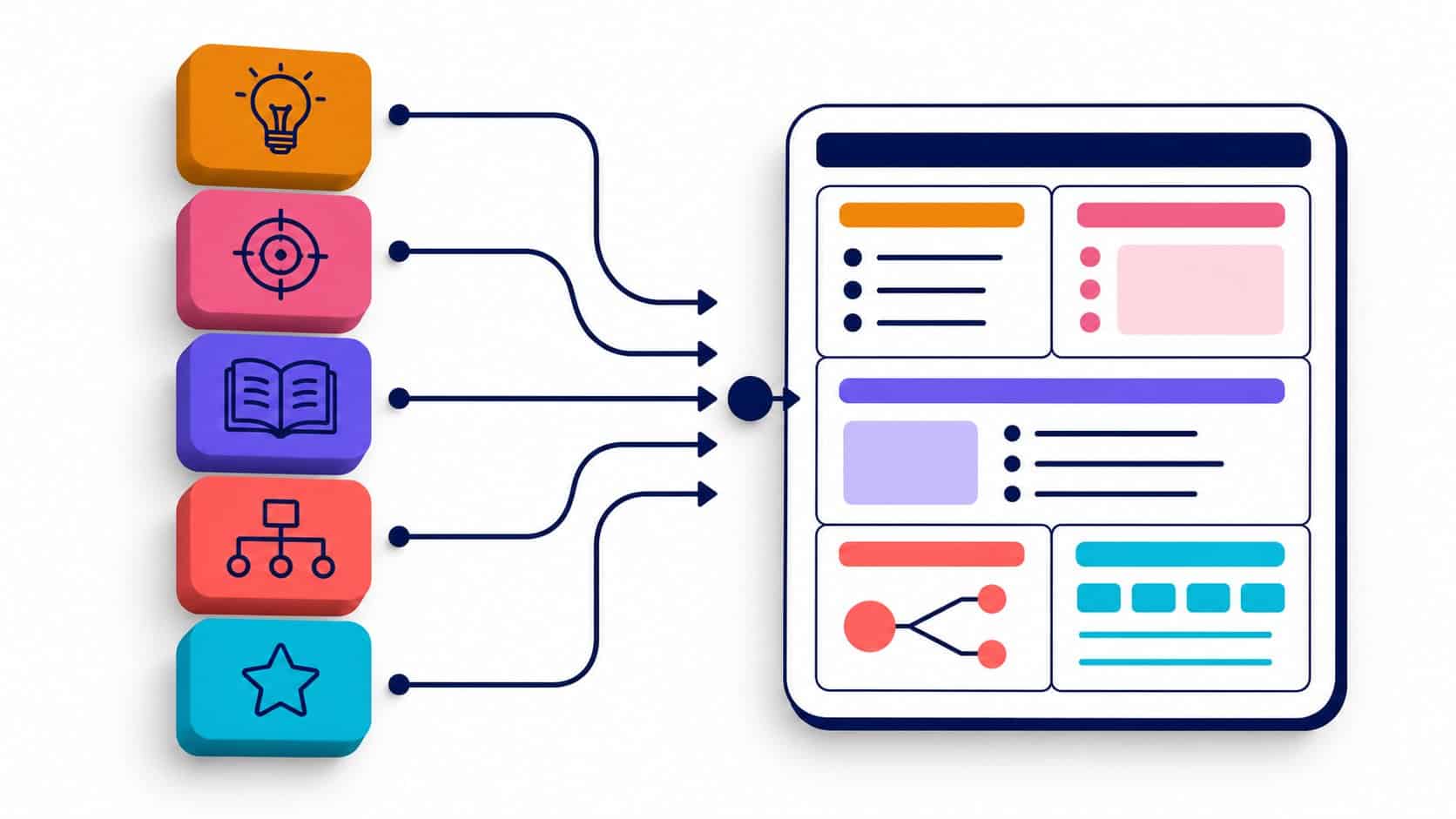
If you just write “make me a revision sheet”, you get a vague, generic text. A good sheet prompt rests on five ingredients. The more you give, the more precise the sheet.
- A role. “You are a [subject] teacher preparing a student for the [final exam / mid-term / competitive exam].” Setting the role shapes the tone and the level of demand.
- The context: subject + level + chapter. Specify “Year 13”, “college”, “second-year law”, “pre-med”… A Year-10 biology sheet has nothing in common with a university one.
- The raw material: your course. Paste your course, attach the PDF or the photo. Without your course, the AI improvises from the official syllabus — handy in a pinch, but less faithful.
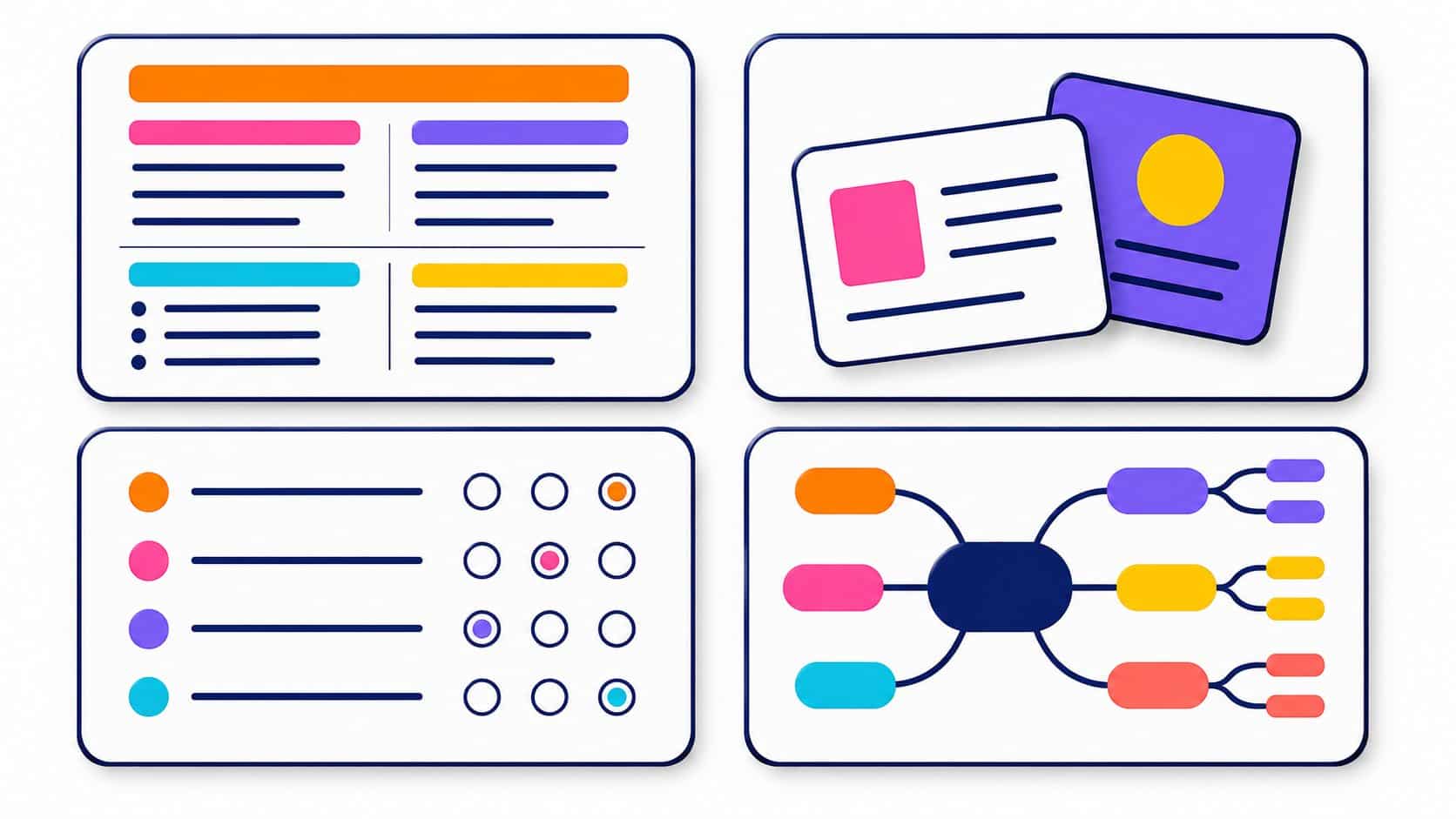
- The output format. This is what changes everything: one-page summary, question/answer flashcards, multiple-choice quiz, mind map, comparison table. Be explicit about the structure you expect.
- The constraints. Length (“one A4 page maximum”, “15 lines”), goal (“I’m revising for an oral”, “45-min test”) and level of detail. A length constraint forces synthesis.
The effect of these five ingredients is spectacular. Let’s compare a lazy request and a structured one on the same chapter:
“Make a revision sheet on the French Revolution.”
→ A generic summary, with no hierarchy, not adapted to your level, and not testable.
“You are a Year-13 history teacher. From my course below, make a one-page sheet: causes, key dates, concepts, 3 examples worth using in an essay, then 6 check questions.”
→ A structured sheet, at the right level, ready to use.
The reflex that doubles the quality. Always tell the AI your goal. “Sheet for an oral” (which likes examples) and “sheet for a quiz” (which likes sharp definitions) don’t produce the same thing. And if the first version doesn’t suit you, ask for an adjustment: “shorter”, “more keywords, fewer sentences”, “add examples”.
42 ChatGPT prompts for your revision sheets
Here’s the library. Each prompt is ready to copy: replace the items in brackets […] with your subject, your level and your chapter, then paste your course where indicated. Use the filters to jump to the format or subject you want, or the search box for a specific keyword.
Library of “revision sheet” prompts
42 templates sorted by format and by subject. Filter, search, then copy with one click.
Turn a course into a one-page sheet
You are a [subject] teacher, level [Year 13 / college / university].
Turn the course below into a concise revision sheet:
1. The key definitions (very short)
2. The main ideas (one sentence each)
3. The must-know examples to remember
4. The classic pitfalls to avoid
5. 5 self-assessment questions
Be concise: one A4 page maximum.

Course:
[PASTE YOUR COURSE HERE]
Sheet in 3 levels (pass → top grade)
From this chapter of [subject], create a sheet in 3 levels:
Level 1 "Pass": the essential concepts.
Level 2 "Merit": the nuances, precise examples and vocabulary.
Level 3 "Distinction": references that stand out, openings, links with other chapters.
10 lines maximum per level.

Chapter:
[PASTE THE COURSE OR STATE THE TOPIC]
Sheet “definitions + ideas + method”
Make a revision sheet on [topic] in [subject], level [level], in 4 clearly separated blocks:
- DEFINITIONS (the terms to know by heart)
- KEY IDEAS (what you need to understand)
- METHOD (how to answer a typical question on this topic)
- TAKEAWAYS (3 sentences I can reuse in an exam answer)
Summarise a long PDF/chapter into a sheet
Here is a long chapter of [subject]. Summarise it into a structured revision sheet, without inventing anything:
- keep only the essentials (remove repetitions and secondary examples)
- structure it with headings and subheadings
- put the keywords to memorise in bold
- end with a box "if I only remember 5 things"

Chapter:
[PASTE THE TEXT]
Sheet from several documents
Here are several sources on the same chapter of [subject] (course, slides, notes).
1. Merge them into a single coherent sheet.
2. Flag the points where the sources contradict each other.
3. Fill in what's missing from all three.

Source 1: [PASTE]
Source 2: [PASTE]
Source 3: [PASTE]
Fill-in-the-blank sheet (text to complete)
From this course of [subject], create a "fill-in-the-blank" revision sheet:
- write the sheet then replace the important keywords with [____]
- number each blank
- give the list of answers separately, at the end
I want to be able to test myself by filling in the blanks.

Course:
[PASTE YOUR COURSE HERE]
20 question / answer flashcards
From this course of [subject] level [level], create 20 question / answer flashcards.
Rules:
- one key concept per card
- answer in 2 lines maximum
- vary the types: definition, date, mechanism, example, distinction
- order them from easiest to hardest

Course:
[PASTE YOUR COURSE HERE]
Flashcards ready to import into Anki
Create 25 flashcards on [topic] in [subject], level [level], in a format ready for Anki:
- one card per line
- front and back separated by a semicolon ( ; )
- no numbering, no surrounding text
Give me only the list, so I can copy it directly.
“Key dates and figures” flashcards
From this course of [subject], create 15 flashcards focused solely on the dates, figures and data to memorise.
Format: on the front the question ("In what year…?"), on the back the answer + a word of context to anchor the memory.

Course:
[PASTE YOUR COURSE HERE]
10-question quiz with explained answers
From this course of [subject] level [level], create a 10-question multiple-choice quiz:
- 4 options per question, only one correct
- don't give the answers right away
- after my answers, mark them, explaining why each wrong option is false

Course:
[PASTE YOUR COURSE HERE]
Progressive quiz with score
Quiz me on [topic] in [subject], level [level].
Ask 10 questions one at a time, from easiest to hardest.
Wait for my answer before moving to the next, tell me if it's right, then give my final score and the concepts to review.
True / False with justification
Create 15 True / False statements on [topic] in [subject], level [level].
Mix true and false, including common traps.
Give the correction at the end, with a one-line justification for each statement.
Likely topics from past papers
Here are the topics that came up in [subject] over the past few years:
[LIST THE TOPICS]
1. Identify the 5 themes that recur the most.
2. For each theme, make a mini-sheet (concepts, typical outline, examples).
3. Rank the themes by likelihood of coming up again.
Text mind map
Turn this chapter of [subject] into a text mind map.
At the centre: the main theme.
Then 3 to 5 branches, each with 2-3 sub-branches.
For each sub-branch: a keyword + an example or a date.
Use indentation to make the structure visual.

Chapter:
[PASTE THE COURSE OR STATE THE TOPIC]
Tree outline of a chapter
Give me the full tree outline of the chapter [name] in [subject], level [level]:
I, II, III with their sub-parts A, B, C, and for each sub-part one sentence of content.
Goal: visualise the overall logic before revising the detail.
Comparison sheet between two concepts
Create a comparison sheet between [concept A] and [concept B] in [subject], level [level].
For each: definition in one sentence, reference author/theory, example, common point, main difference.
End with a synthesis sentence reusable in an exam to show I've mastered the distinction.
Multi-item comparison table
Make a comparison table of the following [authors / theories / regimes / models] in [subject]: [list].
Columns: name, main idea, strengths, limits, example.
Add below the table 3 sentences to memorise the essential distinctions.
Telling apart concepts that look alike
In [subject], level [level], I often confuse certain concepts.
List the 5 pairs of concepts easiest to confuse on the topic [topic], and for each pair:
- the difference in one sentence
- a trick to stop mixing them up
- an example illustrating the distinction
Memory aids (mnemonics)
Create a sheet on [topic] in [subject], level [level].
For each important concept, suggest a memory aid: acronym, sentence to remember, mental image or association of ideas.
Short sheet (15 lines max), simple and memorable aids.
Understand with analogies
Explain the key concepts of the chapter [name] in [subject] to me with everyday-life analogies.
For each concept: the analogy, then the rigorous definition.
Aim: that I understand deeply before memorising.
“Explain it like I’m a child” then sheet
Step 1: explain [difficult concept] to me as if I were 12, simply.
Step 2: gradually work up to level [level].
Step 3: sum it all up in a mini-sheet of 8 lines that I can revise.
“Exam-eve” sheet (15 lines)
I have an exam tomorrow on [topic] in [subject], level [level].
Create a "survival summary" sheet of 15 lines maximum:
- what I must know by heart (dates, definitions, formulas)
- what I must understand without reciting (mechanisms)
- the 3 most rewarding examples to place in my answer
No waffle, just the essentials.
Express revision in 20 minutes (Pareto)
I have 20 minutes left to revise [topic] in [subject].
Apply the Pareto principle: give me the 20% of concepts that bring 80% of the marks.
Format: 7 points maximum, ranked by priority, each in one sentence.
“The 10 things you absolutely must know”
Give me the 10 things you absolutely must know about the chapter [name] in [subject], level [level].
One line per point, ranked from most to least important.
Add at the end the one mistake you must never make on exam day.
Sheet for the oral exam
My oral exam topic is: [topic]. Specialism: [specialism].
Create a sheet that fits on one page:
1. Outline of the presentation (5 min) in 3 parts
2. Key concepts to mention without fail
3. Transitions between the parts
4. 5 likely questions from the panel with possible answers
5. Possible link with my future plans
Interactive oral exam simulator
Play the role of an examiner for an oral in [subject], level [level], on the topic [topic].
Ask me one question at a time, listen to my answer, then follow up as a panel would.
At the end, give me feedback: strengths, areas to work on, and a model rephrasing of my best answer.
“Pitch” sheet to explain out loud
Prepare me a 2-minute "pitch" to explain [concept] in [subject] out loud, level [level].
- a hook
- the explanation in 3 simple ideas
- a vivid example
- a closing sentence that shows I've mastered it
Spoken style, short sentences, easy to memorise.
Spaced-repetition schedule
I have sheets on these chapters: [LIST]. My exam is in [X] weeks, I can revise [X] h/day.
Create a schedule based on spaced repetition:
- each sheet reread at D+1, D+3, D+7, D+14
- prioritise the high-weighting subjects
- include test sessions (not just rereading)
- leave rest slots
Reverse schedule before the exam
My [subject] exam is on [date]. Here are the chapters to cover: [LIST].
Make me a day-by-day reverse schedule from today:
- spread the chapters according to their difficulty and weight
- plan 2 days of general revision before the exam
- end with an exam-eve checklist.
Balanced daily programme
Build me a typical revision day for [level], with [number] hours available.
Alternate the subjects [list] to avoid boredom, place the hardest ones in the morning, and insert breaks (Pomodoro method: 25 min work / 5 min break).
Law — case note
You are a law tutorial leader. Make me a structured case note from the decision below:
- legally qualified facts
- procedure
- legal issue (one sentence)
- the court's ruling + reasons
- the scope of the ruling
Then 3 questions to check I've understood.

Ruling:
[PASTE THE DECISION]
Law — concept sheet + exceptions
Make a revision sheet on [legal concept] in [branch of law], level [Bachelor/Master]:
- definition and basis (article, principle)
- conditions / rules
- the important exceptions (insist on them)
- the case law to cite
- a mini practical case with its answer
Check the exceptions carefully, that's where the points are won.
Medicine — dense sheet
Make a dense revision sheet on [topic] for a [pre-med / medical] student.
- pathophysiological mechanisms (step by step)
- the concepts to know by heart (tables if useful)
- the classic quiz pitfalls
- 10 exam-style multiple-choice questions with explained answers

Course:
[PASTE YOUR COURSE]
Nursing — pathology sheet
Create a revision sheet on the pathology [name] for a nursing student:
- definition and causes
- clinical signs
- tests and treatments
- nursing role and monitoring
- complications to know
Clear format, ready to revise before a mid-term.
Maths — formulas + method + mistakes
Create a sheet for the chapter [name] in maths, level [level]:
1. The essential formulas (with their conditions of use)
2. The typical solving method, step by step
3. The most frequent calculation mistakes
4. A typical worked exercise in summary form
5. 3 tips to go faster on the day
I'll check the calculations myself, flag the sensitive points.
Physics & Chemistry — formulas + units
Make a revision sheet on [topic] in physics-chemistry, level [level]:
- the formulas with the name and unit of each quantity
- the typical diagram or set-up (describe it precisely)
- the method for solving a classic exercise
- the unit confusions to avoid
- 3 orders of magnitude to know
Biology — process sheet
Create a sheet on the process [e.g. mitosis, photosynthesis] in biology, level [level]:
- definition in one sentence
- the steps in order (numbered)
- the key actors/molecules and their role
- a description of a diagram to reproduce
- the frequent mistakes
End with 5 check questions.
History & Geography — timeline + concepts
Make a sheet on [period/topic] in history-geography, level [level]:
- a timeline of the key dates (date → event)
- the concepts and vocabulary to master
- the major players
- 3 precise examples usable in an essay
- a typical essay outline on the topic
Languages — vocabulary + grammar
Create a revision sheet in [French / Spanish / German] on the topic [topic], level [level]:
1. 15 key words or expressions with translation
2. 3 to 5 grammatical structures useful for talking about the topic
3. sentences reusable in writing and speaking
4. cultural references to cite
5. the frequent mistakes of native English speakers
Economics — mechanisms + thinkers
Make a sheet on [topic] in economics, level [level]:
- the definitions and mechanisms (cause → consequence)
- the reference thinkers and theories
- the data and figures to cite
- the links with other chapters
- a typical analysis sentence for an exam answer
Philosophy — concept + theses
Create a sheet on the concept of [concept] in philosophy, level Year 13:
- definition and general problem
- the theses of 3 thinkers (with a short quote and its meaning)
- concrete examples to illustrate
- a possible essay outline
- the question traps to spot
English — work / reading sheet
Make a revision sheet on the work [title] by [author], for your [English Literature exam / level]:
- brief summary and structure
- major themes
- characteristic writing techniques
- 4 key quotations with their significance
- the reading angles for the oral
No needless spoilers, get to the essentials.
Revising with ChatGPT, beyond the sheet
The sheet is only a starting point. What really makes you progress is active revision : testing yourself, getting things wrong, correcting them. Cognitive science is unequivocal on this point — it’s thetesting effect : forcing yourself to recall information from memory anchors it far better than passive rereading. ChatGPT is an ideal practice partner for that.
ChatGPT’s “Study and Learn” mode
Launched by OpenAI in July 2025 and available for free (Free, Plus, Pro and Team plans), the “Study and Learn” (Study Mode) mode turns ChatGPT into a tutor. Instead of giving you the answer, it asks questions in a Socratic way, guides you step by step and checks your understanding with quizzes. To activate it: click “Tools” under the input bar, then “Study and Learn”.
The most effective strategy combines the two approaches: first use Study mode to understand a difficult chapter, then turn it off and launch a prompt from the library to synthesise what you’ve learned into a sheet. First you understand, then you lock it in.
Test yourself, simulate an oral, plan
Beyond sheets, ChatGPT is useful for: generating quizzes to self-assess, simulating an oral exam (it plays the examiner and questions you), explaining a sticking point differently, or building a revision schedule. To memorise over time, rely on spaced repetition : reviewing a concept at increasing intervals (D+1, D+3, D+7, D+14) to fight forgetting. The “Revision plan” prompts in the library above take care of that.
Go further on the art of the prompt. To get each of these requests right, structure matters. Our guide to writing effective prompts and our selection of prompts for students perfectly complement this page.
Importing your course: text, PDF, photo
The quality of the sheet depends first on what you give the AI. Everything works, but not in the same way. A “text” PDF (typed course, exported slide) is the most reliable. A scanned PDF or a photo of a notebook also work, as long as they’re legible: otherwise the AI guesses, and you lose the benefit.
| Format | Ideal when… | The tip that changes everything |
|---|---|---|
| Pasted text | Course on the school portal, email from the teacher, sheet already extracted | Add the chapter title and your level before pasting |
| “Text” PDF | Typed course, exported slides | Remove the useless pages (table of contents, blank pages) |
| Scanned PDF | Paper handout, printed textbook | Scan in black and white, high contrast |
| Handwritten photo | Lecture notes, notebook, whiteboard | Front lighting, no shadow; better still: scan the photo to PDF |
Small practical limit: in ChatGPT, the sheet stays as text in the conversation. For a clean, laid-out and exportable sheet directly from a file, without fiddling with a prompt, a dedicated tool is faster — that’s the point of the Nation AI sheet generator, which accepts PDF, photo (even handwritten) or text and can also produce a course summary along the way.
Which AI should you choose to make your sheets?
ChatGPT isn’t the only option, and not all AIs are equal depending on the use. Here’s how to situate the approaches.
| Approach | Ideal for | Advantages | Limits |
|---|---|---|---|
| ChatGPT (with prompts) | Fine control of the format and iterating | Flexible, multi-format, free to start | You have to write the prompt and copy-paste the result |
| Dedicated generator (Nation AI) | A clean sheet from a PDF / a photo, without “talking prompt” | Direct upload, structured sheet in two clicks, quizzes possible | Fewer fine settings than a custom prompt |
| NotebookLM (Google) | Synthesising large volumes of documents | Good for linking several sources, audio summaries | Overkill for a simple chapter sheet |
| Flashcard app (Anki…) | Memorising over time | Automated spaced repetition | Doesn’t create the sheet: pair it with an AI |
In practice, many students combine: an AI to produce the sheet and the questions, a flashcard app for spaced memorisation. And for special subjects, specialised assistants help, such as Nation’s dedicated maths AI . You can compare them all on the AI tools page.
Mistakes to avoid
- Not checking. AI can invent a date or an author. Always cross-check the points that matter against your course.
- Copying without understanding. A sheet is only effective if you’ve first read and tried to understand the course. Skipping that is building on sand.
- Piling up without rereading. Better 10 sheets reread 5 times than 50 sheets never reopened. Creating them gives an illusion of productivity.
- Keeping sheets that are too long. If your “sheet” runs to 3 pages, it’s a summary. Force ChatGPT to be concise (“one A4 side maximum”).
- Handing in graded work as is. Revising with AI is legitimate; passing off AI output as your own is not.
Your revision sheet in two clicks, no prompt
Upload a PDF, a photo of your notes or paste your text: Nation AI builds you a clear sheet, ready to revise. Free trial, no sign-up.
Prefer to chat freely? Try the Nation AI chatbot in full screen.
FAQ
Can ChatGPT make revision sheets?
Yes. It’s even one of its best academic uses: from your course, it extracts the key concepts, ranks them and puts them in the format you want (summary, flashcards, multiple-choice quiz, mind map). The one golden rule: reread and check the sensitive points, because AI can get it wrong.
How do you write a good ChatGPT prompt (example)?
Give a role, your subject and your level, paste your course, specify the format and a length constraint. Example: “You are a Year-13 biology teacher. From this course, make a one-page sheet: definitions, steps of the process, diagram to reproduce, common mistakes, then 5 check questions.” All the templates in the library above follow this principle.
Which prompt should you use for a law revision sheet?
Law has its own formats: case note (facts, procedure, legal issue, ruling, scope) and concept sheet (definition, rules, exceptions, case law, mini practical case). Insist on the exceptions, that’s where the points are won. Two law-specific prompts appear in the “By subject” filter.
Should you use ChatGPT, Claude or Gemini?
For revision sheets, the three big assistants do the job very well with a good prompt; recent models hallucinate less and handle longer courses. What matters most remains the quality of your request and the rereading. You can test several models from a single interface on the Nation AI chatbot page.
Can you get the sheet as a PDF?
In ChatGPT, the sheet is text in the conversation: you can copy it into a document and export it to PDF. To get a laid-out sheet directly from a file, a dedicated tool like the Nation AI sheet generator is more convenient.
How long does it take to create a sheet?
With a good prompt and your course to hand, the first version comes out in 2 to 3 minutes. Add 5 to 10 minutes to reread, check and personalise: about a quarter of an hour per sheet, versus 30 to 45 minutes by hand. Never skip the rereading step.
Is free ChatGPT enough to revise?
Yes, for most sheets. The free version and the “Study and Learn” mode amply cover the needs. Paid plans mainly bring more nuanced answers on complex topics and the handling of longer courses in one go — useful, but not essential to get started.
In summary
ChatGPT doesn’t revise for you: it saves you time on synthesis and formatting, as long as you give it a good prompt and check the result. Start from one of the 42 templates above, adapt it to your subject and your level, then turn the sheet into a testing tool. And when you want the simplest route — a PDF or a photo of your notes as input, a ready-made sheet as output — the Nation AI revision sheet generator takes care of it.
Sources: OpenAI, launch of the “Study and Learn” mode (July 2025); cognitive science on the testing effect and spaced repetition.