In short

For the search “ai celebrity voice generator free”, all 9 organic results on the first page are product pages, and Google’s AI Overview recommends one of them outright. Not a single editorial page says what the “free” actually delivers: we went through the pricing grids one by one on September 23, 2026.
The verdict is clear: the free tier is a sample, not a production plan. A “free” plan capped at 30 credits per year, an app that locks its celebrities behind a subscription, a generator that promises “completely royalty-free” output while its own grid crosses the commercial license off the free column.
And this is not only a shopping question: making a real person say things without consent has legal consequences. Tennessee’s ELVIS Act treats a simulated voice as property, publicity rights vary from state to state, and since August 2, 2026, Article 50 of the EU AI Act requires labeling realistic AI-generated content released in the Union.
Typing “ai celebrity voice generator free” into Google means wanting to make anyone say anything: a birthday message in a soccer star’s voice, a funny video voiced by a president, or a voice-over that sounds like a movie star. The first page answers with dozens of products all promising the same thing. This guide sorts it out: what each tool really gives you without paying, what their own contractual pages say about usage rights, and what the law allows or forbids when the voice imitates a person who exists.
Three very different products hiding behind the same query
The search results mix products that share nothing beyond the words “voice” and “celebrity”. Telling them apart avoids bad surprises, because their free limits are not the same at all.
| Family | What it does | Examples from the first page | What to check before trying |
|---|---|---|---|
| Text-to-speech with “celebrity-style” models | You type a script, the tool reads it with a voice imitating a personality | Parrot AI, AI Voice Lab, Vidnoz, FakeYou | The character quota and the line about usage rights |
| Voice-to-voice conversion | You upload a recording of your own voice, the tool turns it into a star’s voice | Media.io, most mobile apps | Who keeps the uploaded recording, and the watermark or maximum length |
| Voice changer apps | A mobile app with a celebrity voice catalog, often with a real-time mode | VoiceUp, Parrot AI’s app | The real price of the subscription, since the celebrities are frequently paid-only |
This distinction matters because the law does not look at them the same way. A tool that reads your script with a star imitation and an app that turns your recording into a star raise exactly the same legal question, but cloning a real voice (yours, or a loved one’s) is a different subject entirely, and it stays perfectly legal when the person consents.
The law part is where these products get uncomfortable. Impersonating a real person for fun is one thing; doing it in an ad, or in a message sent to someone who believes it, is another. Every grid below should be read with that line in mind: the tool decides how much you can produce, the law decides what you may publish.
The first page is a shopping mall
Google’s AI Overview answers the query by recommending Parrot AI, described as a “free-to-start tier where you can type a script and select from various celebrity voices like Donald Trump”. Below it, none of the 9 organic results recorded on September 23, 2026 is an article, a comparison or a forum thread: they are all product pages. There is no “People also ask” block either. The reader gets nothing but the vendors’ own sales pitches, which is exactly the gap this article fills using the vendors’ own grids as sources.
Not a single guide in the results Among the 9 organic results recorded on September 23, 2026 on Google, all 9 are tool or app pages: Parrot AI, AI Voice Lab, Vidnoz, VoiceUp on Google Play, FineVoice, Media.io, FakeYou, Rewind.ai and StarVoiceAI. No press article, no independent comparison. Google has nothing to offer between the commercials.
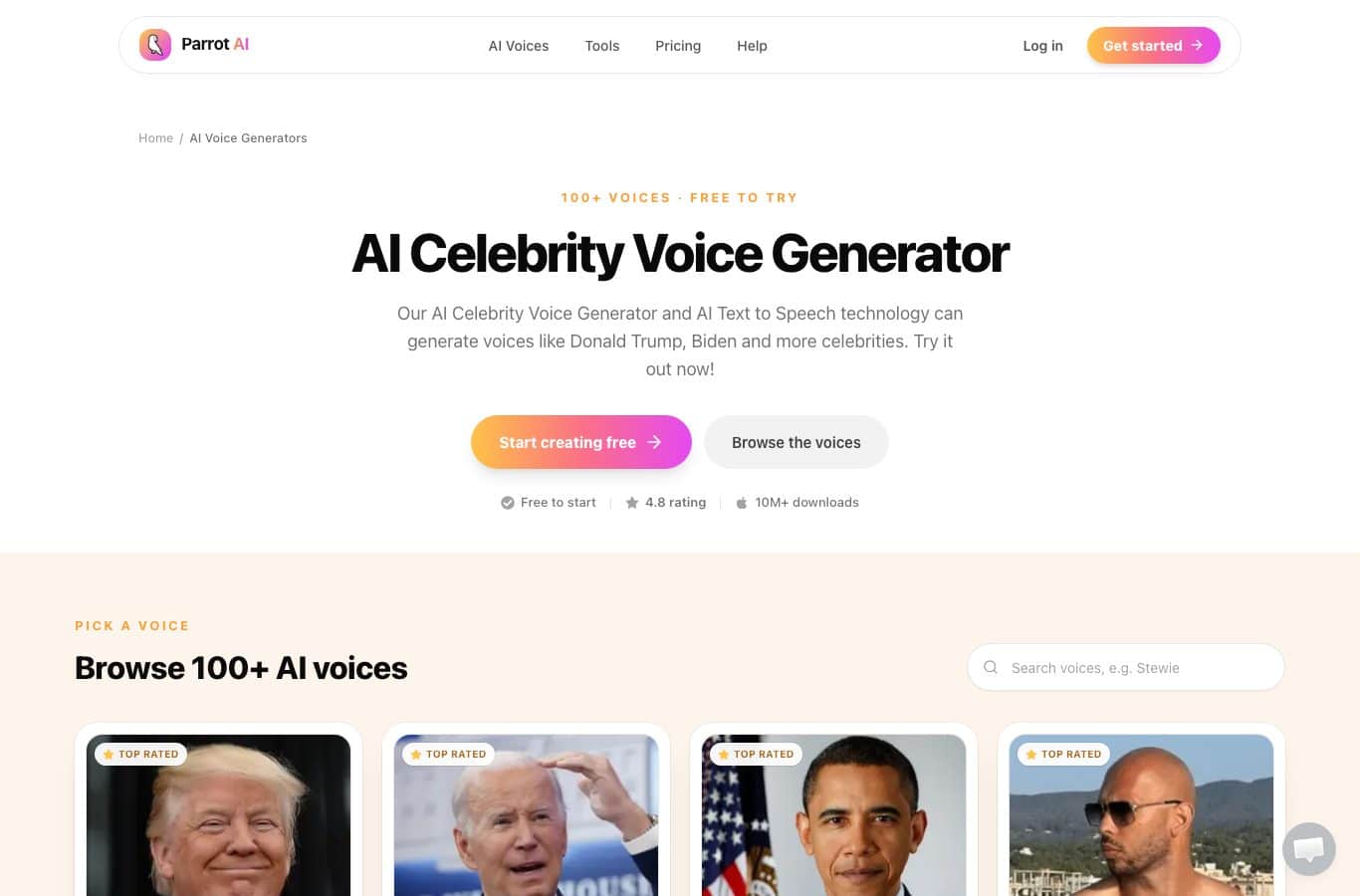
The top result sets the tone. Parrot AI’s own page says its website generator “is limited in text length”, and invites you to “Sign up free to unlock the full generator”, or to grab the app “for tons more celebrity and president voices”. In other words, the leader of this query sells imitations of real, living people, presidents included, and the free website version is a tasting menu for the paid product.
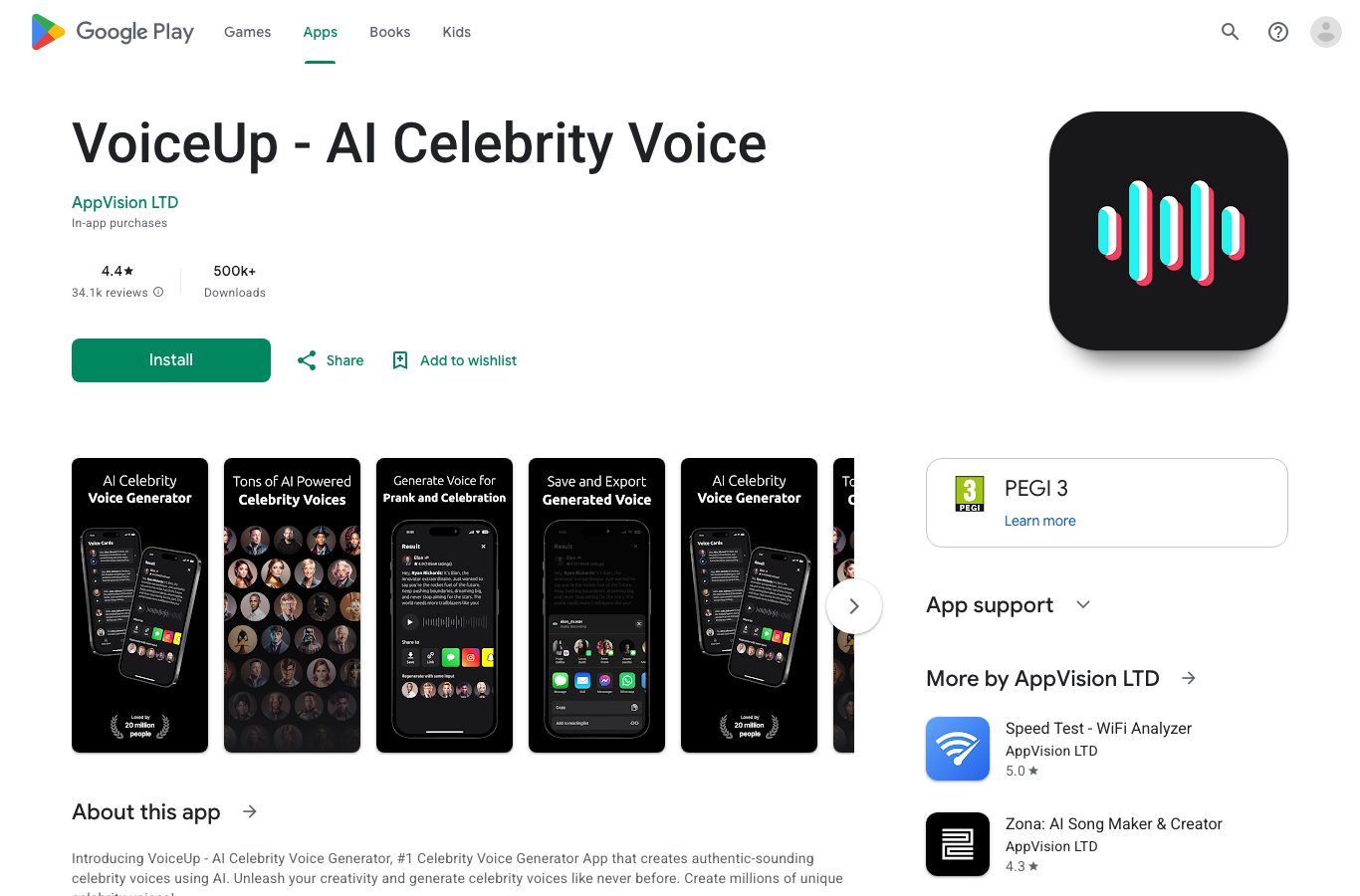
And there is a whole family of mobile apps. VoiceUp sits in fourth position on Google Play: 500K+ downloads, a 4.4-star rating on 34.1K reviews, and “In-app purchases” listed on the store page itself. The celebrity catalog is the selling point, and the subscription is what unlocks it.
What the “free” really gives you: the September 23, 2026 record
We opened every product on the first page and noted what its own interface or its own grid shows for free. Every value below comes from the English pages of the vendors, recorded on September 23, 2026: offers change often, so check before you commit.
| Tool | What the “free” covers | The wall right behind it |
|---|---|---|
| Parrot AI (1st result) | “Free to start” website generator with 100+ voices to try | Its own page admits the website version “is limited in text length” and asks you to sign up “to unlock the full generator”, or to download the app |
| AI Voice Lab (2nd) | Free AI cover and voice-over tool with a catalog of celebrity-named voices | No quota or grid published on the page: the full generator requires a signed-in account |
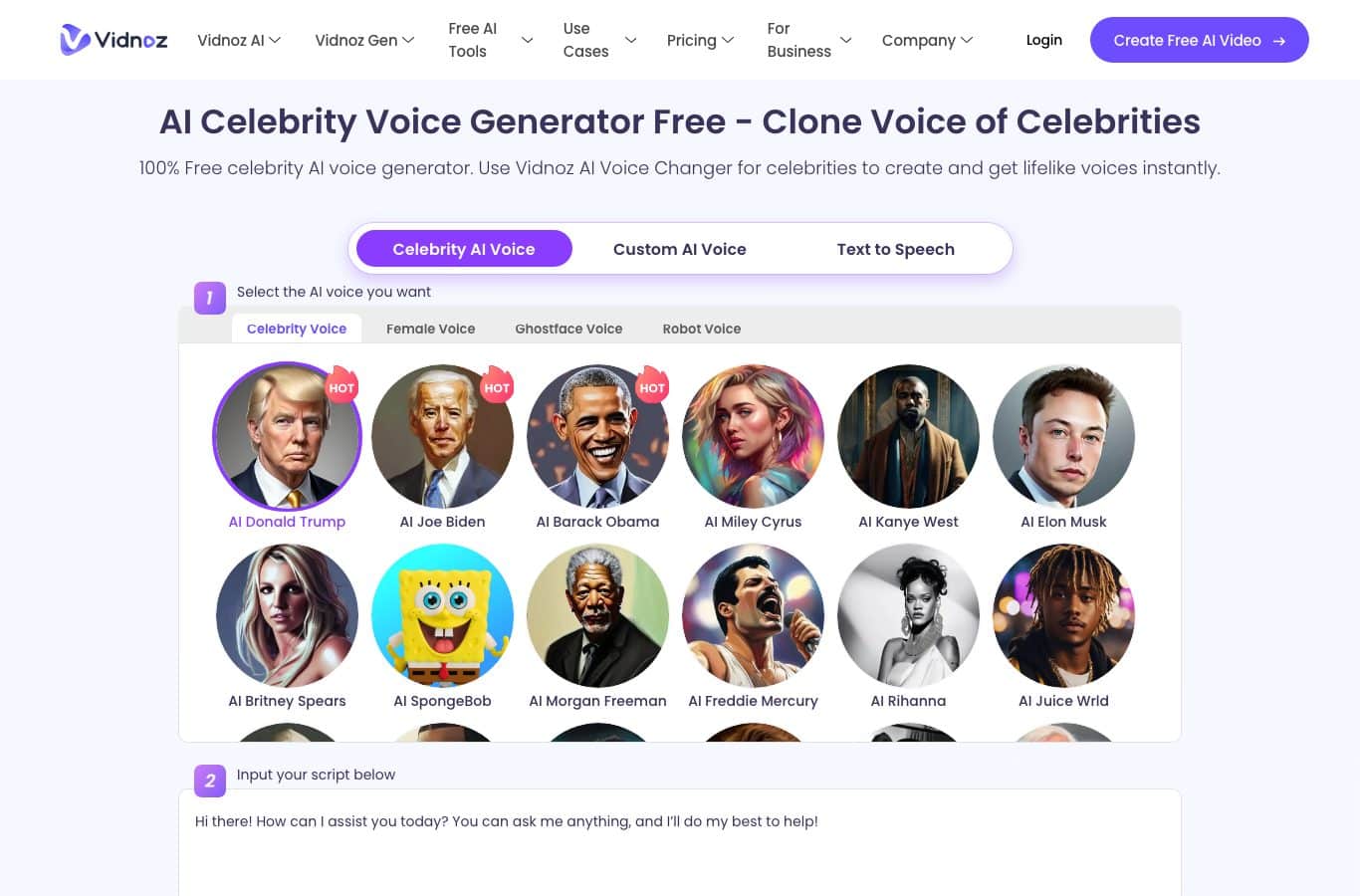
| Vidnoz (3rd) | “100% Free celebrity AI voice generator” with a catalog of voices named after politicians, singers and cartoon characters | The free daily allowance is counted in credits (30 per day for video creation), and voice cloning is a paid feature |
| VoiceUp (4th, Google Play) | Free install: 500K+ downloads, 4.4 stars on 34.1K reviews | “In-app purchases”: the celebrity catalog is the product being sold |
| FineVoice (5th) | “Start for Free” with a celebrity voice library and “Free Credits” | The credits system gates the tool; no free-plan grid published on the page |
| Media.io (6th) | Voice-to-voice conversion into a celebrity voice, free trial advertised | No quota published on the voice page itself |
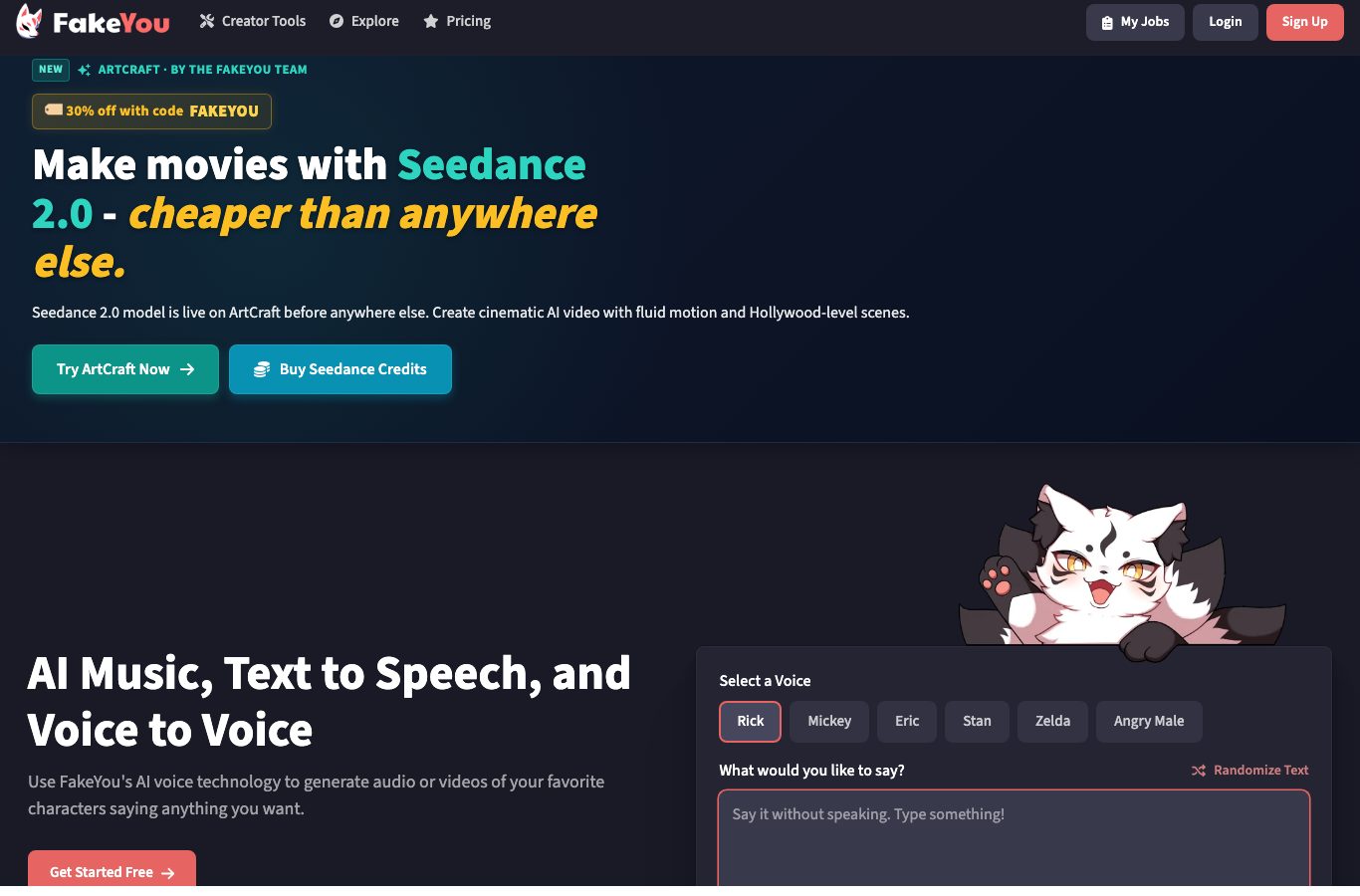
| FakeYou (7th) | “Get Started Free”, and its own pitch says it “allows users to use celebrities such as Bill Gates and Arnold Schwarzenegger to speak their favorite lines for free” | The free tier works with queues and limited lengths; the paid plans shorten the wait |
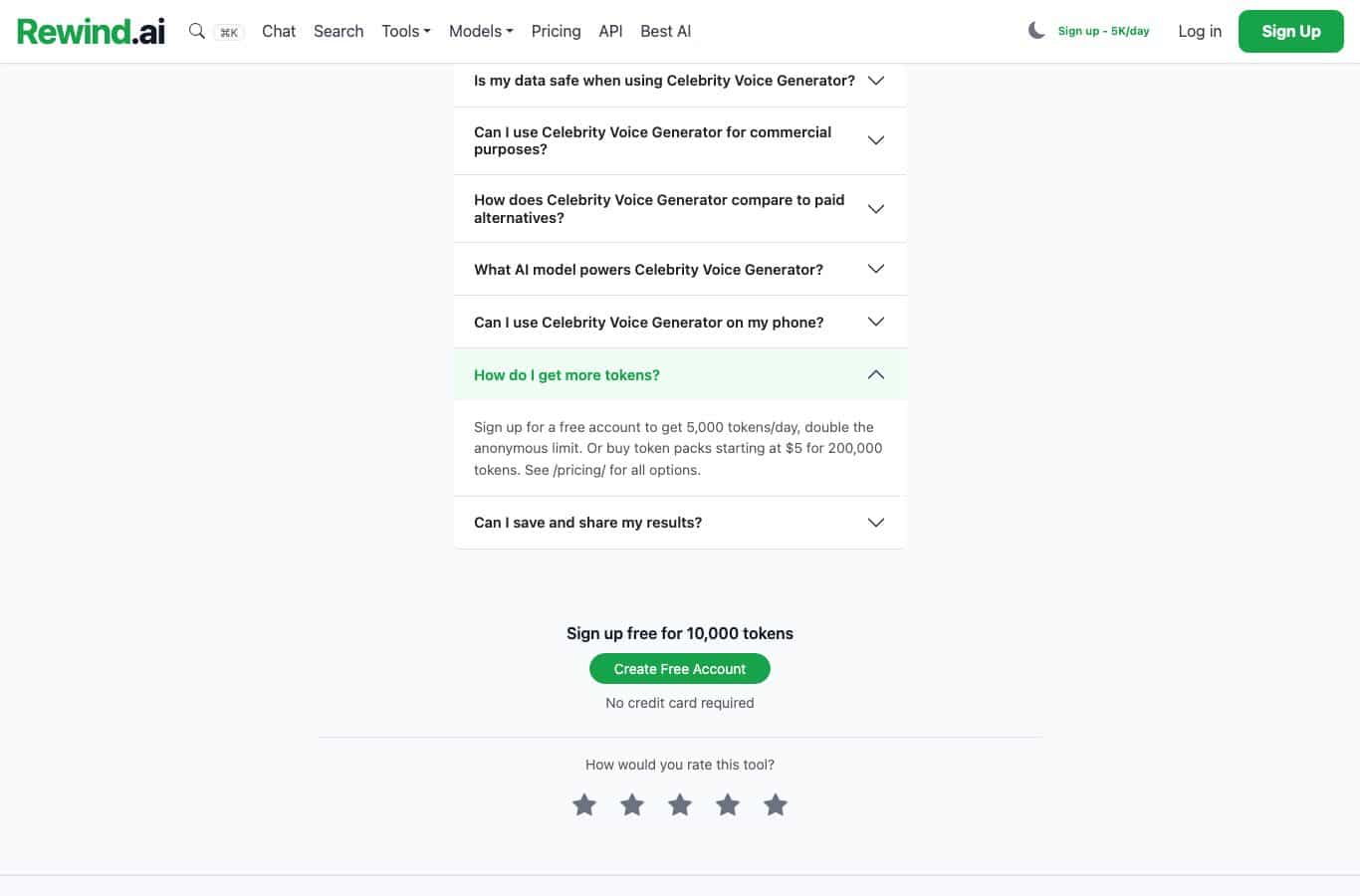
| Rewind.ai (8th) | Anonymous use, then “Sign up for a free account to get 5,000 tokens/day, double the anonymous limit” | “Or buy token packs starting at $5 for 200,000 tokens”: usage is counted in tokens, and commercial use has its own page of rules |

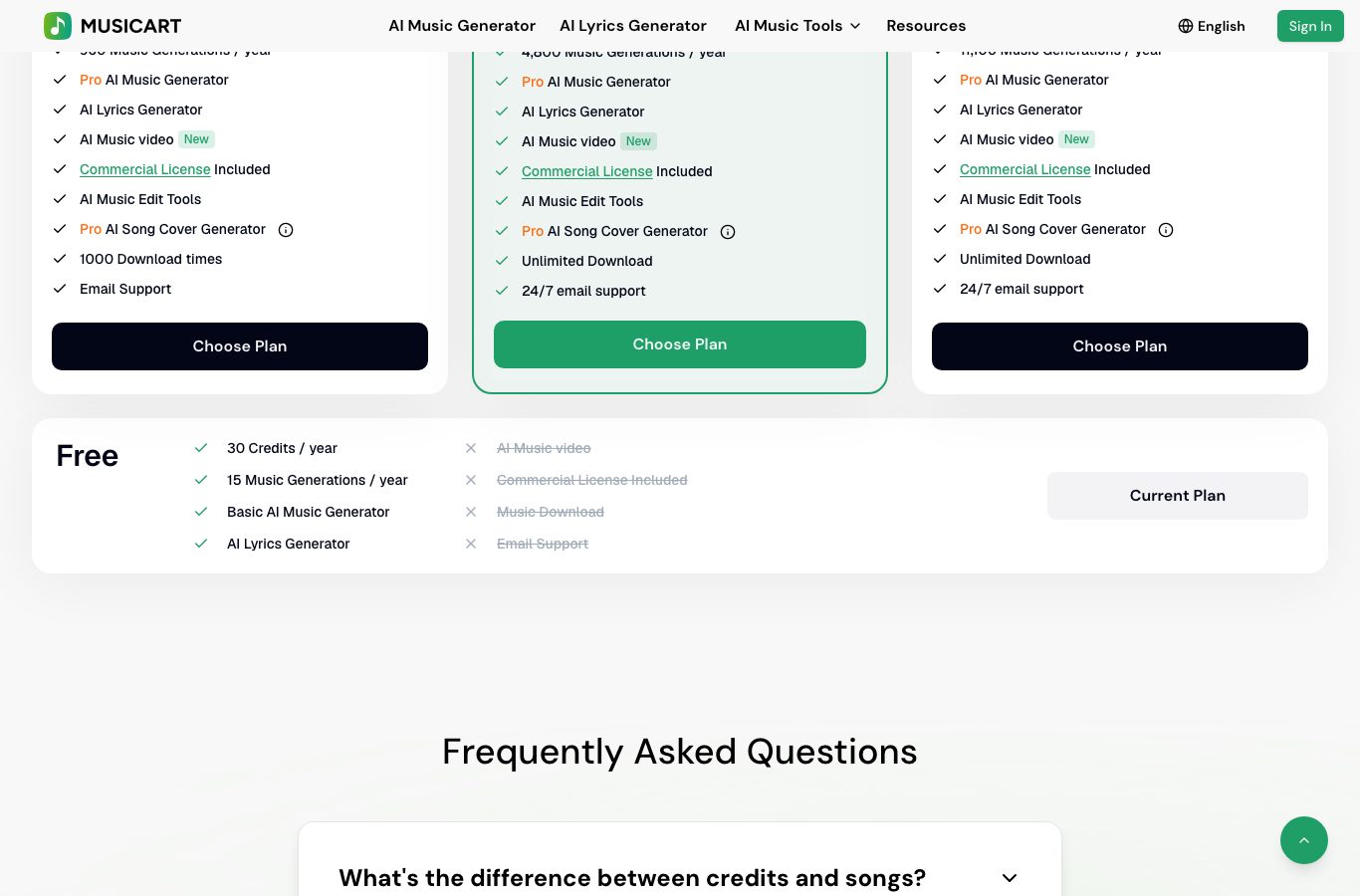
Three lessons come out of this table. First, the free tier is almost always counted in credits, tokens or trials, never in minutes of audio: 30 credits per year on MusicArt, 5,000 tokens per day on Rewind.ai, limited text length on Parrot AI. Second, the celebrity herself is often the paid product: the apps lock the star voices behind a subscription, and the free install only lets you discover it. Third, none of these “free” pages says a word about usage rights on their landing page: you have to dig down to the FAQ or the pricing grid to find the line that matters.
“Completely royalty-free”: the promise, and what the same site’s grid says
The most interesting conflict in this record plays out between a vendor’s sales page and its own pricing page. MusicArt dedicates a whole block of its celebrity voice page to the legal argument: “Every output from our AI voice generator celebrity is completely royalty-free. Use generated voices across YouTube, podcasts, commercials, and streaming platforms without licensing fees.” On its pricing grid, the Free plan shows “30 Credits / year” and “15 Music Generations / year”, and the “Commercial License Included” line is crossed out in that column while it is checked on the paid plans.
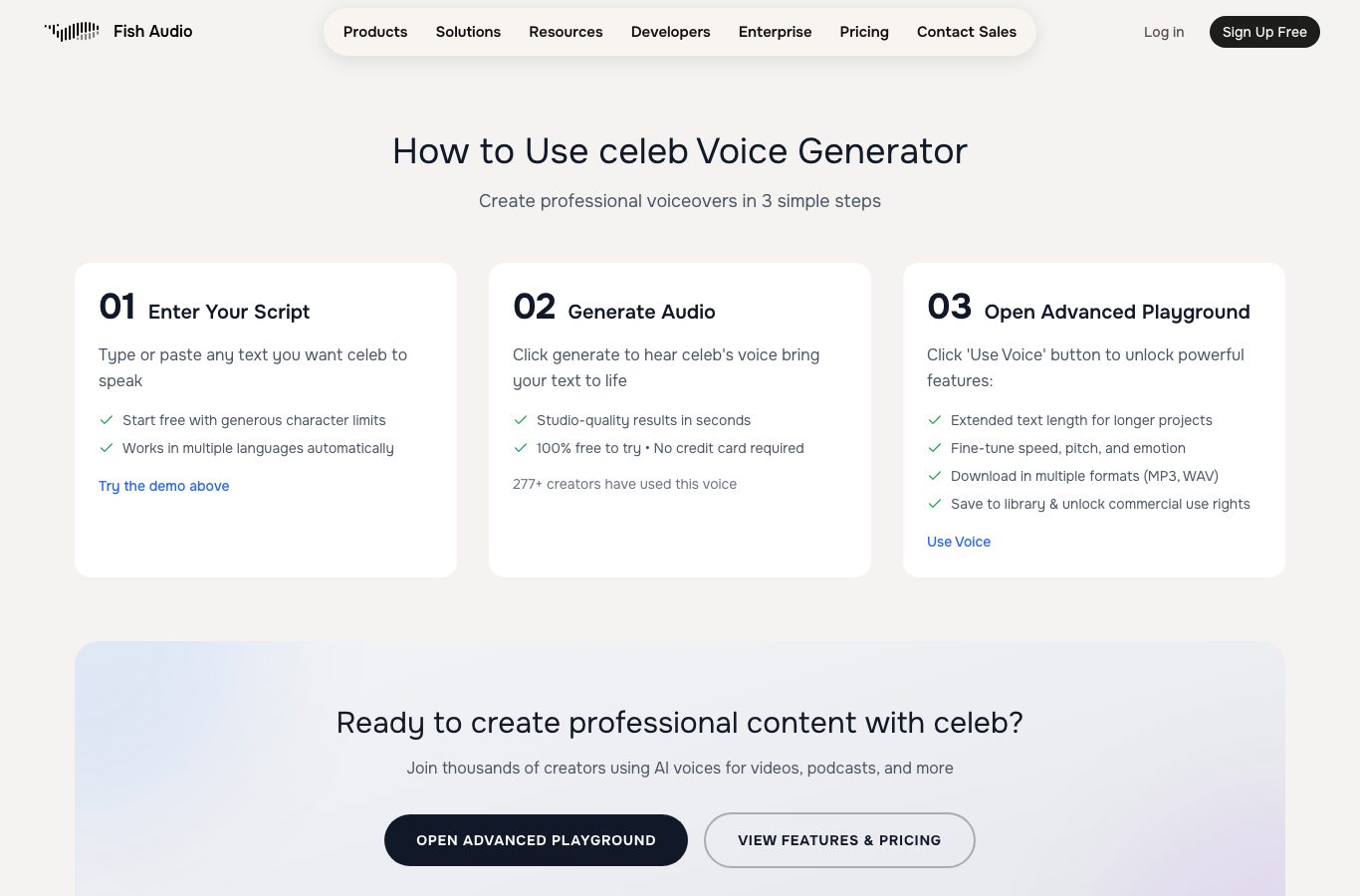
Fish Audio follows the same logic, and writes it out in its own FAQ: to the question “Can I use celeb voice commercially?”, the answer is “Yes, with our paid plans you get full commercial use rights. Free users can use voices for personal projects.” In other words, on this market, the words “free” and “commercial” live in two separate worlds, and the free tier is designed for testing, not for publishing.
The broadest promise is not always yours A “royalty-free” note written on a sales page does not give you the right to imitate anyone you like: it only means the vendor will not charge you a royalty. The imitated person’s right to their own voice exists independently, and that is the one that decides. See the next section.
Celebrity or not: what the law says about the voice
Imitating a real person’s voice is not a matter of style, it is a matter of consent. In the United States the protection is a patchwork that has just gained its most famous piece, and the European framework has applied since August 2, 2026.

The ELVIS Act: a simulated voice is property
Tennessee, home of country music and of graceland-level publicity rights, passed the “Ensuring Likeness, Voice, and Image Security Act of 2024”, the ELVIS Act. Its definition is the sharpest on the market: “‘Voice’ means a sound in a medium that is readily identifiable and attributable to a particular individual, regardless of whether the sound contains the actual voice or a simulation of the voice of the individual”. And the act adds that “Every individual has a property right in the use of that individual’s name, photograph, voice, or likeness in any medium in any manner”, with civil liability extending to the tools and users who enable the imitation. The full text is available on the official Tennessee publications site. Other states protect the same rights through their own publicity-right statutes, so the exact rules move as you cross state lines.
The EU AI Act: label realistic generated content
For content published in the European Union, Article 50 of Regulation (EU) 2024/1689 on artificial intelligence has applied since August 2, 2026: whoever publishes machine-like realistic audio or video generated by AI must mark it in a machine-readable way, and whoever distributes a deepfake must disclose it. That is the second reason to label an AI-generated voice, after consent: the label is not politeness, it is the law.
Presidents in the catalog: the uncomfortable case
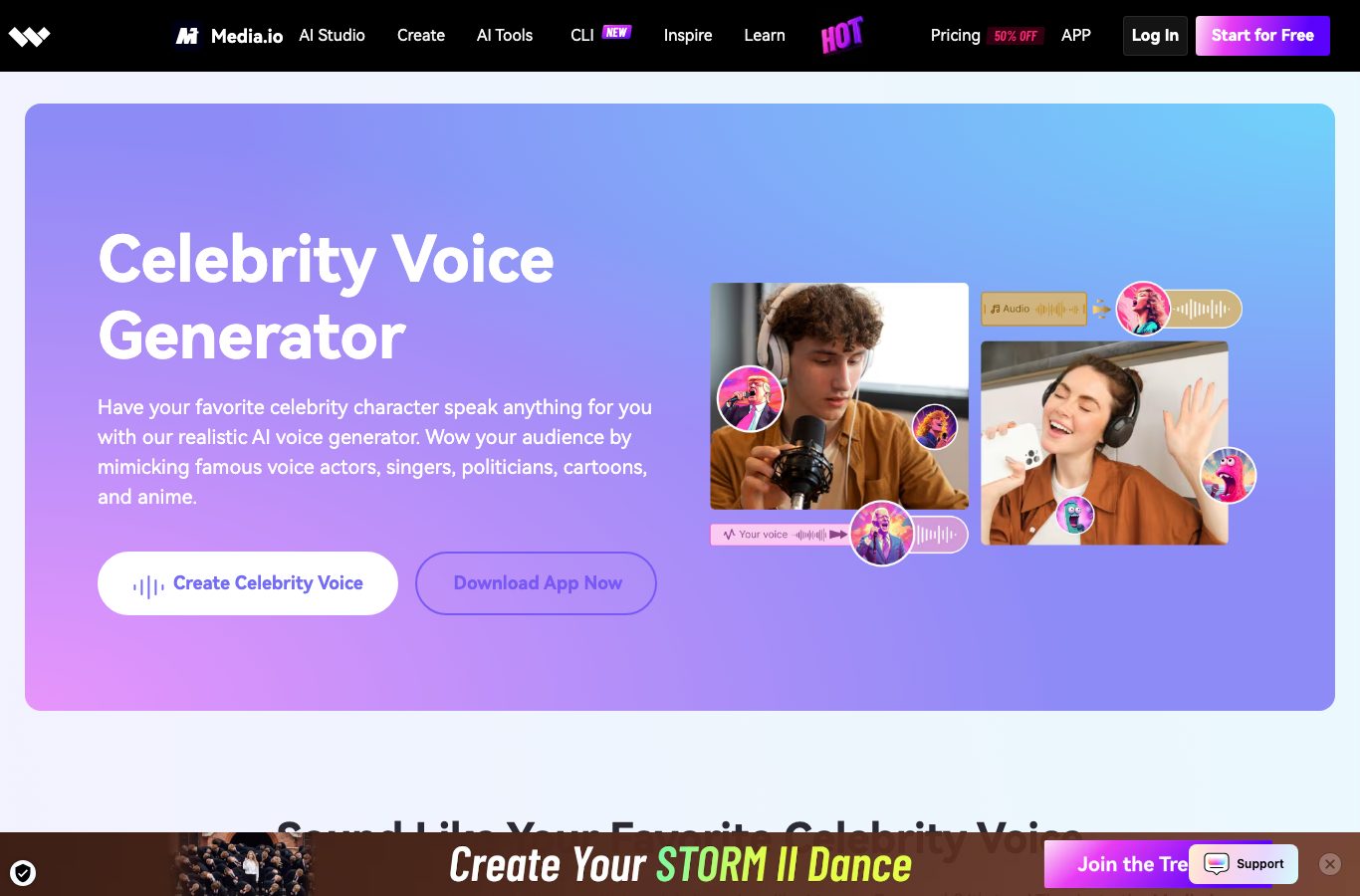
The record shows that imitations of public figures are not a side effect, they are the offer. Parrot AI advertises “celebrity and president voices”, and its voice cards include Donald Trump, Biden and Obama. Vidnoz’s selector lists voices named after presidents and singers side by side, and Media.io promises to mimic “famous voice actors, singers, politicians, cartoons, and anime”. This is exactly the content that fuels fake voice message fraud: our article on the AI voice phone scam explains how these frauds work and why the real threat is documented, beyond the exaggerated rumors.
Faced with this risk, the vendors protect themselves, not you. Voice changer app listings carry warnings describing their voices as parodies with no connection to real people: it is the best summary of the market. The product sells the star imitation, the legal disclaimer denies it, and the responsibility stays with the user.
What stays perfectly legal
Very little is forbidden, far from it. Cloning your own voice with a market tool is legal and common (dubbing, voice-over, accessibility). Making a loved one speak with their voice and their consent is legal too: the law protects every person, famous or not, so your mutual written consent is your best evidence. And generic voices (a deep narrator voice, a character voice) raise no issue at all, as long as they imitate nobody identifiable. The ethical frame for these uses is detailed in our article on ethical and responsible AI.
The legality filter: your case in three questions
The right to one’s voice applies to everyone, not only to stars, and the special cases pile up fast (parody, private content, a child’s voice, advertising). The filter below answers in three questions. It gives you an orientation, not legal advice: for a project beyond the simple cases, a lawyer remains the right address.
The AI voice legality filter
Three questions, one orientation. The texts quoted are those of the ELVIS Act and of the EU regulation cited in this article.
Your orientation
Waiting: answer the three questions, then click Show my orientation.
At least one answer is missing: complete the three questions to get an orientation.
The filter leans on four orientations, whose card it copies on screen. Each one builds on the texts quoted earlier in the article:
Open road: your own voice
You speak with your own voice, altered or not by a tool. No text forbids it, and it is the only case that requires no consent at all. Two precautions keep the habit healthy: if the result is realistic enough to fool someone (your voice placed in a fake message, for instance), the AI-generated disclosure remains the golden rule of the EU AI Act, and if your voice ends up in advertising, the usual rules on testimonials apply like anywhere else.
- Strength: no consent to collect, no legal risk, it is your timbre.
- Honest limit: the “celebrity” tools on this market are tuned to imitate other people, not you; the result in your own voice varies a lot from one service to the next.
- Good habit: test the same script on two tools and keep the one that respects your pacing, not the most spectacular one.
Consented road: the lent voice
The person said yes, and that yes is everything. The law protects every person, not only celebrities: your brother, your grandmother and your neighbor have the same right to their voice as a star. A short written agreement (who, for which script, for which use, until when) turns a family prank into a risk-free project.
- Strength: a written agreement also covers commercial use between friends, if it says so in black and white.
- Honest limit: a spoken yes at the dinner table proves nothing the day the video travels badly; two minutes of writing save hours of arguing later.
- Good habit: keep a “voice generated with the consent of” line in the description of your publication; it makes the consent visible.
Risky road: a public figure’s voice
Even labeled as generated, an exploitable star imitation exposes you. The person holds a right to their voice and likeness, and publishing without consent puts you on contested ground as soon as there is a benefit (views, followers, clients). The platforms make the picture harder still: YouTube and TikTok now require declaring realistic AI-generated content and can take it down.
- Strength: clearly displayed parody and satire, or a commented informative excerpt, hold up better than a believable fake speech.
- Honest limit: none of the “free” tools in this record covers you: on Fish Audio, the free tier says it serves “personal projects”, and the “royalty-free” promise only binds the vendor’s own royalty.
- Good habit: if the project goes beyond the private joke, write to the person’s team before publishing, not after.
Closed road: impersonation
Making people believe a real person is speaking without their consent is precisely what the ELVIS Act treats as an attack on a property right, with civil damages, and what every state fraud statute handles when money or data are the goal. It is exactly the script of fake voice message scams.
- Strength: there is none, and it is the only verdict of this filter with no nuanced version.
- Honest limit: neither an anonymous account nor an app’s disclaimer protects you; the store warning that calls the voices parodies with no connection to real people exists for the vendor, not for you.
- Good habit: if you receive such a message instead of sending one, see our victim walkthrough in the AI voice phone scam article.
The alternative that costs nothing and risks nothing
The truly free segment of this market is not the star voice: it is your script. A credible voice-over depends on three things no cloning tool manufactures: short sentences, simple words, and a rhythm written for the ear. That is where an assistant like Nation AI makes all the difference: it does not speak the voice, it writes the script the voice will read, shortens it, adjusts the tone, and prepares the variants you will test against the free quotas in the table above. For the rest of a voice or video project, the entry point to the site’s free AI tools covers the whole chain.
We applied the same measuring method to the neighboring products: the real free minutes of AI voice generators (converted to the minute of audio, the only unit that makes comparison possible), the real limits of free AI face swap and its legal frame, or the real quotas of free AI meeting minutes. If your project is a voice-over for video, our guide to free AI video editing takes over after the recording.
Frequently asked questions about free AI celebrity voices
Is it legal to make a celebrity’s voice say whatever you want?
No, not without the person’s consent. Tennessee’s ELVIS Act defines a simulated voice as property and gives every individual a property right in its use, with civil liability, and most states protect the same interest through publicity rights. Since August 2, 2026, Article 50 of the EU AI Act additionally requires disclosing a deepfake published in the Union. Clearly displayed parody and commented informative excerpts hold up better, but nothing guarantees immunity: this is general information, not legal advice.
Which celebrity voice generator is actually free?
None of them durably, according to our September 23, 2026 record. Parrot AI’s own page says the website version is limited in text length, Rewind.ai counts tokens (5,000 per day with a free account), MusicArt’s free plan gives 30 credits per year, and the apps lock the celebrity catalog behind a subscription. The most immediate without an account is FakeYou; the most explicit about its free ceiling is Rewind.ai.
Can you publish an AI celebrity voice on YouTube or TikTok?
Technically often, legally rarely. Both platforms ask creators to disclose realistic AI-generated content and remove imitations of real people without consent, and Article 50 of the EU AI Act requires disclosing a deepfake published in the Union since August 2, 2026. An assumed, clearly labeled parody passes better than a credible imitation, and commercial use (monetization, a brand) increases the legal exposure instead of reducing it.
Are celebrity voice apps reliable?
They work, but read the listing before paying. VoiceUp, the fourth result of the query, shows 4.4 stars on 34.1K reviews with 500K+ downloads and in-app purchases right on the store page. The listings of these apps carry warnings describing the voices as parodies with no connection to real people. Subscriptions are frequent, often weekly, and are paid inside the app.
Do you have to disclose that a voice was AI-generated?
As soon as the content credibly imitates a real person, yes, on two grounds. In the European Union, Article 50 of the AI Act has required disclosing the artificial origin of a deepfake since August 2, 2026, and in the United States, publishing a simulation without consent exposes you to publicity-rights claims under laws like the ELVIS Act. A visible label in the video and in the description covers both.
How do you clone a voice completely legally?
Two simple cases: clone your own voice, which requires nobody’s consent, or clone a loved one’s voice with their written consent, stating the intended use. Every tool on the market offers that consented cloning, often paid, and all that is left is adding the AI-generated label if the result is realistic. Cloning the voice of a person who never said yes, famous or not, has no legal version.
What happens if you impersonate someone’s voice to scam people?
The consequences stack up. The impersonation itself attacks a property right protected by laws like the ELVIS Act, with civil damages, and obtaining money through deception is plain fraud under federal and state criminal statutes. If you are on the victim’s side, our AI voice phone scam article details the procedure: contacting your bank, reporting to the FTC or the FBI’s IC3, and forwarding suspicious texts.
Can you clone a child’s voice?
A minor cannot consent: the agreement of the parents or legal guardians is required, and written consent is better for any use that leaves the family circle. Imitations of known child voices (cartoon actors, for instance) raise the professional’s own voice rights as well, since the performer remains a real person with a contract.
What to remember
The search “ai celebrity voice generator free” leads to nine pages all selling the same dream, and the September 23, 2026 record shows what sits behind it: a trial counted in credits or tokens, a star catalog locked behind a subscription, and usage rights that stop exactly where the paid line begins. The free tier exists, but it is built for testing, not for producing.
And the real wall is not the price tag. A real person’s voice belongs to them, Tennessee now treats its simulation as property, and the European Union requires labeling realistic AI-generated content since August 2026. Between those lines remains a huge, risk-free space: your own voice, your loved ones’ voices with their consent, and better scripts. That is exactly what Nation AI can prepare with you before you open any generator.
Sources. Product pages, pricing pages, FAQs and store listings of the vendors cited (Parrot AI, AI Voice Lab, Vidnoz, VoiceUp, FineVoice, Media.io, FakeYou, Rewind.ai, MusicArt, Fish Audio), English versions, recorded on September 23, 2026. Ensuring Likeness, Voice, and Image Security Act of 2024 (ELVIS Act), Public Chapter 588, Tennessee. Regulation (EU) 2024/1689, Articles 50 and 113, consolidated version on EUR-Lex. Search result positions recorded on September 23, 2026 on Google.