
- Injury suits: two years in general in California, three in New York (sections 335.1 and 214).
- The California DMV wants its SR-1 form within 10 days of an injury or damage beyond $1,000.
- “Be wary of any lawyer who guarantees results,” the State Bar of California says.
A Sacramento rideshare driver is stopped at a red light when another car rams theirs; the neck hurts, and the other driver’s insurer sends a low offer. Before the first call with a lawyer, the clock is as urgent as the questions.
The Deadlines That Start Before the Call
In California, a crash with an injury or a death must reach the Highway Patrol, or the city police, in writing within 24 hours (Vehicle Code 20008).
| What | Deadline | Source |
|---|---|---|
| Written report, injury or death (California) | 24 hours | Vehicle Code 20008 |
| SR-1 to the DMV, injury or damage beyond $1,000 (California) | 10 days | California DMV |
| Lawsuit for an injury (California) | 2 years | Section 335.1, Code of Civil Procedure |
| Lawsuit for an injury (New York) | 3 years | Section 214, CPLR |
Questions for a Car Accident Lawyer on the First Call
Official guides agree on a short list.
- “What is your experience with my kind of case?”
- “Who will do most of the work on the case? Will it be you, other lawyers in the firm, or paralegals?”
- “What are the fees for each person who will work on my case?”
- “How long could it take to resolve my issue or case?”
- Ask whether the lawyer will handle the case personally; if a colleague takes part, try to talk to that lawyer too.
- Afterward, the State Bar’s self-check: “Does the fee seem reasonable?” A no means “you probably should talk to another lawyer.”
“The first consultation with a lawyer is often free,” the FTC says; ask before the meeting whether the time is billed. Our questions to ask a divorce lawyer follow the same method.
The Fee, and What to See in Writing
On a contingency case, you pay “a percentage of the money you get if you win your case,” plus expenses like depositions, expert witnesses and filing fees, the FTC explains. If no money comes in, there is no fee, but the expenses can be yours.
The American Bar Association’s model rule asks for a written, signed agreement stating the percentages for settlement, trial or appeal, the expenses deducted from the recovery, and what you owe win or lose.
In California, section 6147 of the Business and Professions Code requires a duplicate of the contract, signed by both of you. It must state the fee rate, how costs affect your recovery, and that the fee “is not set by law but is negotiable.” Miss one and the agreement is voidable, the lawyer keeping only a reasonable fee.
The fee may be negotiable, the FTC adds: lower if the case settles quickly, higher at trial. No official page fixes a typical figure; ask the lawyer to run the math.
The List Gabriel Drafted for the Call
Our rideshare driver, Lena Voss (the other motorist) and the crash are all fictional; Gabriel prepared the list below from the message he received.
The list Gabriel drafted
Liability and the offer
Based on the police report and what I’ve told you, how strong is the evidence that the other driver was at fault?
What might a fair settlement range look like, and what facts could raise or lower it?
What does the insurer’s offer cover, and what claims or rights would I give up if I accept it?
Should I respond to the offer now, or wait until my treatment and prognosis are clearer?
Could I still seek compensation if my symptoms continue or more treatment is needed?
Injury, bills, and other losses
How should we document my neck injury, ongoing symptoms, treatment, and any effect on my daily activities?
Besides the $4,860 in medical bills and car repairs, what other losses might be part of my claim, for example, future care or rideshare income I’ve lost?
Do I need to repay any health insurer, medical provider, or other party from a settlement? How would that affect what I actually receive?
What additional records would help establish my injuries, expenses, and lost income?
Rideshare and insurance
Does my rideshare status affect which insurance policies may apply or how my claim should be handled?
Does it matter whether I was logged into the app, waiting for a ride, matched with a passenger, or carrying a passenger when the crash happened?
Should we notify the rideshare company or my own insurer, and could doing so affect coverage?
Can you check the available policy limits and whether there may be other applicable coverage?
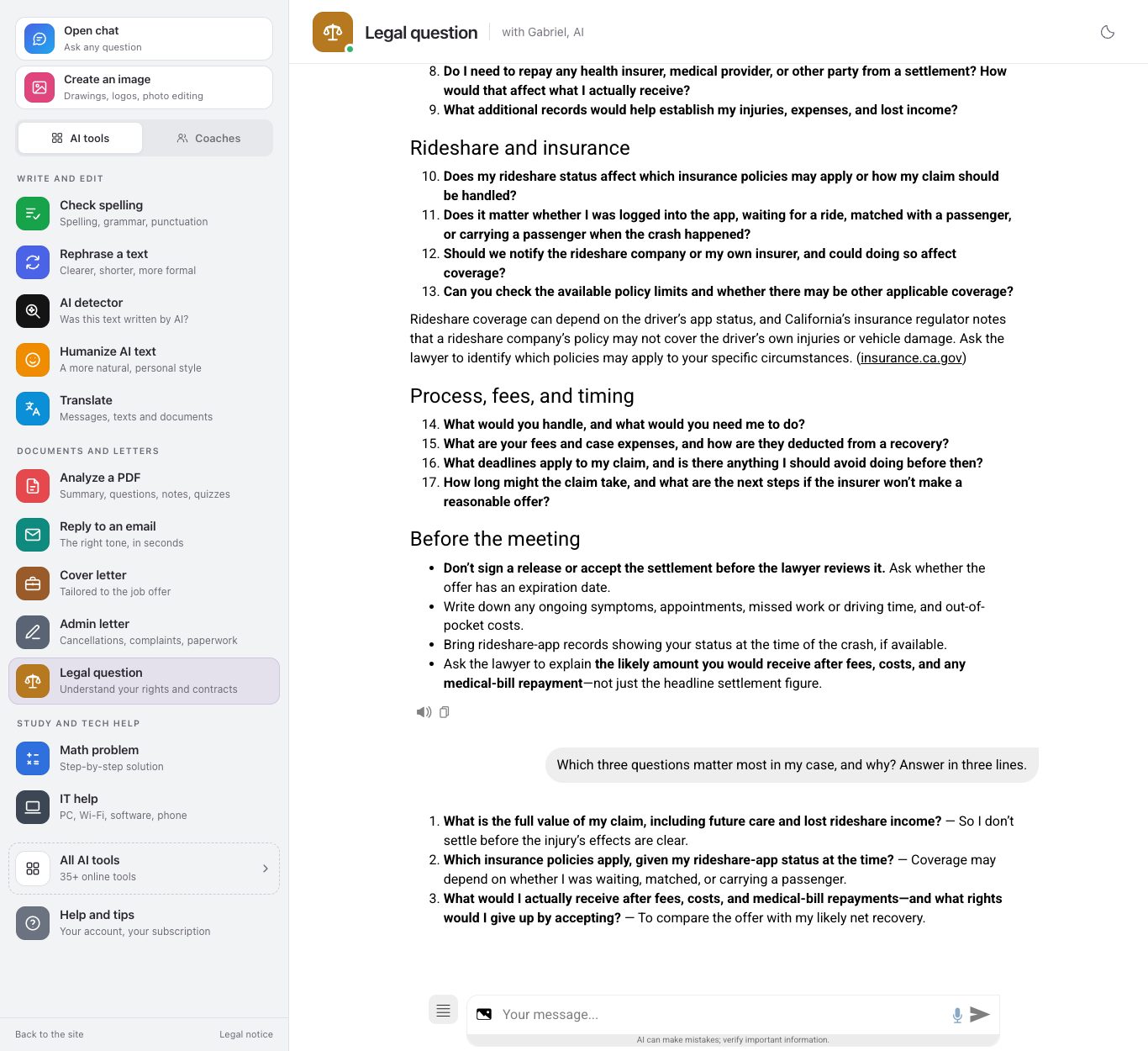
Example conversation
Which three questions matter most in my case, and why? Answer in three lines.
“What is the full value of my claim, including future care and lost rideshare income? So I don’t settle before the injury’s effects are clear.”
“Which insurance policies apply, given my rideshare-app status at the time? Coverage may depend on whether I was waiting, matched, or carrying a passenger.”
“What would I actually receive after fees, costs, and medical-bill repayments, and what rights would I give up by accepting? To compare the offer with my likely net recovery.”
What Not to Sign, and What to Bring
The California Department of Insurance says to save your account of the crash for the police and your insurer. Never sign statements about fault or a promise to pay the other driver’s damages; if they offer to pay your deductible, sign nothing.
To fill the SR-1, the DMV asks for your license or ID, plate number or VIN, insurance details, and the other party’s vehicle and insurance information. For the meeting, the State Bar suggests key points in writing, contact details for everyone involved, and all the case papers.
The CHP report can be requested online through the Crash Portal by a party of interest, or by mail with its CHP 190 form. If your claim runs on medical payments coverage or uninsured motorist coverage, the Department of Insurance guide says to document the loss: injuries, medical expenses, lost wages. Our demand letter template takes you through that step.
Gabriel’s warning
Gabriel is not a lawyer and does not replace one. He never presents a rule he cannot check; the crash rules here come from official sources. He flags the deadlines, documents and evidence that matter in what you give him.
Gabriel
AI legal assistant
“Send me your situation and papers, and I return a question list for the call, urgent items on top. I also read offer letters with you and watch the dates.”
Take the list to the call
Gabriel, our AI legal assistant, turns your facts into questions for the lawyer and a summary to send ahead. Free to try, no sign-up.
Frequently Asked Questions
Is the first consultation with a car accident lawyer free?
Often, yes; ask before you go whether the time is billed.
How big is the percentage a car accident lawyer takes?
No official source sets a typical figure. “There is no standard amount or percentage for a lawyer’s contingency fee,” the FTC says; most states keep it to a “reasonable” share of the recovery.
How long does an injured driver have to sue?
It depends on the state and the claim. Two years in general in California, three in New York; a lawyer can say which limit fits your case.
Sources
- Hiring a Lawyer, FTC, September 2023.
- Before Selecting an Attorney, State Bar of California.
- Rule 1.5 (fees), American Bar Association.
- Section 6147, Business and Professions Code.
- Section 335.1, Code of Civil Procedure.
- Section 16000, Vehicle Code.
- Section 20008, Vehicle Code.
- Section 214, CPLR (New York).
- The DMV SR-1 report, California DMV.
- Request a Crash Report, California Highway Patrol.
- So You’ve Had an Accident, What’s Next?, California Department of Insurance.
One more paper to sort? Ask Alex
Alex, the generalist assistant, helps with the rest: sorting your papers, a letter, a deadline.