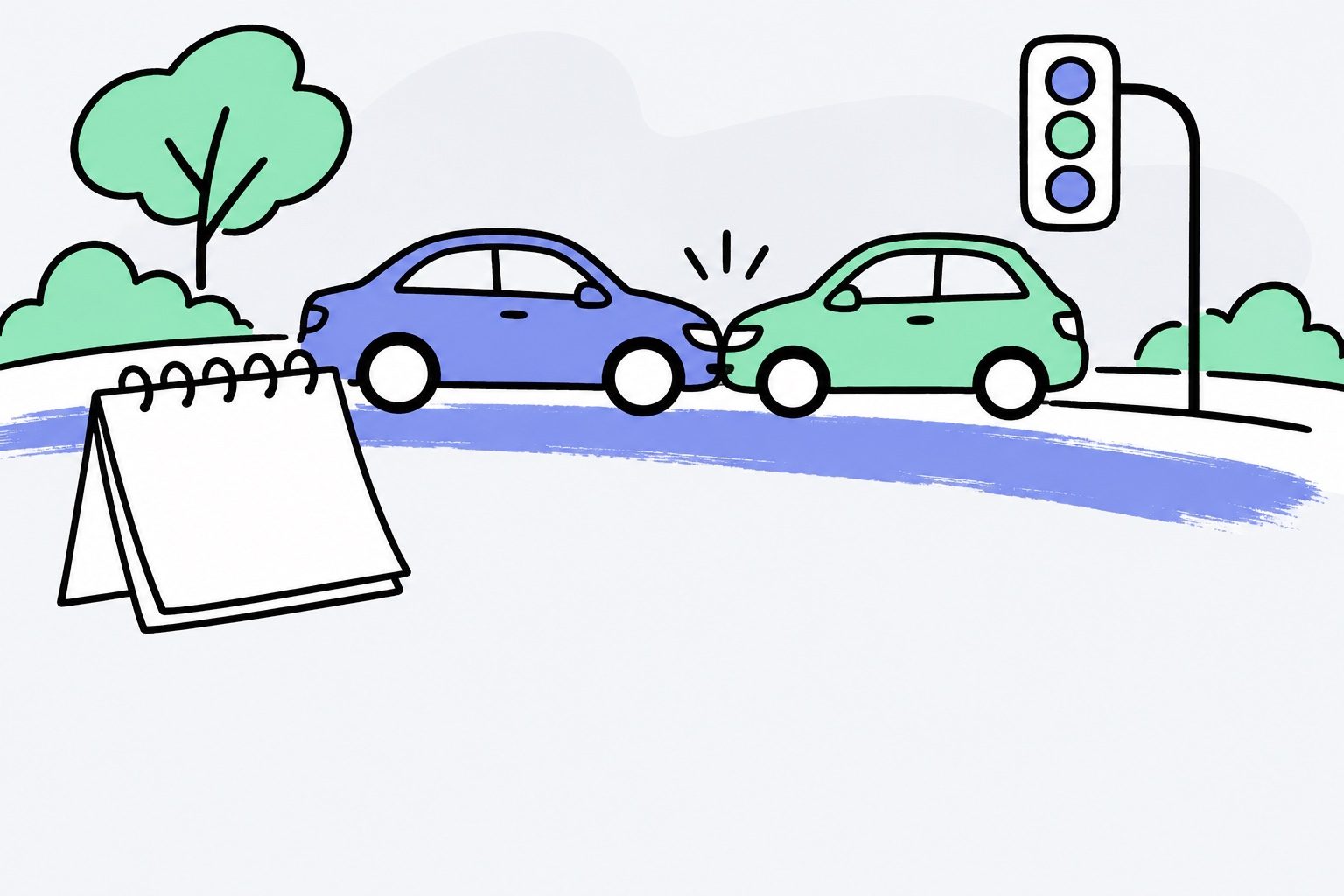
- Copyrights, trademarks, and patents are the classic grounds (Cornell LII; NYS courts).
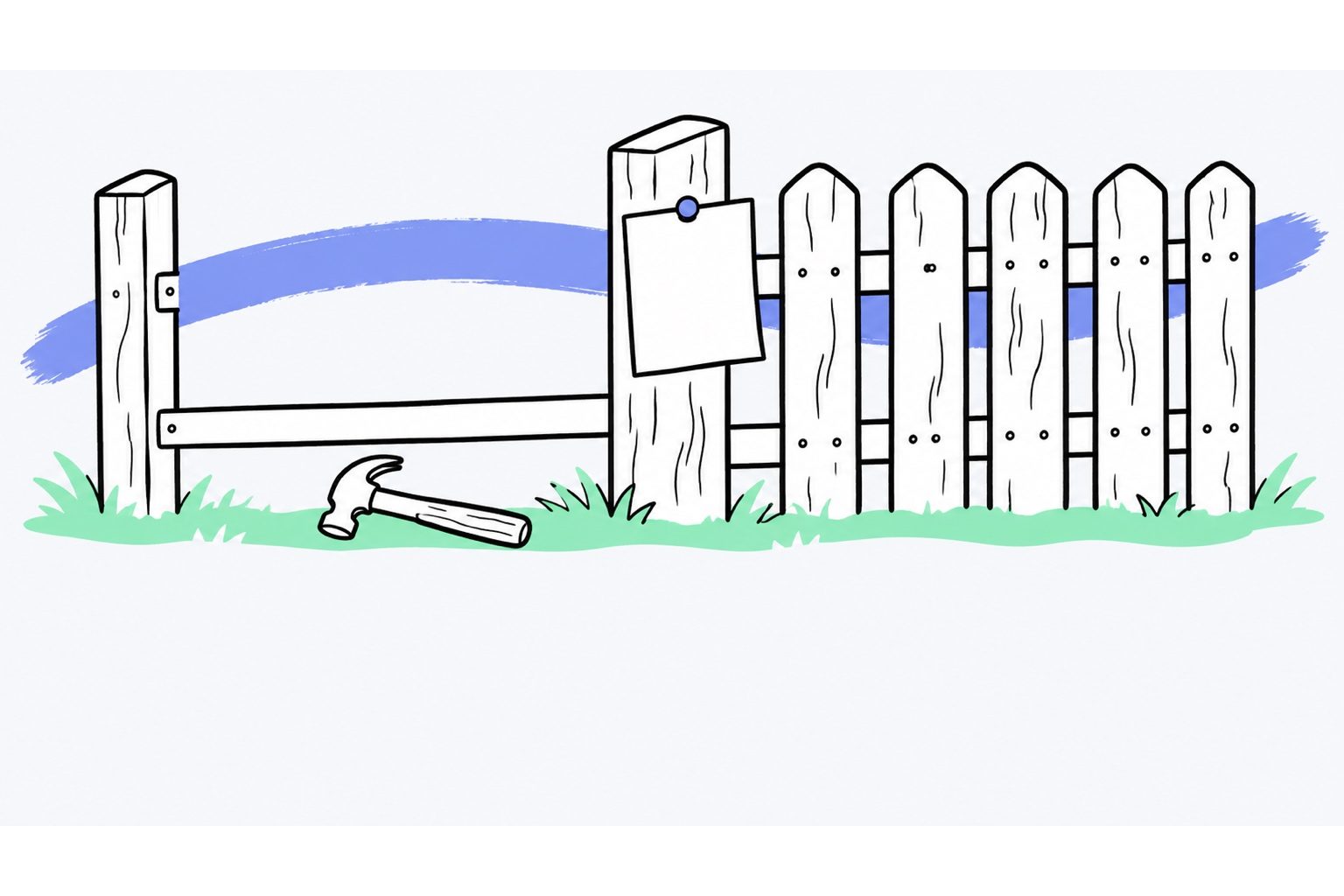
- One written request, and a debt collector has to stop contacting you; the debt itself survives (CFPB; section 1692c(c)).
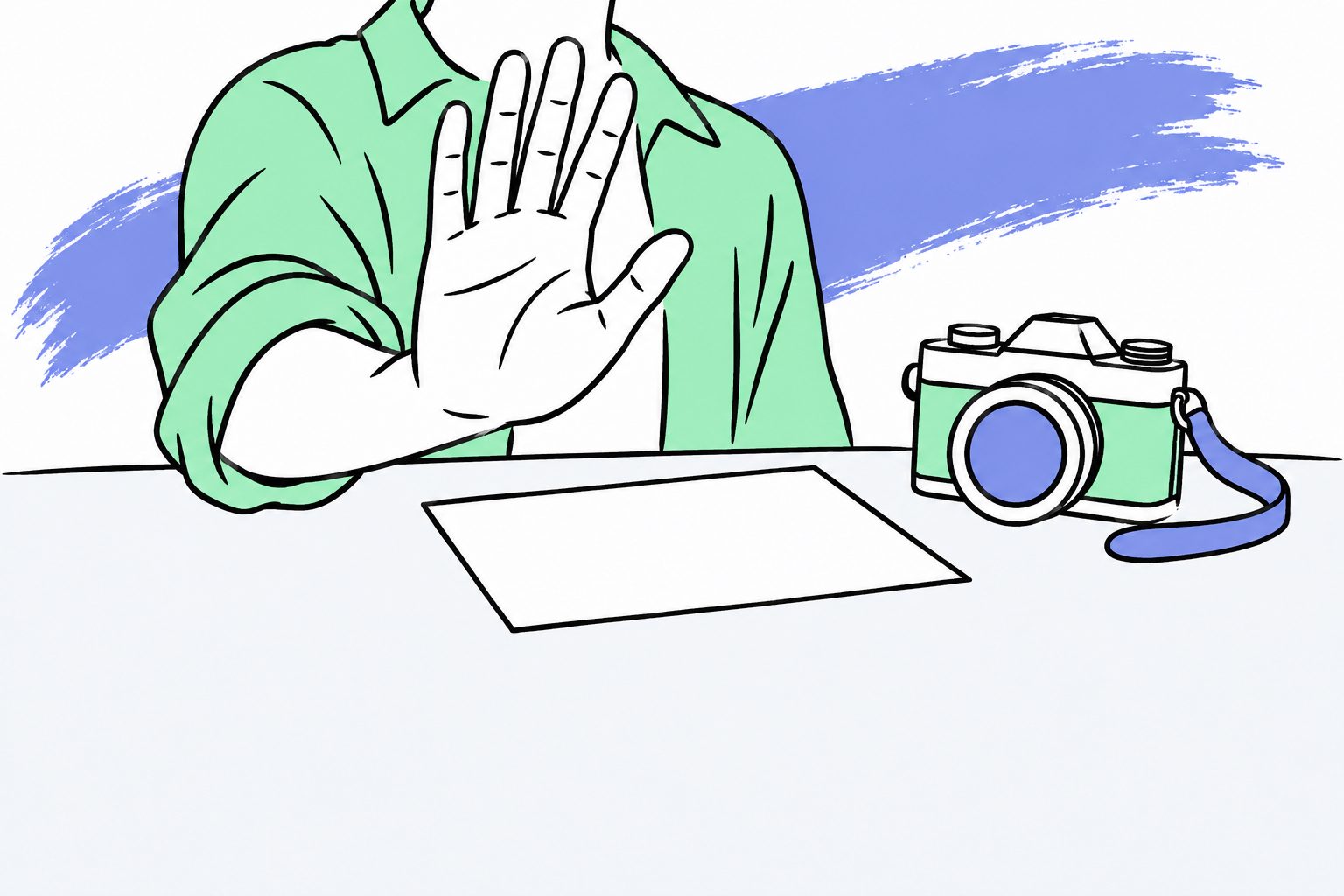
- A letter in your mailbox is not yet a lawsuit; real cases start with a complaint and a summons (USPTO).
A freelance photographer finds three of her own photos on a local café’s site, posted without her permission. A letter can tell the café to stop; no judge has ordered anything yet.
A Cease and Desist Letter in Plain Words
Cornell University’s Wex legal dictionary, a university reference, describes a message “sent to a person or entity describing their alleged misconduct and demanding that the specified conduct stop.” The law librarians of the New York courts, quoting Black’s Law Dictionary, keep the older label: “a cautionary notice sent to an alleged wrongdoer” that demands the offending activity stop.
Cornell points out that such a letter “is different from a cease and desist order,” and calls it “a non-binding cautionary letter” without legal effect of its own. It also targets harassment, slander, libel, or a broken contract. In trademark disputes, the USPTO adds a second name, the demand letter.
Three Situations, Three Official Answers
| Situation | What the official page says |
|---|---|
| Intellectual property | Sent over an alleged or actual infringement of copyrights, trademarks, or patents (USPTO; NYS courts; Cornell LII). |
| Debt collection | Once your written request asks the collector to stop, further contact has to end; the debt stays due (CFPB; section 1692c(c)). |
| Harassment | California’s courts can grant a civil harassment restraining order against someone who harassed, threatened, stalked, or harmed you, including online; in immediate danger, call 911. |
The Photographer’s Letter, Drafted by Gabriel
Everyone here is fictional: the photographer, Bramble Hill Café in Madison, and the story around them. Gabriel, Nation AI’s legal AI assistant, drafted the letter below from her facts.
The letter Gabriel drafted
Subject: Demand to Remove and License Unauthorized Use of Photographs
[Date]
Via email and [certified mail, if desired]
Bramble Hill Café
[Address or email]
Dear Bramble Hill Café,
I am a freelance photographer and the creator and copyright owner of three photographs I took at a spring market on March 12, 2026. On August 4, 2026, I discovered that the photographs were being displayed on your website.
I did not grant you a license or otherwise authorize this use. I have retained the original image files, dated screenshots showing the photographs on your website, and emails relevant to the absence of permission.
I request that you:
Remove the three photographs from your website and any other channels you control within 10 calendar days of receiving this letter; and
Pay $1,200 for the use to date, which is the licensing fee I estimate would ordinarily apply to this use.
Please also confirm in writing by that date that the photographs have been removed and tell me whether they were used elsewhere, including on social media, in advertising, or by a web designer or other third party acting for you. Please preserve records relating to the use, including any copies of the photographs, communications, and information about where and when they were displayed.
This request is an attempt to resolve the matter directly. It does not grant permission for continued use, and I reserve my rights. If you believe you had authorization, please send me the basis for that belief and any supporting documentation.
Please respond to [your email or mailing address]. I am willing to discuss a practical resolution.
Sincerely,
[Your name]
[Business name, if applicable]
[Email]
[Phone]
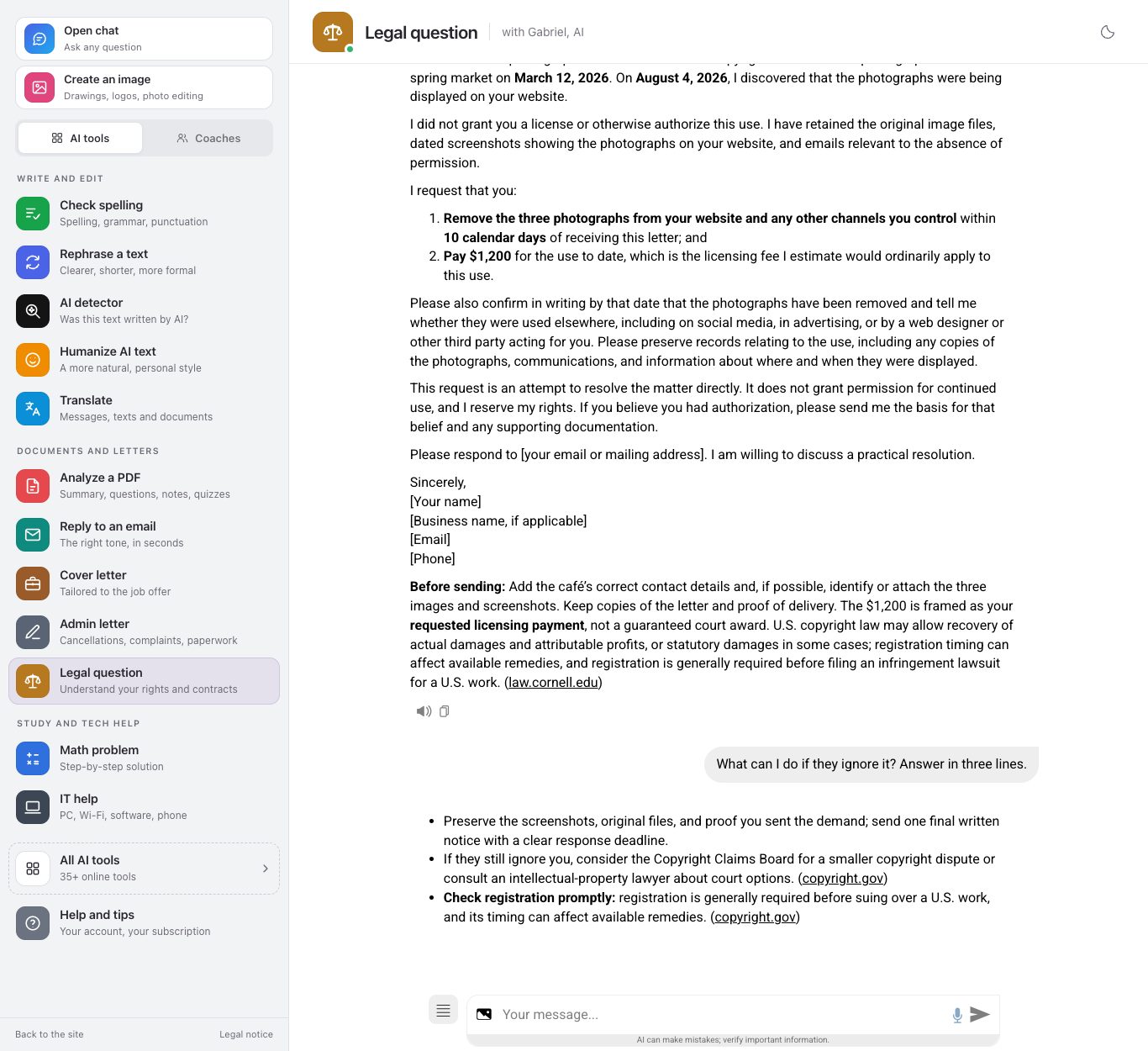
The next step, in Gabriel’s words
What can I do if they ignore it? Answer in three lines.
“Preserve the screenshots, original files, and proof you sent the demand; send one final written notice with a clear response deadline.”
No official page read for this article lists what such a letter has to contain; treat the draft as a starting point.
What to Do When One Arrives
The USPTO lays out the moves for a trademark letter; most fit any kind.
-
Take it seriously
Treat “any such letter/email seriously”: receiving one, “without more, does not mean that you have been sued.”
-
Weigh the sender’s aim
Some letters go out hoping, as the office puts it, to mislead or intimidate you into stopping or paying when you need not. Check the claim first.
-
Choose your answer
Your options: deny the infringement, or ask for proof; stay silent; offer a license or another deal; or sue first for a ruling. Silence is allowed, but “doing nothing carries some risk”: found liable later, you may be treated as reckless, with extra damages.
-
Know what escalation looks like
A federal suit arrives with two documents, “a complaint and a summons,” served on you; a letter brings neither. At any step, the office recommends a lawyer versed in trademark disputes.
Gabriel’s warning: what he will not do
Gabriel works only from the facts you hand him: he reads a letter with you, drafts replies and formal notices. He never invents a statute, a date, or a case. He is not a lawyer and does not replace one: when the money at stake, a running procedure, or a deadline turns serious, he sends you to a qualified professional. The same commitments sit on his coach profile.
Gabriel
AI legal assistant
“Bring me the letter you received, or the one you want to send: I read it with you, draft the answer from your facts alone, and watch the dates. When a file grows serious, I am the first step, not the lawyer you may need next.”
Turn your facts into a letter
Tell Gabriel what is happening, and this legal AI drafts a first version, never inventing a rule. Our legal AI page explains his method; the trial is free, with no sign-up, and a few messages are included.
Frequently Asked Questions
A cease and desist letter arrived: is it binding?
No. Cornell’s Wex dictionary calls it “a non-binding cautionary letter,” with no legal effect of its own. California State University, Long Beach’s resource center agrees: it cannot force anyone.
Can I send a cease and desist letter myself?
Nothing makes a lawyer mandatory. Cornell calls hiring one the usual practice, and the Long Beach center adds that drafting one “does not mandate legal expertise.”
The collector kept calling after my letter: now what?
Stay factual. After your written request, the CFPB says the collector may contact you only to announce there will be no further contact, or to advise of actions it is legally allowed to take, such as filing a lawsuit.
Sources
- CFPB, “How do I get a debt collector to stop calling or contacting me?”, reviewed May 14, 2024.
- Section 1692c(c) of the U.S. Code, Government Publishing Office, 2024 edition.
- USPTO, “I Received a Letter/Email”, trademark help pages.
- California Courts, civil harassment restraining orders, self-help guide.
- New York courts, “Ask a Law Librarian”, on the phrase’s meaning.
Something else to write or send?
Alex, Nation AI’s generalist assistant, takes the rest: emails, rewrites, everyday questions.