

- Bulbs go in the ground in October and November, and mid-December is still possible while the soil can be worked.
- The package gives the depth; the general rule is a hole about three times as deep as the bulb is wide, pointed side up.
- Backyard burning is banned around Portland, hardship permit aside; the leaves go into the green bin or onto the compost.
- On heavy clay, spread compost on top instead of digging it in, and plant on a raised bed or berm where water pools.
A late-October Saturday: boots heavy with sticky clay, an empty bed, a tired hedge by the fence line, and a pile of leaves waiting. The chat opens: “Hello Julien, where do I start?” In one Saturday, you will know what to plant and how deep, which shrubs and where, and what to do with the leaves instead of burning them.
Where to start when the clay sticks to your boots
In front of you, roughly 430 square feet of ground facing west, soil that clings to the tools, and the wish for flowers in spring.
With Julien
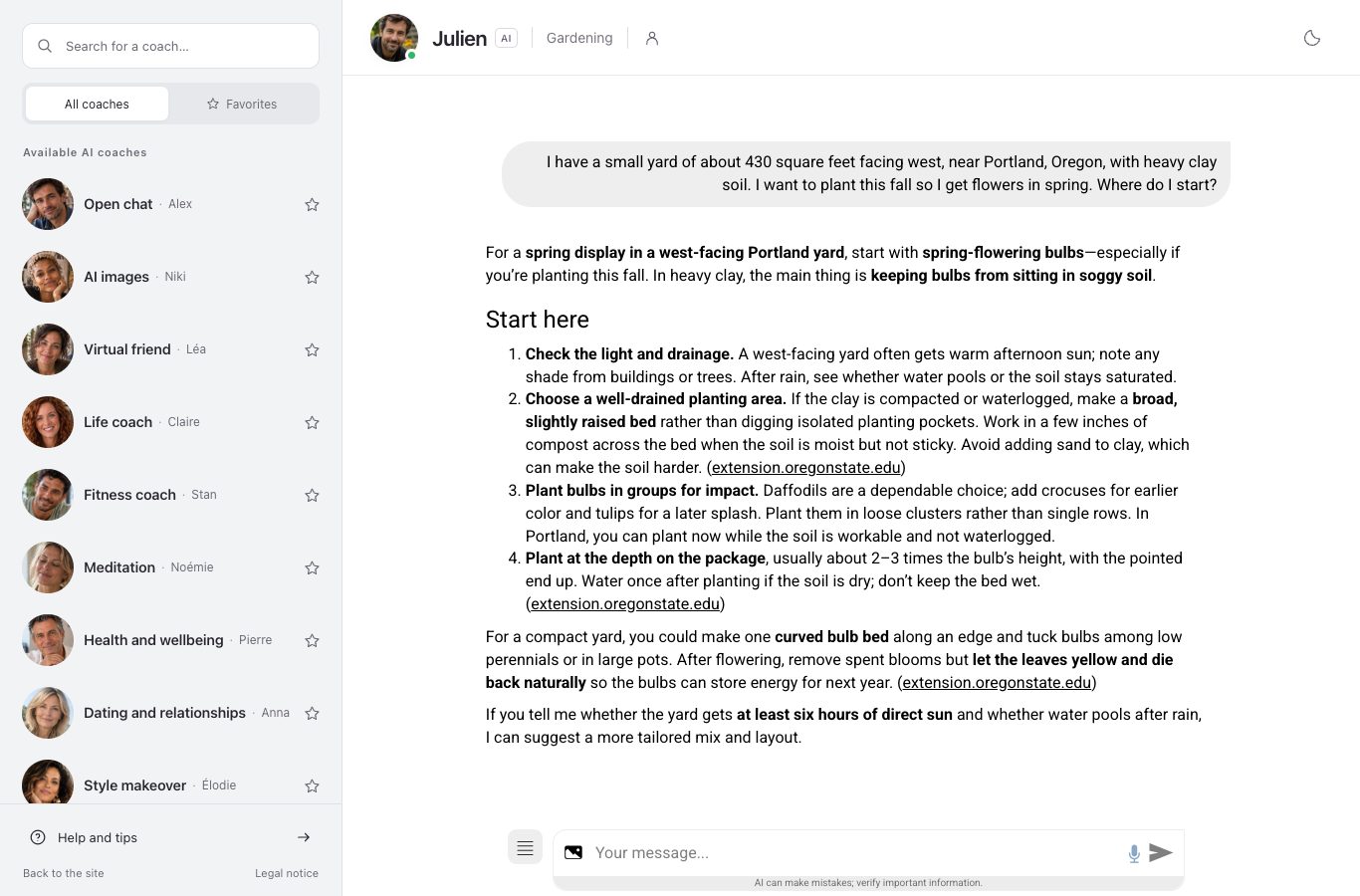
My yard is close to 430 square feet, west-facing, near Portland in Oregon, and the soil is heavy clay. I would love flowers come spring. Where should I begin?
“For a spring display in a west-facing Portland yard, start with spring-flowering bulbs, especially if you’re planting this fall. In heavy clay, the main thing is keeping bulbs from sitting in soggy soil.”
“Check the light and drainage. A west-facing yard often gets warm afternoon sun; note any shade from buildings or trees. After rain, see whether water pools or the soil stays saturated.”
“Choose a well-drained planting area. If the clay is compacted or waterlogged, make a broad, slightly raised bed rather than digging isolated planting pockets. Avoid adding sand to clay, which can make the soil harder.”
-
Pick the moment
October and November are the ideal planting months across most of Western Oregon, and bulbs can still go in by mid-December while the soil remains workable.
-
Bury them at the right depth
The package gives the depth; the general rule is a hole about three times as deep as the bulb is wide, with the pointed side up.
-
Group rather than line up
Dig larger holes that take several bulbs at once; a group makes a mass of color in spring.
-
Make peace with the clay
Where water pools, plant on a raised bed or a berm, and spread a layer of compost two to three inches deep on top; leave the sand out.
Julien
AI gardening advisor
“I work from the season, the climate and the conditions of your yard, and a photo of a plant or a problem helps me see what is going on. I ask for one detail only when it changes the advice, most often your region.”
The hedge along the fence, and the neighbor’s line
The old hedge is worn out, and the boundary question is back.
Next, the hedge
The hedge on my neighbor’s fence has given up: which shrubs go in the ground now, and how close can they stand to the line?
“Fall is a good time to plant shrubs near Portland, as long as the clay is workable, not waterlogged or sticky. For a west-facing fence line, I’d favor a mixed hedge rather than a row of one fast-growing shrub: it’s more resilient and gives you flowers, texture, and seasonal interest.”
“Those are among the Pacific Northwest hedgerow plants listed by OSU Extension.”
“There isn’t a reliable one-size-fits-all setback for shrubs. Confirm the actual boundary, a fence isn’t always exactly on it, and plant wholly on your side.”
Late winter
Red-flowering currant
A mid-height deciduous shrub whose pendant red flower clusters open in late winter, ahead of the foliage.
Late spring
Mock orange
A multistemmed, mid-height deciduous shrub that reaches 10 feet, covered in late spring with masses of fragrant, bright white flowers.
Winter
Red-osier dogwood
A deciduous shrub whose reddish bark carries the winter interest; it takes dry, moist or wet soil.
In Western Oregon, the wet season is when hedge shrubs go in: from fall into late winter, or even early spring. What the city’s brochure on fences, decks and outdoor projects warns: property lines are hard to pin down, and you may need a professional surveyor to locate the exact line.
Before you buy, our article on what an AI garden render never tells you looks at the image tool in detail.
Julien’s heads-up
A fence does not always sit on the property line. Before the hedge goes in, make sure where your line runs; a professional surveyor can locate it exactly. General information, not a substitute for professional advice.
And the pile of fallen leaves?
A match, an old reflex, and the chat pushes back.
Common belief
A small leaf fire in the far corner of the yard is fine.
In reality
Backyard burning is banned in the Portland metropolitan area and nearby communities, except where DEQ has issued a hardship permit: that is what Oregon’s outdoor burning guide, last updated in March 2019, says. Its smoke makes breathing difficult, and your local fire district can add restrictions of its own.
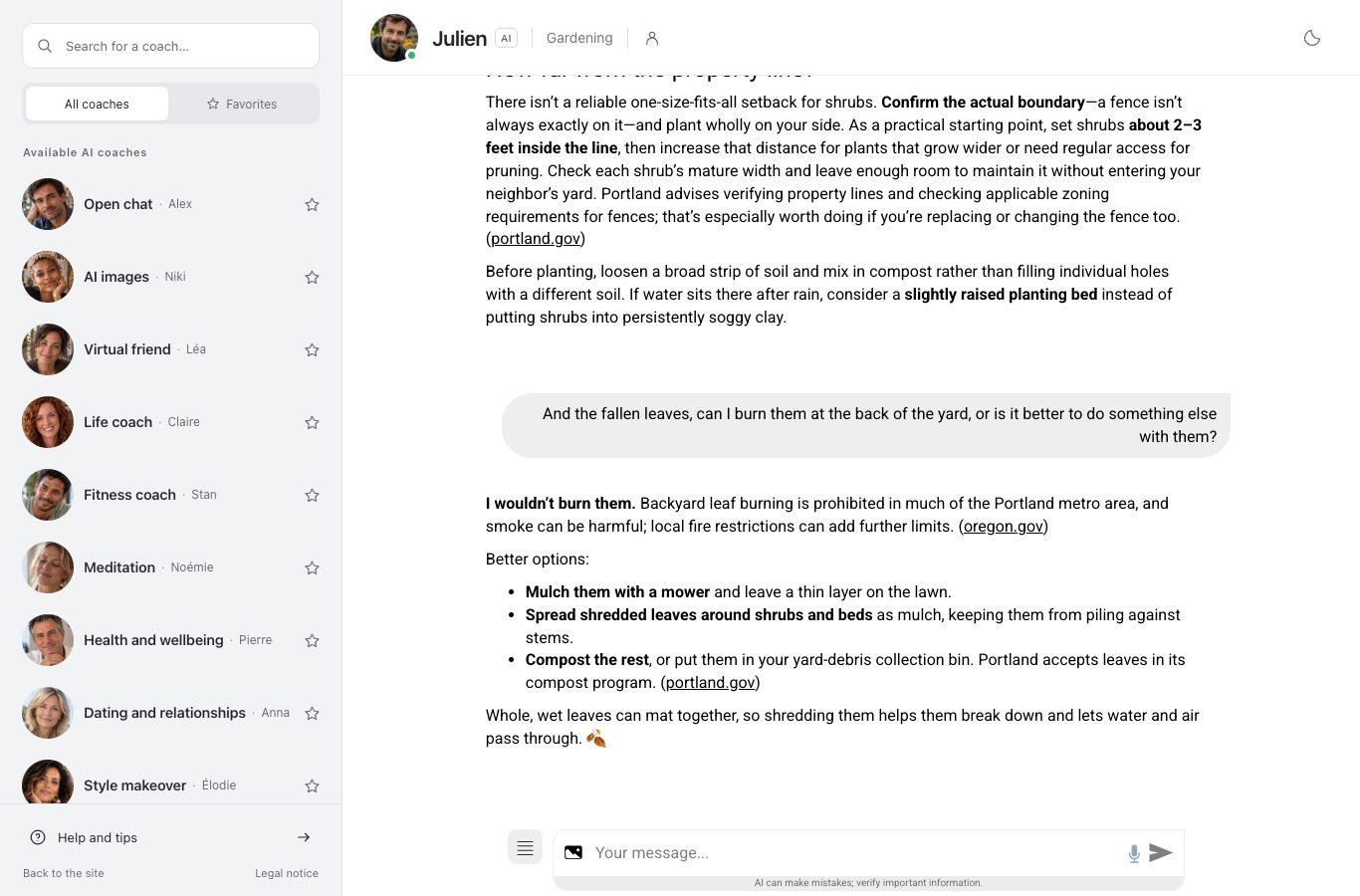
Julien’s answer starts with a no: “I wouldn’t burn them. Backyard leaf burning is prohibited in much of the Portland metro area, and smoke can be harmful; local fire restrictions can add further limits.” Then the reuse: “Mulch them with a mower and leave a thin layer on the lawn.” “Spread shredded leaves around shrubs and beds as mulch, keeping them from piling against stems.” And what is left: “Compost the rest, or put them in your yard-debris collection bin. Portland accepts leaves in its compost program.”
The weeks ahead
The calendar, then:
- Bulbs in the ground during October and November, or until mid-December while the soil can still be worked.
- Hedge shrubs during the wet season, from fall into early spring.
- Compost spread on top of the clay beds, and no sand added.
- Fallen leaves into the green bin, or onto the compost heap.
- The property line confirmed before you dig the hedge trench.
Daffodils, tulips, crocus and hyacinths go in now for a reason: they need the weeks of fall to root before they can produce spring flowers. That is OSU Extension’s advice for Western Oregon.
When Julien hands you over
Dangerous pruning, work at height, a certain identification of a fungus or an edible plant from a photo, professional plant protection products: Julien sends all of that to a qualified professional. On the rest, he separates what he can see, what is likely, and what he cannot settle.
Other coaches take over on Nation AI’s assistants page: languages, math, cooking.
To picture a project before it exists, Nation’s image generator turns a description into a first visual.
Frequently asked questions
Is Nation’s gardening coach free?
The trial is free, with no account and no card, and a few messages come with it. After that, the two-week plan is $9 and the monthly plan is $19 (Nation’s pricing page, October 28, 2026).
Can you send Julien a photo of a plant?
Yes. A photo helps him identify a plant or understand a problem, together with the season and the conditions of your yard.
When should a hedge go in?
During the wet season: hedge shrubs are planted in Western Oregon from fall into late winter, and early spring can work too.
Your yard has another question?
Ask Alex, and keep going on any subject: the trial is free, no account and no card needed.
Sources
- Plant spring-blooming bulbs in fall for years of low-maintenance color and Clay soil challenges and solutions for Oregon gardeners, two OSU Extension guides, September 2025 and April 2023.
- Gardening with Oregon native plants west of the Cascades, OSU Extension, publication EC 1577, revised in October 2022.
- Oregon’s outdoor burning guide, Oregon DEQ, updated March 21, 2019.
- Compost, City of Portland.
- Fences, decks and outdoor projects, brochure 3, City of Portland.