

In short

Agentic AI is an AI you hand an objective, not a question. Instead of answering and stopping, it breaks the work down, plans, uses tools (web search, forms, calendars), checks the result, and keeps going until the end, with varying degrees of human oversight depending on the system.
In 2026 it genuinely exists, and it is still bounded. Consumer agents have been rolling out since 2025 (ChatGPT’s agent in July 2025, coding agents, deep research), but independent measurements remain modest: roughly 2 hours 17 minutes of human task completed one time out of two for the best agent benchmarked by METR (reading of October 5, 2026).
Our tester, further down, tells you whether today’s task needs an agent, a plain chat, or your own vigilance. The line is often thinner than the marketing promises suggest.
The word is everywhere: press releases, news articles, product pages for AI tools. “Our agents work while you sleep,” the ads promise. And if you just asked a search engine “what is agentic AI”, it means the word arrived before the explanation. The results you get are almost all cloud vendor or consulting firm pages, written for IT departments.
This article does the opposite: it starts from you, a reader with a phone or a laptop, and answers in plain language. What exactly is agentic AI? What does it look like concretely, step by step? Where is the line against the ChatGPT you already know? What can these systems actually do on their own in October 2026, and where do they still fail? Every dated claim is sourced, and an interactive tester helps you decide whether your own task needs an agent or not.
Agentic AI: what is it? The simple definition
The one-sentence answer: agentic AI is an artificial intelligence you give a goal to reach, and it chains together the necessary actions on its own to get there, instead of merely answering one question and waiting for the next.
The clearest analogy is still cooking. A classic chatbot is someone reading a recipe to you over the phone: the explanation is great, but you are the one peeling the vegetables. An agent is the person you put in charge of the whole meal: they open the fridge, notice a missing ingredient, go buy it, cook, taste, adjust the seasoning, and check with you before serving because you said nothing gets served without your sign-off. The difference is not the intelligence of the talk, it is the move to action.
The word itself is an adjective derived from the noun “agent”: in computing, an agent is a program that acts on someone’s behalf. “Agentic” therefore describes systems built around that capacity to act. You will also run into “AI agent”, “autonomous AI” or the phrase “agentic AI” used loosely as synonyms. We covered the family in detail in our article on AI agents and what they can do.
French public authorities have looked at it closely. In a note published in February 2026, the French Council for Artificial Intelligence and Digital (CIANum), an independent body that studies the impact of these technologies, offers the following definition, relayed on March 13, 2026 by the public service vie-publique.fr: “It is a computer program capable of making decisions or carrying out actions by relying on AI models. Integrated into a software suite, an AI agent has its own capacity to act” (translated from French).
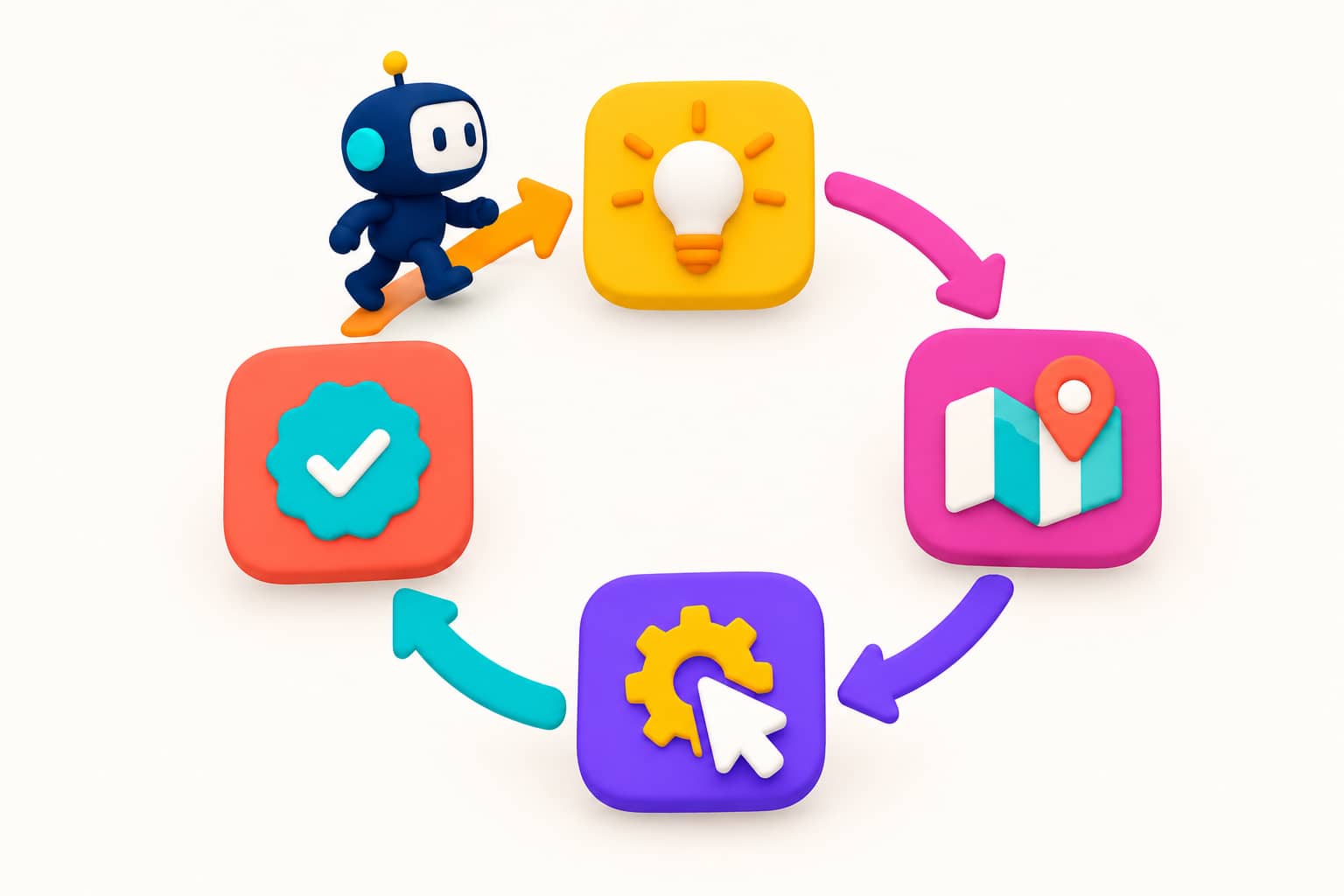
That “own capacity to act” is the criterion that decides everything. In practice, an agentic system runs in a loop: goal, plan, action, verification. It understands what you want, lists the subtasks, executes the first one, checks the outcome, corrects if needed, then moves to the next. A chat stops at the answer. An agent keeps going until the result, and that loop, repeated dozens of times, is what is genuinely new.
The step-by-step example: “plan me a weekend in Lyon”
To make the definition tangible, let us follow a request plenty of people would happily hand to a machine. You type: “Plan a weekend in Lyon for two people, 400 euros all in, the second weekend of next month, we like museums and we hate running.” Here is the kind of run an agent is designed to complete:
1. It clarifies the objective. Exact dates of that second weekend, budget constraints, preferences, and if the agent has access to your calendar, it checks that nothing is already booked. It may ask you a question up front rather than guess.
2. It builds the plan. Travel from your city, lodging, three museum visits, two restaurants, a rain plan B. It slices the mission into ordered subtasks.
3. It acts, tool by tool. It pulls train schedules, filters hotels within budget, checks museum booking slots, cross-reads restaurant reviews. Each subtask uses a different tool: search, comparison, form.
4. It verifies and corrects. Total over budget? It swaps a restaurant or moves the return trip. A museum sold out? It triggers plan B. It loops as long as the result does not match the objective.
5. It asks for validation before sensitive actions. At payment time, consumer agents designed since 2025 stop and hand you the screen: you are the one confirming the transaction.
6. It closes the mission. Confirmations gathered, itinerary summarized, departure reminder set. You receive a result, not a list of tips.
The line in one pictureA chat explains very well how to organize a weekend. An agent organizes it. That is the distance between the manual and the travel companion who boards the train with you.
This example is not theoretical: it is exactly the one cited by CIANum in its February 2026 note, where the agent is described as able to “find dates available in the user’s calendar, study the existing transport and accommodation options, compare prices, propose suitable options and pay online” (translated from French). The gap between the official note and everyday reality is reliability: we come back to it in the limits section.
What changes versus the chatbot you already know
A conversational chatbot and an agent do not differ only in the length of their answers. Three things genuinely change:
- Persistence. The chat forgets everything when the conversation ends. The agent keeps the thread of a mission that can last hours, and some retain preferences across missions.
- Tools. The chat produces text, images or code from what you ask. The agent queries the live web, reads documents, fills forms, checks calendars, triggers payments (with your validation).
- Initiative. The chat waits for the next question. The agent decides the next step itself, detects a failed subtask and picks another route without checking in every time.
Generative AI, assistant with tools, agent: the real line
The most common confusion swirls around generative AI, the kind that writes, translates or draws on demand. We give it a detailed definition in a separate article. In short: generative AI is reactive, it produces content in response to a prompt and stops. Agentic AI is goal-driven: it pursues an objective by chaining actions and tools until the result. A sentence factory on one side, a delegate with a mission on the other.
Between the two, an intermediate floor has existed since late 2024: assistants able to go fetch the information on their own. The “deep research” modes, launched by Google in late 2024 then by OpenAI in early 2025, explore the web for tens of minutes and come back with a sourced synthesis. They search on their own, but they book nothing, buy nothing, send nothing: they stop at the document. That is an assistant with legs, not yet an agent with hands.
| Your request | A classic chat | An assistant with tools | An autonomous agent |
|---|---|---|---|
| Write a cover letter | Drafts the letter from your material | Drafts it after checking the company’s site | Drafts, formats, prepares the email, shows you before sending |
| Pick a cheaper internet plan | Explains what to compare | Compares current offers and synthesizes | Prepares the switch and the cancellation slot, for you to approve |
| Organize the Lyon weekend | Gives a list of tips and well-known spots | Lists available trains and hotels with real prices | Books, adjusts to budget, asks confirmation before paying |
One honest caveat about this table: the “agent” column describes what these systems aim at, not infallible magic. In real 2026 products, autonomy almost always stops at sensitive actions: payments, sends, deletions. The principle of human validation before those gestures is part of the very design of the consumer agents announced since 2025.

What it changes for you: the real uses in 2026
Let us leave theory behind. Here is what concretely exists as of October 5, 2026, with dated milestones you can verify, and above all: what is left for you in each case. It is the table vendor marketing pages never write.
| Use case | What the AI does alone | What is left for you | Where it stands for consumers |
|---|---|---|---|
| Deep research | Explores the web for tens of minutes, crosses sources, writes a referenced synthesis | Verify the key sources before deciding | Launched by Google in late 2024, by OpenAI in early 2025; mostly inside paid plans |
| Coding and development | Writes, runs, tests and corrects whole programs, folder by folder | Review before shipping to production | Professional tools; the Claude Code agent has been available since May 2025 |
| Delegated browsing | Fills forms, compares, books, handles hiccups along the way | Validate payments, take over when it stalls | ChatGPT’s agent since July 2025; European rollout delayed at launch |
| Repetitive chores | Follow-ups, monitoring, report drafts under rules you set | Set the rules, watch for drift | Mostly enterprise tooling, rarely packaged for individuals |
| End-to-end customer support | Reads the history, diagnoses, refunds or reroutes, closes the ticket | Arbitrate sensitive cases and complaints | Deployed by the companies you call, not chosen by you |
The honest reading of this table: for an individual, the agent “that does everything” remains in October 2026 a rare, paid and partially region-locked object. ChatGPT’s agent, announced in July 2025 for Pro and then Plus and Team subscribers, saw its European rollout delayed at launch, and the quotas communicated then (on the order of forty agent messages per month on the mid tier) are a reminder that autonomy gets billed. At Google, the browsing agent unveiled in December 2024 under the name Project Mariner has since fed the agent features of the Gemini app. At Anthropic, the ability to control a computer announced in beta in October 2024 led to agent tools widely used by developers. The three giants named here serve as dated landmarks: this article links to none of their sites.
The energy point, rarely in the promises
More agents means more continuous compute. CIANum’s February 2026 note puts a number on it: “the generalization of autonomous agents could take AI from 20% to 49% of the total consumption of data centers by the end of 2026” (translated from French). In other words, in under a year, AI could go from one fifth to half of data center electricity. That is not a reason to skip it, it is a reason not to delegate to an agent tasks that a ten-minute search settles.
Does your task really need an agent? The tester
That is the practical question of the day: before dreaming of autonomy, look your task in the eye. Answer the tester’s four questions and it tells you which floor to go to: a plain chat, an assistant with tools, an agent under supervision, or your own two hands. The verdict copies one of the four visible cards below the tool, which also read fine on their own.
The tester: agent or not agent?
Your verdict
Waiting: answer the four questions then click Show my verdict.
At least one answer is missing: complete the four questions to get a verdict.
Whatever the verdict, the first step is the same: stating the objective clearly. Nation AI, our conversational assistant, tries that decisive step for free, no sign-up.
The tester bases its answer on four profiles, whose card it copies on screen. Each describes a real October 2026 situation, not a marketing ranking:
Profile 1: a chat is enough
Your request settles inside a conversation: writing, explaining, translating, summarizing, revising. That is the core of conversational assistants, and it is already huge. No external action is needed, so no autonomy is needed.
- On the menu: the latest text generation models, with a free trial and no sign-up on Nation AI’s chat.
- The habit that changes everything: have the AI reread and critique its own answer, then correct it yourself.
- Rethink it if: you repeat the same request every week. A repeated task eventually deserves more than a chat.
Profile 2: an assistant with tools
Your task requires crossing many fresh sources before concluding: comparing offers, checking a regulation, preparing an argued dossier. That is the turf of deep research modes, launched by Google in late 2024 and by OpenAI in early 2025.
- What they do alone: explore the web for tens of minutes and return a referenced synthesis.
- What they do not do: book, buy, send. They stop at the document.
- No-subscription version: drive the research yourself with a chat, first having it list the sources to consult.
Profile 3: an agent, under supervision
Your mission involves real actions (forms, accounts, payments) but you can proofread at the end. The consumer agents designed since 2025 aim exactly at this case: they browse, compare, fill in, and stop for your validation before transactions.
- Dated landmarks: ChatGPT’s agent announced in July 2025, European rollout delayed at launch; quotas communicated as a number of messages per month.
- The right method: slice the mission into tranches of one hour maximum, with a checkpoint at the end of each.
- The safety reflex: never hand over full banking credentials in advance; payment validation stays a human gesture.
Profile 4: stay at the controls
Long mission, costly error, sensitive paperwork: full delegation is not the right answer in 2026. The independent measurements from the METR lab gave, as of their October 5, 2026 reading, a horizon of about 2 hours 17 minutes of human task completed one time out of two by the most capable agent tested.
- Why: beyond a few hours, failure becomes likely without supervision, and one step’s errors pile onto the next ones, as the CIANum note of February 2026 describes.
- The efficient workaround: delegate subtasks one by one (research, drafting, form preparation) and keep the final decision.
- The hand-back criterion: as soon as fixing an error costs more than the time saved, a badly supervised agent is a net loss.
The honest limits: what an agent cannot do alone in 2026
This is the section promotional pages skip. Three families of limits, all documented with dated sources.
Measured reliability: one task in two, over two hours
The independent lab METR proposed in March 2025 a simple way to measure agents: the “time horizon”, the length of the human task an agent completes with 50% reliability. Their March 19, 2025 study shows that this horizon has been doubling roughly every seven months since 2019, and was worth about an hour for the best models of the time. As of its October 5, 2026 reading, the public dashboard’s FAQ states “a GPT-5 agent (with time horizon of around 2 hours and 17 minutes)”, and spells out the reading: on tasks that take a human expert 90 minutes to 3 hours, the agent succeeds 100% of the time for about a third of them, fails 100% of the time for another third, and is intermittent on the remaining third. Everyday translation: hand the most capable agent on the market a task a human expert would do in two hours, and you cannot know in advance which third it will fall into. The curve moves fast, but in October 2026 full autonomy on long missions is not the measured reality.
Errors that pile up
An agent chains dozens of steps, and every step can go wrong. CIANum’s February 2026 note names it precisely: “cascade effects (each step of a process can generate errors, which accumulate)” (translated from French), and it also flags drift when several agents interact without a shared framework. The weekend example shows it well: one date misread at the first step, and it is the whole hotel that gets booked at the wrong time. A chat that errs gives you a false sentence; an agent that errs gives you a false purchase. That is what justifies human validation before sensitive actions.
Security, payment, accountability
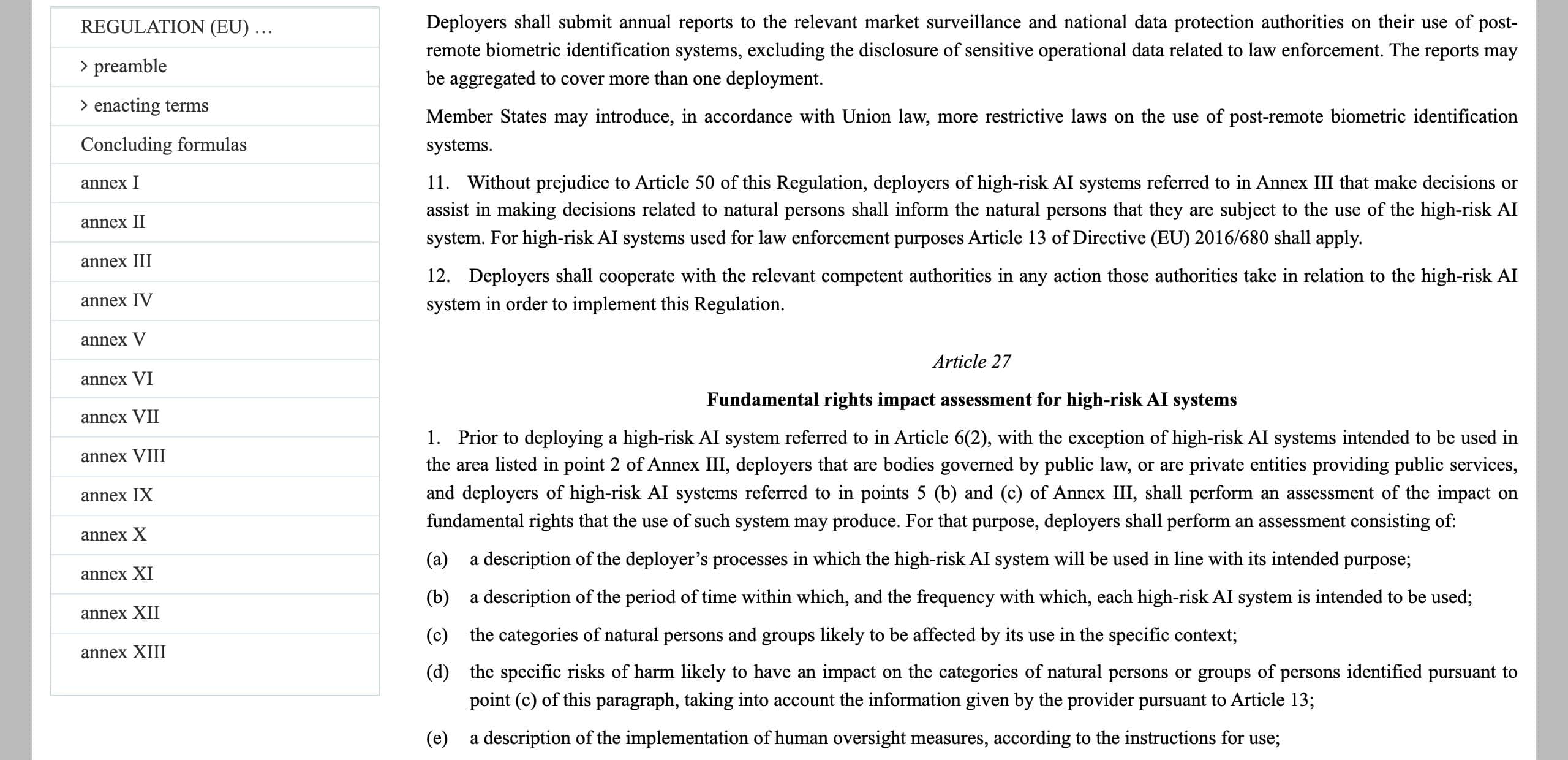
On the practical side, three reflexes in 2026. First, transparency is regulated: the European AI regulation, whose Article 50 obligations have applied since August 2, 2026, requires AI systems that interact with humans to disclose that they are AI; you can read the full text on EUR-Lex. Next, liability when an agent makes a wrong decision remains, in CIANum’s own words, a “partial” framework (translated from French). Finally, pragmatic distrust: anyone asking you to hand full banking codes and passwords to a purported “agentic AI” is setting you up for a scam, not a service. Human validation before payment is a protection, not an obstacle.

How to approach agentic AI without paying a subscription
In October 2026, full consumer agents live behind premium subscriptions, sometimes with delayed availability in Europe. But the agent’s most useful skill, breaking an objective down and anticipating the pitfalls, you can already put to work for free, simply in reverse: instead of delegating execution, you delegate the plan and you execute. Concretely, three tries for tonight:
- The mission in reverse. Ask a chat: “Here is my objective, build the complete plan in numbered steps, with the tool to use and the failure risk for each.” You get the skeleton of what an agent would do, and you run it in a fraction of the time.
- The contrarian. Make the agent play on paper: “Here is the plan you propose, find the three ways it fails.” The verification loop agents perform replays inside the conversation.
- The line tester. Put the same real question (a budget, an insurance pick, a study plan) first without search, then with sources you supply, and compare. You live the chat-versus-assistant difference described above.
These three tries work with Nation AI’s chat, free trial with no sign-up, built on a French layer over the best models on the market. To be exact: Nation AI is a conversational assistant, it does not take over your browser or your accounts. On today’s topic it is even a study tool: handling it is the best way to measure what an agent would add. And if the next step tempts you, our guide on creating an AI agent yourself details the building blocks and the traps for readers who want to move to the builder’s side.
To go further on the internal machinery (memory, planning, multi-agent development frameworks, the full agent typology), our deep dive Agentic AI: intelligence in action walks the technical side for readers who want to go up one floor.
FAQ: the real questions about agentic AI
Agentic AI: a concrete example?
CIANum’s official example (February 2026 note): booking a trip online from a single request, meaning finding free dates in your calendar, studying transport and lodging options, comparing prices, proposing suitable options and paying online. The everyday version: you hand over “plan my weekend, 400 euro budget” and you receive made bookings, not tips to read.
Is ChatGPT an agentic AI?
The ChatGPT everyone uses is a conversational generative AI: it answers, it does not act. OpenAI announced a separate “agent” mode in July 2025 (web browsing, forms, bookings, with validation before payment), first for Pro then Plus and Team subscribers, with a European rollout delayed at launch. The honest answer in October 2026: the most widespread consumer product is still a chat; the agent is a separate, recent, subscription-gated feature.
What is the difference between generative AI and agentic AI?
Generative AI produces content (text, image, code) on request, then stops: it is reactive. Agentic AI pursues a goal by chaining actions and tools until the result: it is proactive. A sentence factory on one side, a delegate with a mission on the other. We detail generative AI in our “What is generative AI?” article.
Is agentic AI free?
Full consumer agents sit in October 2026 behind paid subscriptions, sometimes with monthly agent-message quotas communicated since the July 2025 announcement. What is freely accessible: conversational assistants, and therefore the most useful step of delegation, planning. Our article on trying it without a subscription details three exercises with a free chat.
What does the word “agentic” actually mean?
It is the adjective relating to agents: programs that act on someone’s behalf. “Agentic” describes systems organized around that own capacity to act. You will meet “AI agent”, “autonomous AI” or “agentic system” as near synonyms, which the CIANum note of February 2026 defines precisely.
Is agentic AI dangerous?
The documented risks come in three orders: technical (one step’s errors pile onto the next), legal (liability for a wrong decision remains, per CIANum, a partial framework) and energy-related (AI could go from 20% to 49% of data center consumption by the end of 2026 per the same note). On scams, the simple rule: an “agentic AI” that asks for your full banking credentials up front is preparing a fraud. Real agents validate payments with you, at payment time.
In conclusion: the right question is not “what is it”, it is “what for”
Agentic AI is neither an abstract revolution nor a toy: it is one floor above the chat, where the AI receives an objective and pursues the result with tools, under your closer or looser supervision. The official definition exists (CIANum, February 2026), the products exist (agents announced since July 2025), and the limits are measured (about 2 hours 17 minutes of human task succeeded one time out of two for the best agent tested by METR as of October 5, 2026). Between those three facts sits the decision that concerns you: which tasks deserve an agent, which ones a chat settles, and which ones require you to stay at the controls.
You can climb the first step of that decision tonight, for free: state an objective, ask for the plan, critique it, run it. Try Nation AI, our conversational assistant, no sign-up, or browse the portal of our AI tools to find the one that fits today’s task.
Sources: note from the French Council for Artificial Intelligence and Digital (CIANum) relayed by vie-publique.fr on March 13, 2026 (definition, trip example, limits, data center share; quotes translated from French); METR study “Measuring AI Ability to Complete Long Tasks” of March 19, 2025 (horizon doubling roughly every seven months) and public metr.org dashboard as of October 5, 2026 (GPT-5 agent at around 2 hours and 17 minutes); agent launch announcements cited with their dates (OpenAI July 2025, Google December 2024, Anthropic October 2024 and May 2025); Regulation (EU) 2024/1689 on EUR-Lex.