Key takeaways

AI face swap is free everywhere, but free means trials: ten swaps a day on Picsi.Ai, 30 credits a day across the Vidnoz platform, 5 credits when you sign up on YouCam, welcome credits with no published number on Remaker and DomoAI (surveyed September 1, 2026 on their official pages).
The real wall is not the quota: it is consent. In the United States there is no single federal face swap statute, but the right of publicity protects your likeness state by state (in California, Civil Code section 3344 awards at least $750 per knowing commercial use of your likeness without consent), and the federal TAKE IT DOWN Act, signed May 19, 2025, criminalizes nonconsensual intimate imagery, including AI “digital forgeries”.
And since August 2, 2026, the EU AI Act requires saying when a deep fake has been artificially generated or manipulated, a transparency benchmark that platforms already apply worldwide.
Want to start without risk? Start with your own face, keep the “AI-edited” label clearly visible, and build your starting image with Nation’s AI image generator.
Type “free ai face swap” into Google and the results page is almost entirely tool pages: DomoAI, Pica AI, Vidnoz, Canva, Remaker, YouCam, HeyGen, Picsi.Ai. Not one article in the top 20 answers the question that actually matters after five minutes of use: what does free really get you, and can you publish the result? We surveyed the limits each tool advertises on September 1, 2026, read their file retention policies, and checked the exact wording of the applicable laws on official government sources.
AI face swap: photo, video, and the word “deepfake”
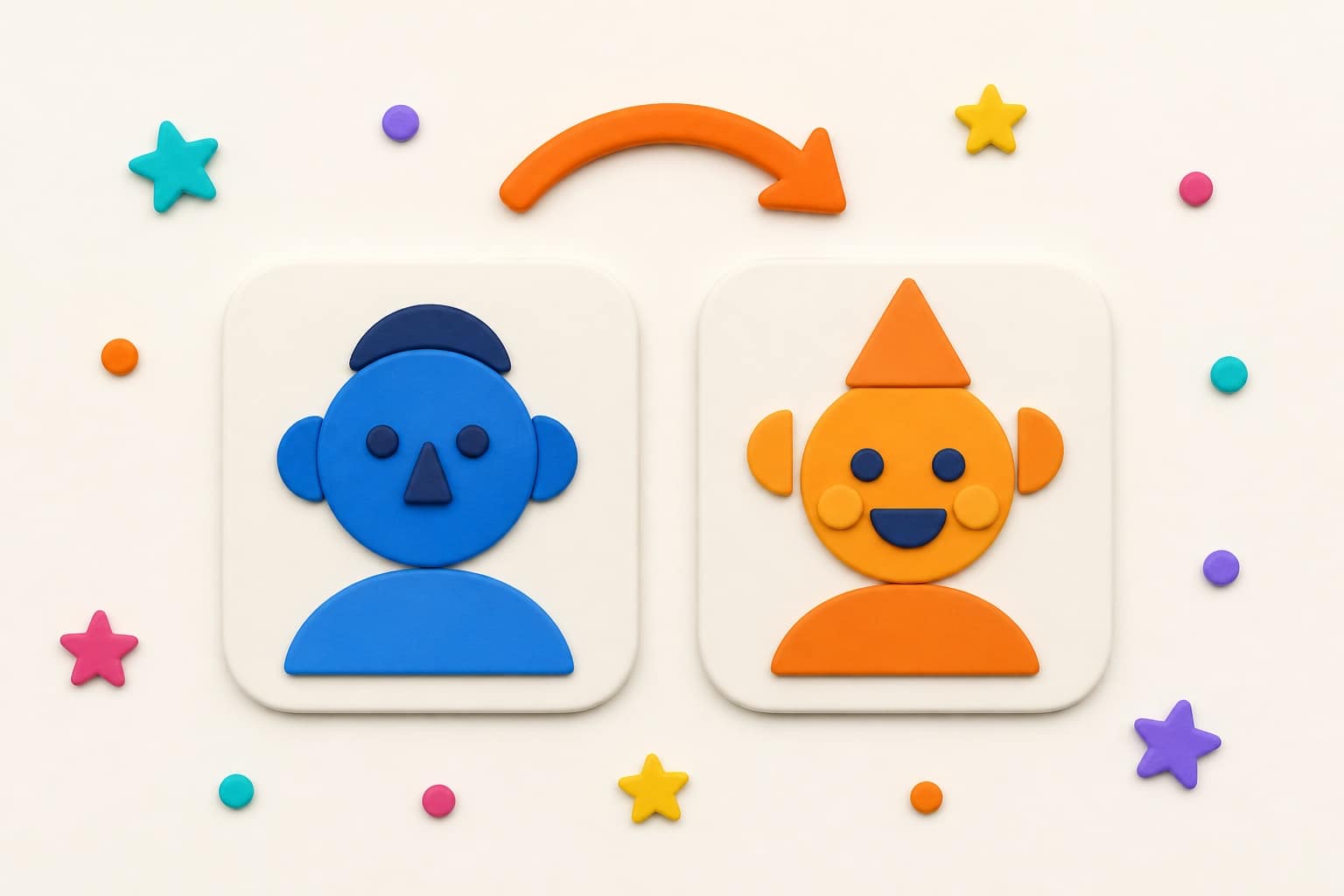
The principle fits in two images: you provide a starting photo or video, then a second image showing the face to put in its place. The AI detects both faces, blends skin tone, lighting and contours, and returns a file with the face swapped. Three variants exist on almost every tool: single photo swap, multiple-face swap (handy for fixing a group photo where someone is blinking), and video or GIF swap, which takes longer to compute.
The use cases the publishers themselves list are mostly playful: memes, profile pictures, party characters, fixing group photos, trying out looks, as in our test of AI haircut try-on tools. It is also the technology behind deep fakes, those doctored videos or images that make someone say or do things they never did. Different word, same technology: which is exactly why the law separates the use (entertainment, clearly labeled) from the victim (a person whose face is taken without asking).
Good news if you are in a hurry: every tool tested here runs in the browser, with no install, and most work on mobile. No downloadable “free face changer app” was needed for this test: the web versions are enough, on a phone too.
What free really gives you: the September 1, 2026 survey
We opened every official page on 09/01/2026 from the United States, with no logged-in account. What follows is what the publishers themselves display: free plan, credits, watermark, sign-up. Offers change often, so check before you commit.
| Tool | What free gives you (surveyed 09/01/2026) | The wall you hit fast | Your files |
|---|---|---|---|
| Vidnoz | Photo and video face swap advertised without sign-up; free plan of 30 credits a day (60 seconds of video) across the platform | The credit cost of a face swap is not displayed; watermark removal and priority stay behind paid plans | Encrypted files and automatic deletion announced |
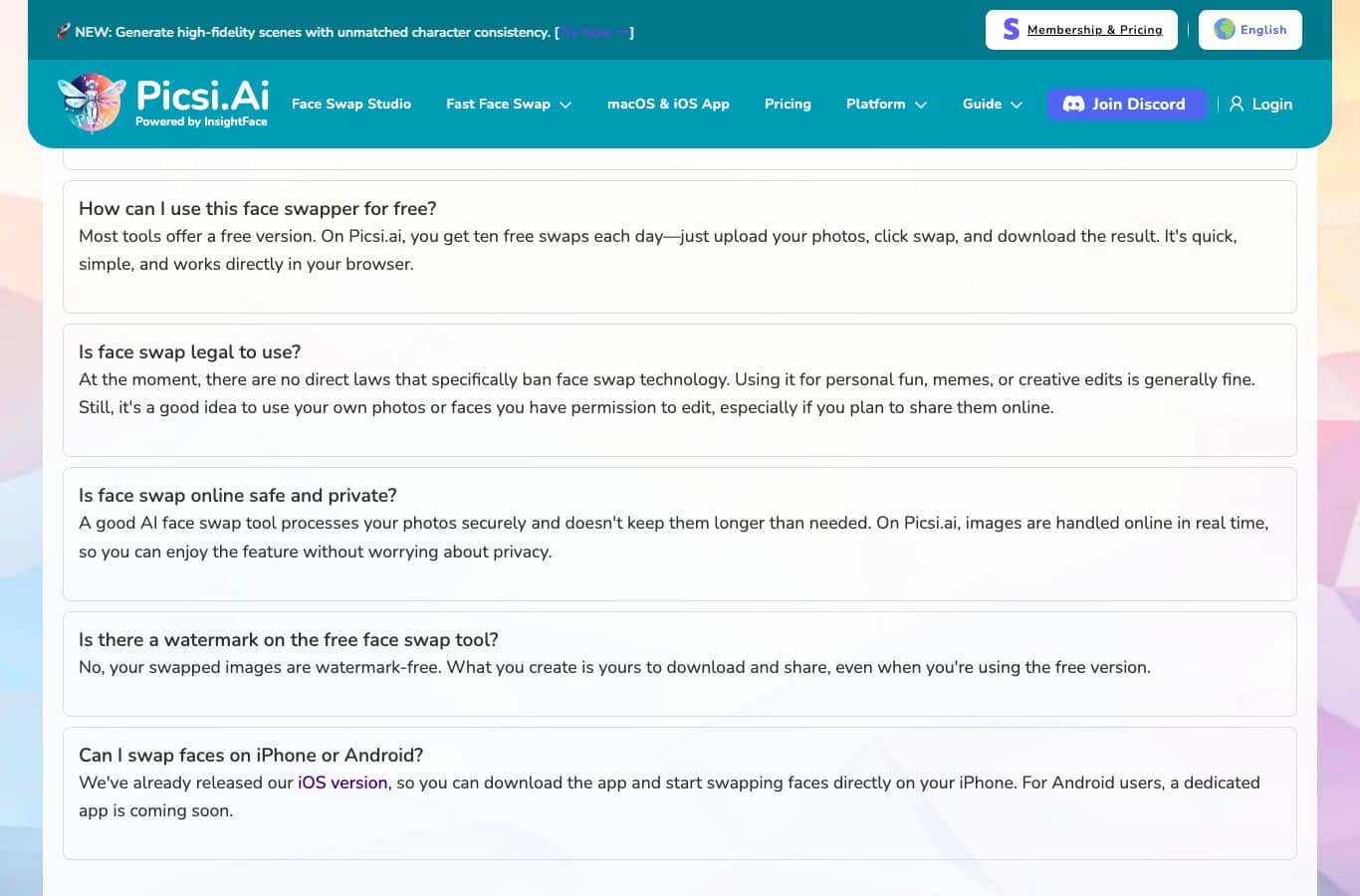
| Picsi.Ai | “Ten free swaps every single day” on the web studio, with no watermark per its FAQ | The pricing grid notes that full “normal face swaps” require a subscription (Basic $9.99/mo, 200 credits/day) | Real-time online processing; on Discord, video swaps are “posted publicly” |
| Remaker (FaceVary) | Single, multiple and batch swaps advertised free; welcome credits for new accounts | The number of free credits is not published | “All uploaded and generated images on FaceVary will be deleted within 48 hours” |
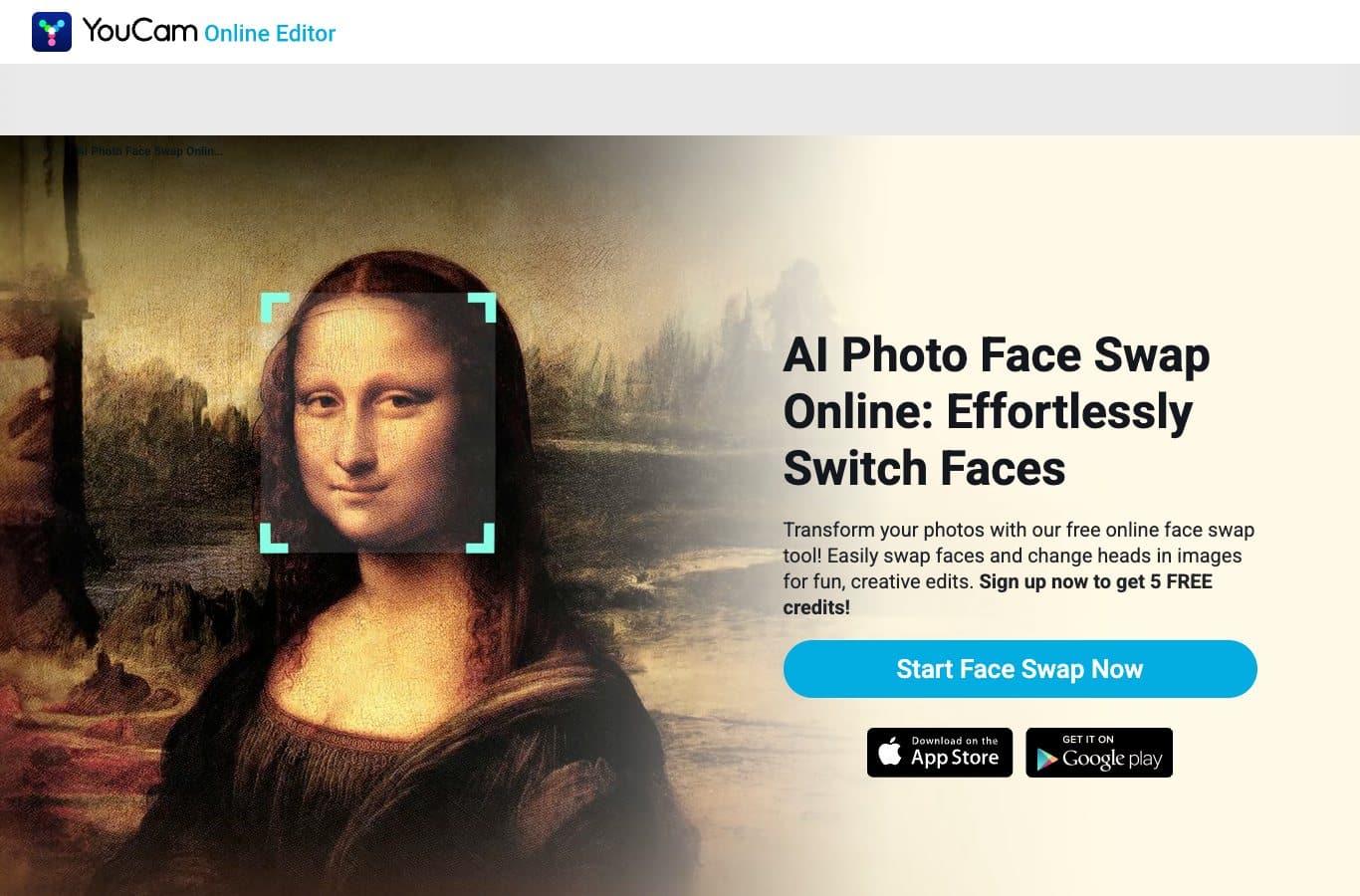
| YouCam Online Editor | Face swap free to try: “Sign up now to get 5 FREE credits” | Watermark-free downloading is reserved for the subscription | Editor Perfect Corp’s privacy policy applies |
| DomoAI | “Free credits for new users”, with no published number | No $0 plan in the grid: plans start at $9 per month billed yearly ($13 monthly) | “We do not use your uploads to train AI models” |
| Pica AI | Photo and video face swap advertised free, with no sign-up required | No public pricing grid (the pricing page redirects to the home page): not surveyed, since there is no grid to verify | Not surveyed on the public page |
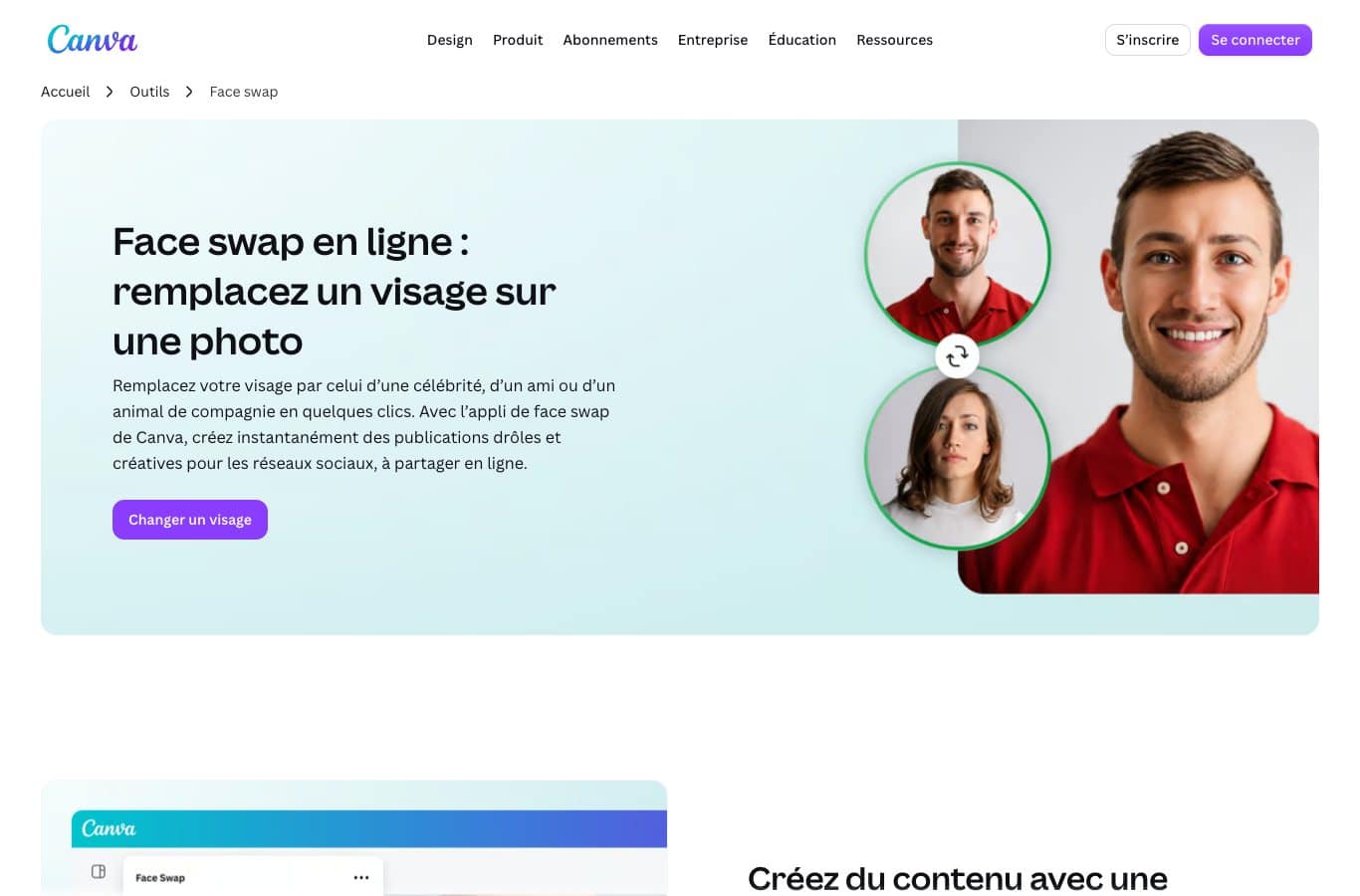
| Canva | A face swap app inside the editor, usable on the free plan | The finishing tools that complete the result (Magic Edit, Magic Eraser, Background Remover) carry the “Pro” tag | Processed under Canva’s own rules |
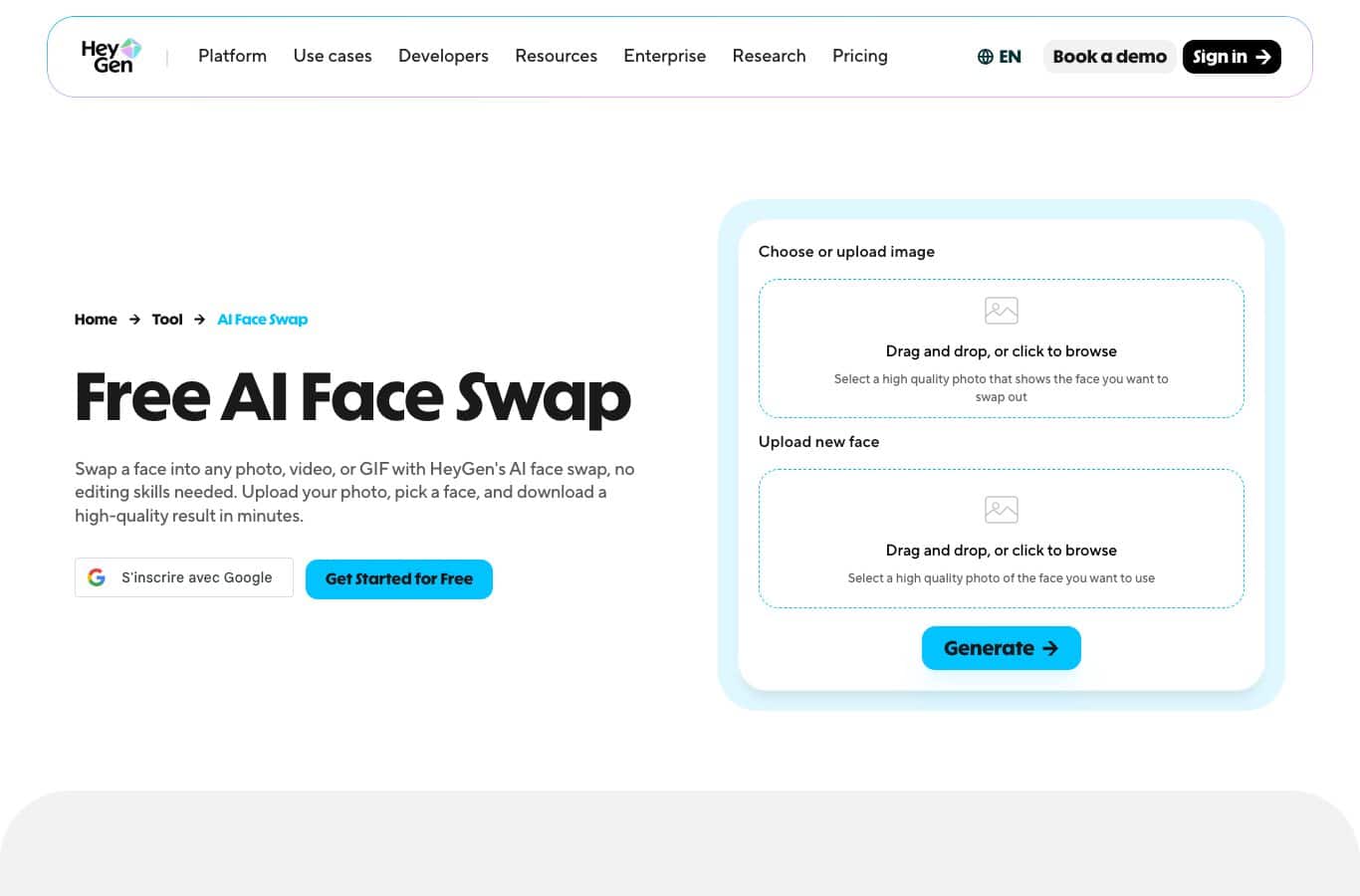
| HeyGen | Photo and video face swap, free trial with no card | Paid plans start at $24 per month and unlock commercial rights; the Creator plan starts at $29 | “Files are processed privately and deleted after generation” |
Vidnoz: the most explicit, yet the cost of a swap stays blurry
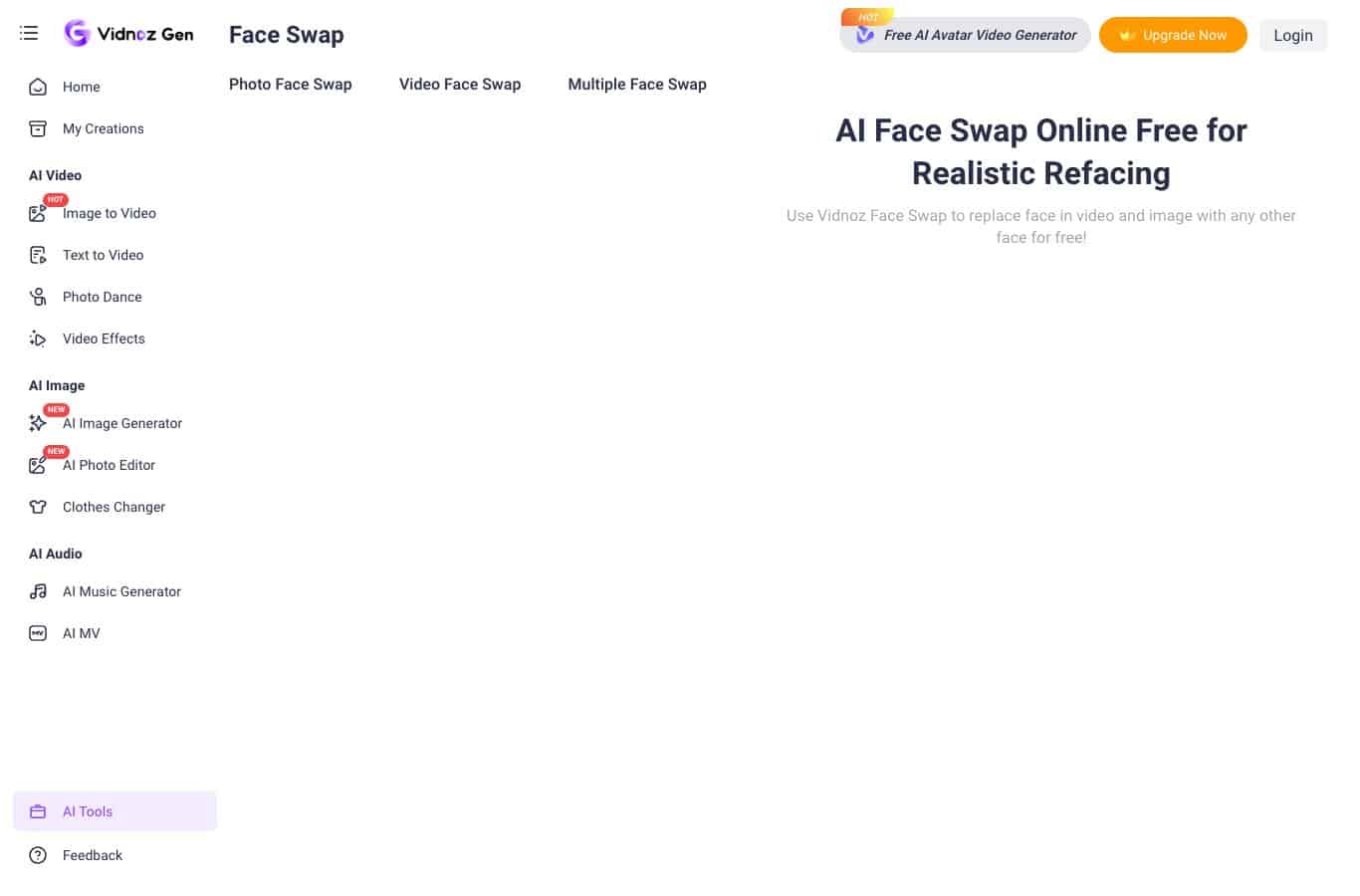
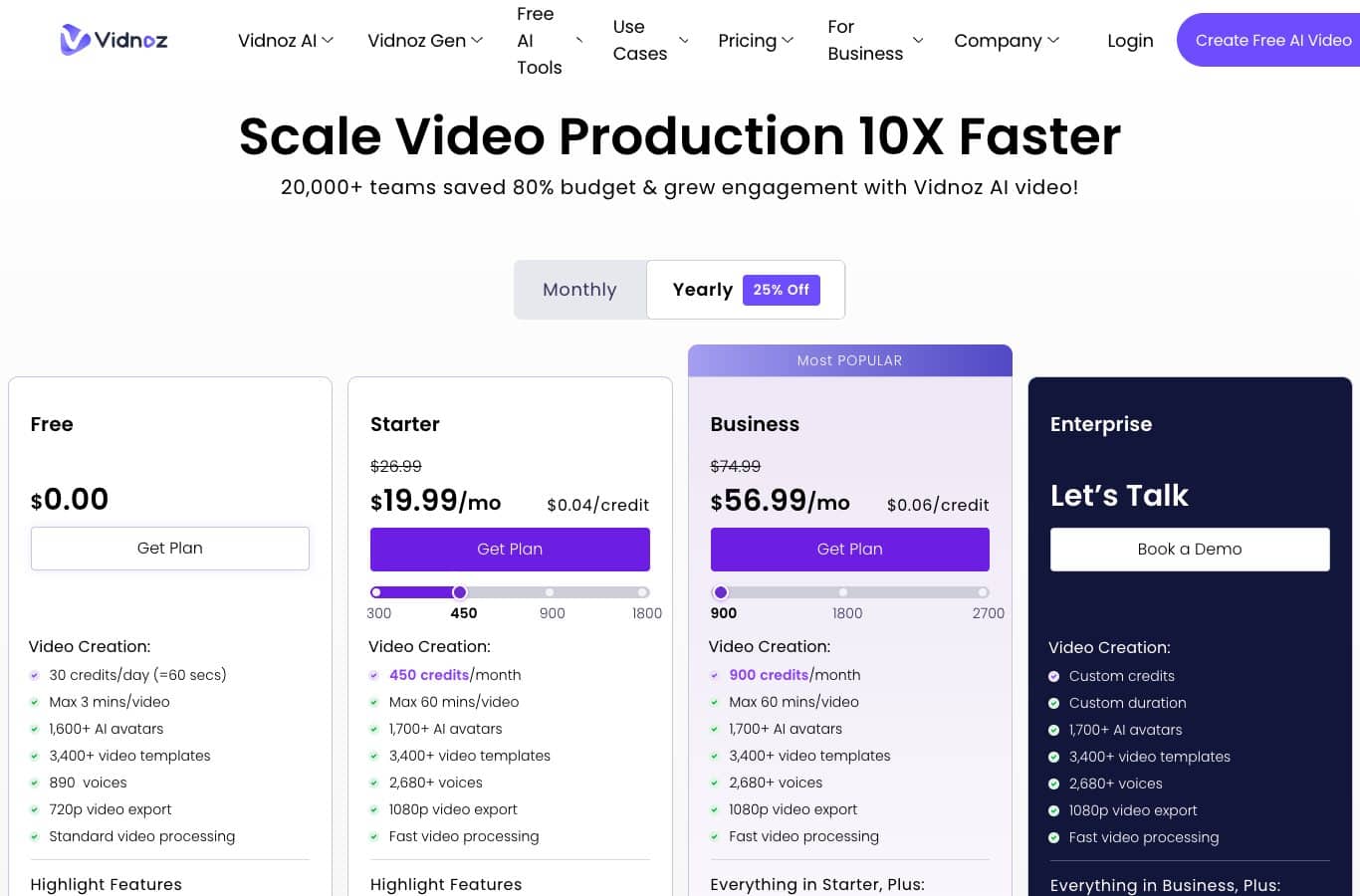
Vidnoz opens with three tabs: Photo Face Swap, Video Face Swap and Multiple Face Swap, promising realistic results. Its English pricing page shows a free plan of “30 credits/day (=60 secs)” with a banner offering 30 free credits every day (surveyed 09/01/2026). The Starter plan costs $19.99 per month billed yearly ($26.99 monthly) for 450 credits a month, and the Business plan $54.99 for 900 credits.
Its FAQ adds a privacy promise: Vidnoz encrypts uploaded files, processes them on secure servers, and applies automatic deletion under its privacy policy, and recommends not using unauthorized images. What the page does not say: how many credits a face swap costs. It is the only tool in the survey that publishes a daily quota without publishing its unit price.
Picsi.Ai: ten swaps a day announced, the clearest of the survey
Picsi.Ai, powered by InsightFace, is the most precise about free: “On Picsi.ai, you get ten free swaps each day, just upload your photos, click swap, and download the result” (official English page, surveyed 09/01/2026). The same page answers on watermarks: “No, your swapped images are watermark-free”, even on the free version.
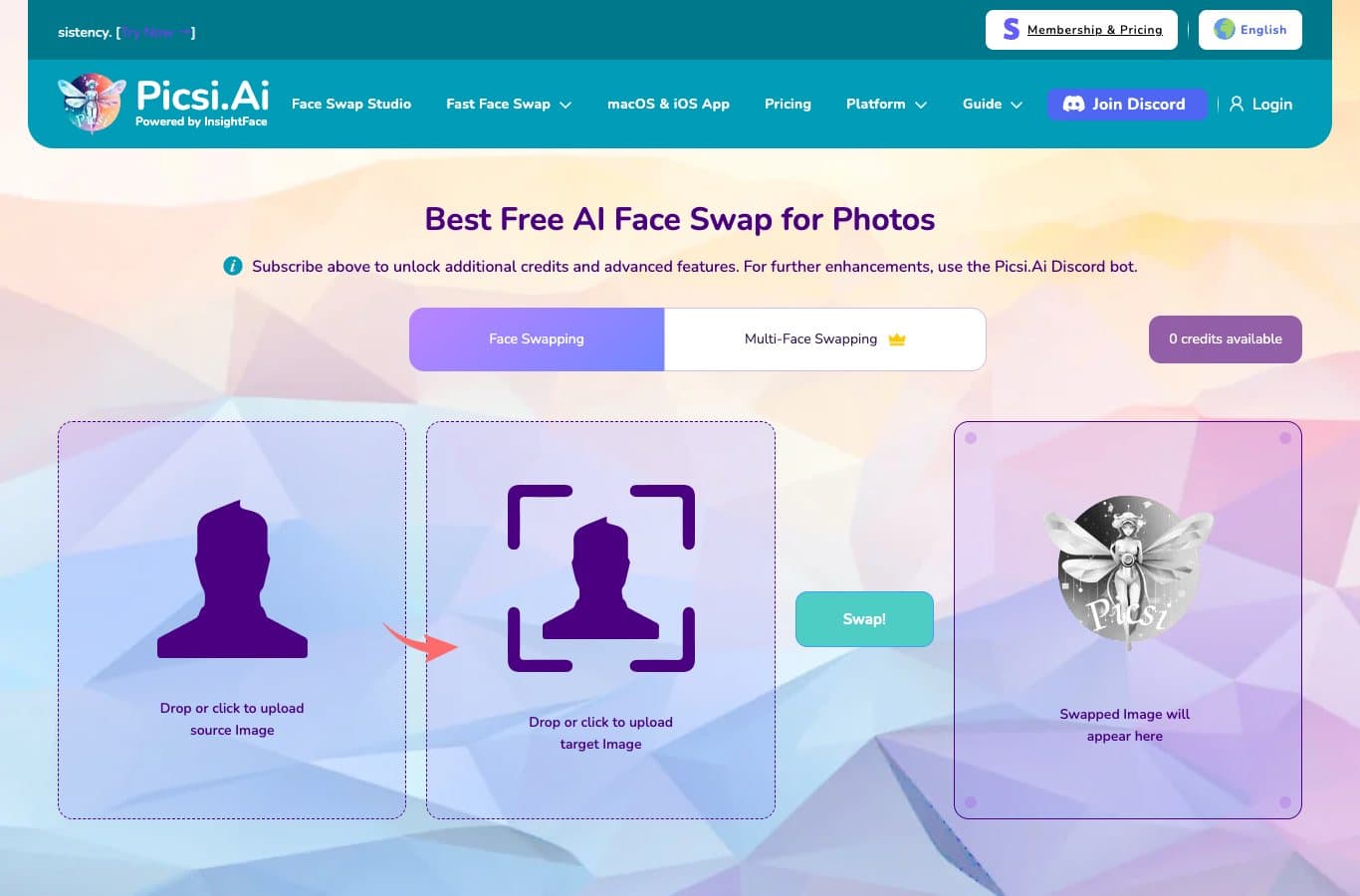
Its paid grid (Basic $9.99 a month for 200 credits a day, Pro $19.99 for 400, Ultra $34.99 for 800) details the studio cost: 1 credit per face on images and 2 credits per second on video. It also flags a limit few tools display: on Discord, video swaps are “posted publicly”. On the community channel, your swap is not private.
Remaker: generous free, an outdated legal FAQ
FaceVary, Remaker’s tool, offers single, multiple and batch swaps. Its FAQ promises that “all uploaded and generated images on FaceVary will be deleted within 48 hours”, and that the service stores and keeps no images, collecting no location or usage data (surveyed 09/01/2026).
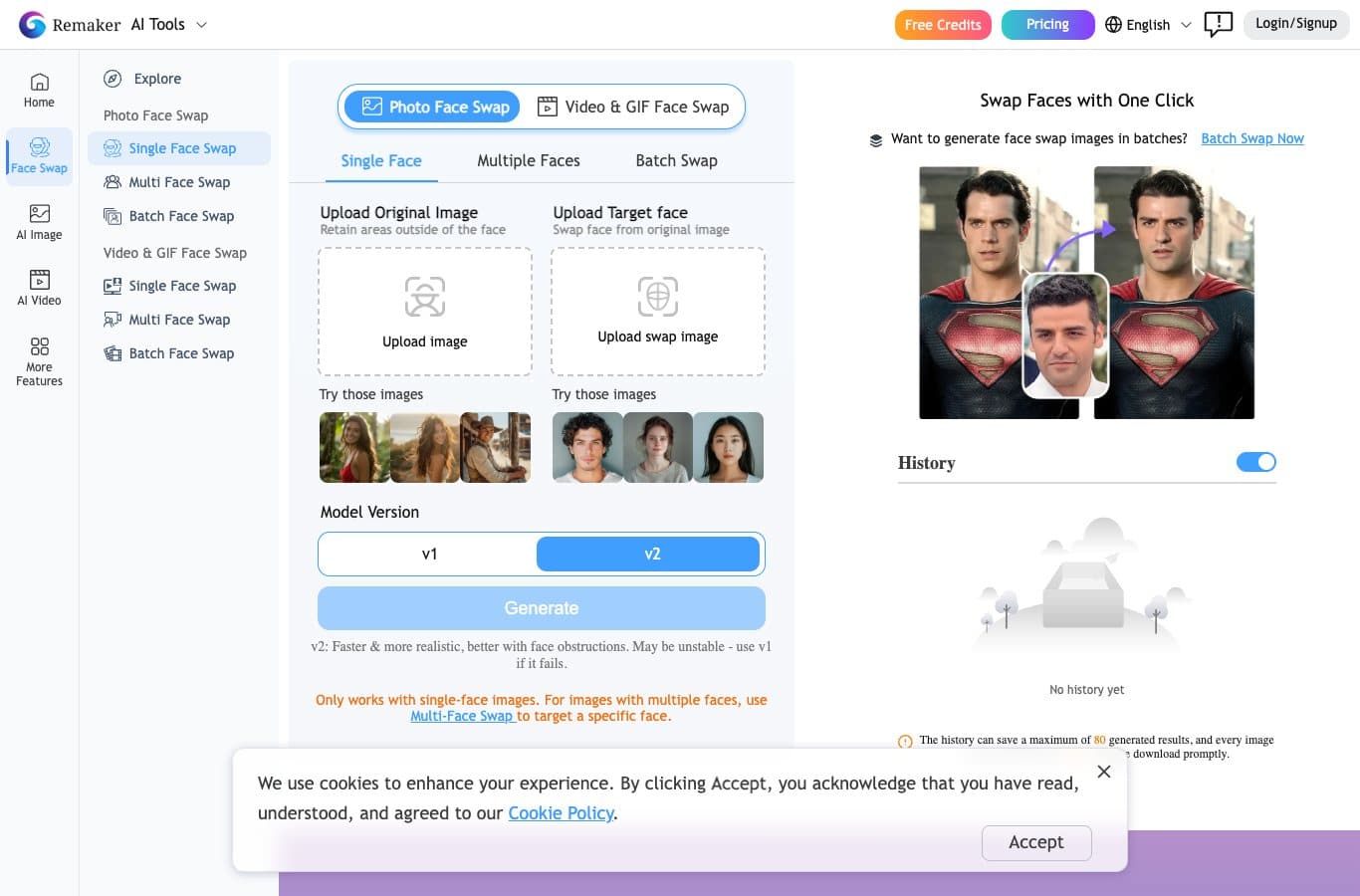
But its FAQ stumbles on legality: “In general, there are no direct laws per se that specifically address face swap or deepfake technology.” That sentence describes a world before May 2025: the federal TAKE IT DOWN Act now criminalizes nonconsensual intimate imagery including AI-generated “digital forgeries”, and state right-of-publicity laws apply to how your face gets used. We break it down below.
YouCam: 5 free credits on sign-up, watermark at the gate
The YouCam page (publisher Perfect Corp) states in plain text: “Sign up now to get 5 FREE credits” (surveyed 09/01/2026). Its FAQ even answers “yes” to a free face swap “without limits”, immediately softened: advanced features have limits, and the watermark-free download sits behind the subscription. YouCam already appeared in our July survey of free AI headshot generators, with the same kind of gap between the welcome promise and the credit grid.
DomoAI: unnumbered welcome credits, plans from $9 a month
DomoAI hosts its face swap in its “quick apps”. Its grid shows no $0 plan: it starts at $9 per month billed yearly ($13 monthly) with 600 monthly credits, continues with Standard at $29 (2,200 credits) and Pro at $99 (8,000 credits), and lists “watermark-free outputs” among the paid perks (surveyed 09/01/2026).

One same question is worth asking in every market: its FAQ, in every language we tested, promises “free credits for new users” with no published number. To know how many, you have to create an account: the page will not tell you.
Canva: the face swap app inside the editor, paid finishing touches
Canva ships face swap as an app inside its editor: “Replace your face with a celebrity, a friend or a pet in a few clicks.” The page itself flags that the finishing tools completing the result are for subscribers: Magic Edit, Magic Eraser and Background Remover carry the “Pro” tag (surveyed 09/01/2026). Canva’s AI quota, shared across all its tools, applies on top.
HeyGen: video, with the rights condition spelled out
HeyGen applies face swap to video: upload a clip and a face image, and the tool returns the video with the face replaced (MP4, MOV and WebM announced). Its FAQ is the only one in the survey to tie commercial use to both rights and a plan: free covers short clips, “paid plans start at $24 per month and add higher video resolution, longer clip support, commercial rights, and faster face swap online output”, and the Creator plan starts at $29 (surveyed 09/01/2026). On privacy: files are processed privately and deleted after generation.
Your photos and your face: what the publishers say
Face swap asks for the most personal thing in your camera roll: a face, often yours. Here is what each publisher writes about what happens to those files, as surveyed on 09/01/2026:
- Remaker: deletion “within 48 hours”, no storing or saving, and no location or usage data collected.
- Vidnoz: uploaded files encrypted, processed on secure servers, with “automatic deletion” under its privacy policy.
- DomoAI: “We do not use your uploads to train AI models or share them with third parties.”
- HeyGen: “Files are processed privately and deleted after generation.”
- Picsi.Ai: “online in real time” processing on the studio side, but video swaps “posted publicly” on Discord, a detail worth knowing before you click.
Our advice stays the same: never send a third party’s face, or children’s photos, to an online service whose retention policy you have not read. The problem is not that publishers lie: it is that the file, once sent, is no longer yours. And remember a face is biometric data: on the European side it counts as a special category under GDPR, and in the US a growing set of biometric privacy laws covers it.
Swapping someone else’s face: what the law says
This is where most tutorials stop, and where everything actually gets decided. In the United States, the first shield is the right of publicity, a state-by-state doctrine: using someone’s likeness without consent can trigger damages even without commercial intent in several states. The clearest written rule is California: Civil Code section 3344 makes anyone who “knowingly uses another’s name, voice, signature, photograph, or likeness… for purposes of advertising or selling… without that person’s prior consent” liable for “the greater of seven hundred fifty dollars ($750) or the actual damages” (Cal. Civ. Code 3344, official text).
For intimate imagery, federal law now steps in: the TAKE IT DOWN Act (Public Law 119-12, signed May 19, 2025) criminalizes publishing nonconsensual intimate visual depictions, and its definition of “digital forgery” covers “any intimate visual depiction of an identifiable individual created through the use of software, machine learning, artificial intelligence, or any other computer-generated or technological means”. It also forces covered platforms to remove a flagged depiction “not later than 48 hours after receiving” a valid request (Public Law 119-12, full text on govinfo). Many states add their own deepfake statutes on top. And the global transparency benchmark comes from the EU: article 50 of the AI Act requires providers to mark outputs “in a machine-readable format” (§2) and deployers of a system generating or manipulating content “constituting a deep fake” to “disclose that the content has been artificially generated or manipulated” (§4), with an exemption for evident artistic or satirical works where disclosure must simply not hamper enjoying the work (regulation (EU) 2024/1689, article 50), applicable since August 2, 2026.

Our AI Act deep dive covers the whole regulation. One more useful reading of the survey: on test day, Remaker’s FAQ writes that “there are no direct laws per se that specifically address face swap or deepfake technology”, and Picsi.Ai echoes it (“At the moment, there are no direct laws that specifically ban face swap technology”). Both sentences describe a pre-2025 world: the federal TAKE IT DOWN Act exists, state publicity laws apply, and the AI Act disclosure duty has been in force since 08/02/2026. HeyGen, by contrast, sets the right condition: publish only if you own the rights to the faces you upload. These quotes are general information, not legal advice: for an actual case, consult a licensed attorney.
Not one of the eight surveyed tools cites the law of its own market in its legality answers: they talk about “personal fun”, “copyright” or United States defamation, and skip the right of publicity and the AI Act disclosure duty. When a tool writes that face swap for memes is “generally fine”, the sentence is only true if the face is yours or the person said yes. The law does not take the game away from you: it sets the one rule that matters, consent.
The 5-step method for a face swap that cannot backfire
A clean face swap depends less on the tool than on four precautions taken before clicking. The method we apply:
- Pick the right subject. Your own face, or the face of someone who said yes, preferably in writing. For a meme, a cartoon character or an animal raises fewer questions than a borrowed real face.
- Prepare two sharp images. Same angle, comparable lighting, a frontal, clearly visible face: it is the common advice of DomoAI (“photos with similar lighting, angles and resolution produce the most natural swaps”) and Vidnoz. A good starting image saves you a long retouch.
- Check the price of free before you upload. Credits per day, watermark, sign-up: the table above saves you time. If the grid is not published, do not start with a sensitive photo.
- Add the “AI-edited” label if you publish. It is what the AI Act asks for deep fakes since 08/02/2026, and the simplest way to make the edit read as what it is. One line in the caption is enough: “image generated or edited with AI”.
- Delete your files on the tool’s side. Check your account gallery, remove the source images, and keep proof of consent in case the person changes their mind.
For the starting image, an AI image generator usually does a better job than a phone photo: there is no real face to protect and the result is under control. And if your project is retouching your own photo without changing identity, our guide to editing a photo with AI for free covers classic retouching, from cutouts to background changes.
The responsible face swap test: where does your project stand?
Answer the three questions: the tool tells you which zone you are in, from free use to unlawful, with the exact texts. The four verdict cards are displayed in plain sight below the tool, nothing is hidden in the code.
The responsible face swap test
Three questions, one verdict with the rules that apply in the United States. Nothing is transmitted: everything runs in your browser.
Your zone
Waiting: answer the three questions, then click Show my zone.
At least one answer is missing: complete the three questions to get your verdict.
The tool copies the card matching your answers onto the screen. Here they are, in plain sight, with their sources:
Green zone: it is your face
You are swapping your own face: likeness rules protect people against edits made “without their consent”, and you are the consent. Two habits remain useful: keep the “AI-edited” label when you post (the AI Act asks for it on deep fakes since 08/02/2026), and if the content is sexual, keep it private: platforms ban it, and publishing it puts your own image at risk.
- Rules involved: right-of-publicity statutes protect others, not you against yourself; AI Act, article 50, §4.
- The commercial case: your image belongs to you, as long as the content shows only you.
Green with guardrails: written permission first
You start from the face of someone who told you yes: make it written. Verbal consent gets withdrawn, written consent gets proven. Publish with the “AI-edited” label clearly visible: the AI Act has required saying that content was artificially generated or manipulated since 08/02/2026.
- Rules involved: AI Act, article 50, §4; consent defeats a publicity claim in every state.
- And if the person withdraws consent: take the post down. That is the price of the yes.
Out of bounds: the face without consent
Posting the face of a person who never said yes is not a settings detail. In California, knowingly using someone’s photograph or likeness for advertising or selling without prior consent costs at least $750 in statutory damages, and many states add their own rules or criminal deepfake statutes. If the edit makes someone say things they never said, defamation and false light claims come on top. Keeping the file for yourself is not the offense: publishing it is, even in a disappearing story, because you have shared it with others.
- Rules involved: state right-of-publicity laws (Cal. Civ. Code 3344 as the written example); defamation and false light.
- A celebrity is not an exception: the right of publicity applies to everyone, and commercial use of their likeness carries its own regime.
Red zone: the sexual-content edit
This is the worst combination, and federal law names it: the TAKE IT DOWN Act criminalizes publishing an intimate visual depiction, including a “digital forgery” made with AI, of an identifiable individual without their consent, and forces platforms to remove flagged content within 48 hours. State deepfake statutes add their own penalties. With the person’s written consent the criminal risk disappears, but you still have to respect platform rules and the law. If you are a victim of this kind of content: screenshots, a takedown request to the platform (StopNCII.org handles it for adults, NCMEC’s Take It Down tool for minors), and a report to law enforcement.
- Rules involved: TAKE IT DOWN Act (Public Law 119-12); state deepfake statutes; help: StopNCII.org and NCMEC’s Take It Down (free).
- General information: for an actual situation, consult a licensed attorney.
FAQ: free AI face swap
What is the best free AI face swap?
It depends on the medium. On photos, Picsi.Ai publishes the clearest free tier (ten swaps a day, no watermark, surveyed 09/01/2026), Remaker offers multiple faces and an advertised 48-hour deletion window, and Vidnoz promises no sign-up with 30 credits a day across its platform. On video, look at HeyGen or Vidnoz’s video tab. Our advice: choose on the clarity of the grid, not on the banner promise.
Is there a face swap AI that is really free without sign-up?
Vidnoz advertises a face swap without sign-up and Pica AI with “no sign-up required”: you can test without an account. But lasting free almost always routes through an account: YouCam reserves its credits for people who sign up (5 FREE credits announced), Remaker and DomoAI grant their welcome credits to new accounts, and Picsi.Ai measures your usage in credits as soon as you move to the full studio. The account also serves to limit abuse: most publishers assume it.
How do you swap a face in a video for free?
Three routes, surveyed 09/01/2026: Vidnoz’s Video Face Swap tab (free within the day’s credits, 30 credits a day displayed platform-side), the Picsi.Ai studio (2 credits per second of video on paid plans, ten free swaps a day announced on the free side) and HeyGen (free trial for short clips, paid plans from $24 a month with commercial rights, Creator plan from $29). Video burns far more than photos: keep clips short to stay free.
Can you swap your face with a celebrity’s?
Technically, every tool allows it and some even show it as an example. Legally, it is the riskiest combination: the right of publicity of the person, the specific regime of commercial use, and defamation or false light if the edit makes them say things they never said. For a private joke between friends, stick to your own face or a fictional character.
Is face swap legal in the United States?
Yes, when the face is yours or the person consented, and while the publication stays transparent: state right-of-publicity laws sanction using a likeness without consent (California awards at least $750 in statutory damages), the TAKE IT DOWN Act criminalizes nonconsensual intimate imagery including AI “digital forgeries” with a 48-hour platform removal duty, and the AI Act adds the disclosure obligation for deep fakes in the EU since 08/02/2026. These lines are general information, not legal advice.
Which app should you use to swap faces on mobile?
Every tool in this survey runs in your phone’s browser, with no install: that is the safest path, because you control the permissions. Picsi.Ai also ships an iOS app, and its plans mention mobile features (watermark-free swaps, LiveCam). Beware of store apps that request full access to your photo library for something the web version offers for free.
How do you spot a photo whose face was swapped by AI?
The classic tells are still the face contour, inconsistent shadows, overly smooth skin texture, teeth and eyes, and jewelry or glasses that get cut off. But those tells fade with every tool generation, and none of them is proof. That is exactly what the “machine-readable format” marking imposed on providers by article 50 of the AI Act is for: eventually the proof will come from the file, not the eye.
Free is real, the rule is simple
Free AI face swap exists, and it is even generous: ten swaps a day on Picsi.Ai, thirty daily credits on Vidnoz, five credits on YouCam, not counting Remaker’s and DomoAI’s welcome credits (surveyed 09/01/2026). What is not free is other people’s faces. The law has it in writing: you publish a face swap with the person’s consent, and when it is a deep fake, with the AI disclosure regulators now expect. In between sits your own face, which belongs to you alone: start there. And for the rest, Nation’s list of AI tools is the shortest path.
Create the starting image, not the trouble
Nation’s AI image generator produces an original image, with no real face to protect: the ideal starting point for your edits. And to retouch your own photos, follow our guide to editing a photo with AI for free.
Sources and surveys. Product and pricing pages of Vidnoz, Picsi.Ai, Remaker, YouCam Online Editor (Perfect Corp), DomoAI, Pica AI, Canva and HeyGen, viewed on 09/01/2026 from the United States; quoted sentences were captured on those pages. California Civil Code section 3344 (leginfo), Public Law 119-12, the TAKE IT DOWN Act (govinfo), and regulation (EU) 2024/1689 (AI Act), articles 50 and 113 (EUR-Lex), read on 09/01/2026. This article is general information, not legal advice.