
Key takeaway: The Bring a Trailer platform had to withdraw the listing for a 1999 Cadillac DeVille whose photos were retouched by artificial intelligence. This incident highlights the growing vulnerability of online auctions to synthetic images, reminding us that the human eye remains essential to ensure authenticity and trust in this digital market.

Is it still possible to believe what we see online since the Bring a Trailer Cadillac AI incident that shook the small world of auctions? This surprising story reveals how crudely computer-generated images forced the site to cancel a sale to preserve its precious reputation. Let’s analyze this blunder to understand how AI awkwardly makes its way into our garages and, above all, how to avoid buying a car that only half exists.
The Tampered Cadillac Incident on Bring a Trailer
A Listing That Seemed Too Good to Be True
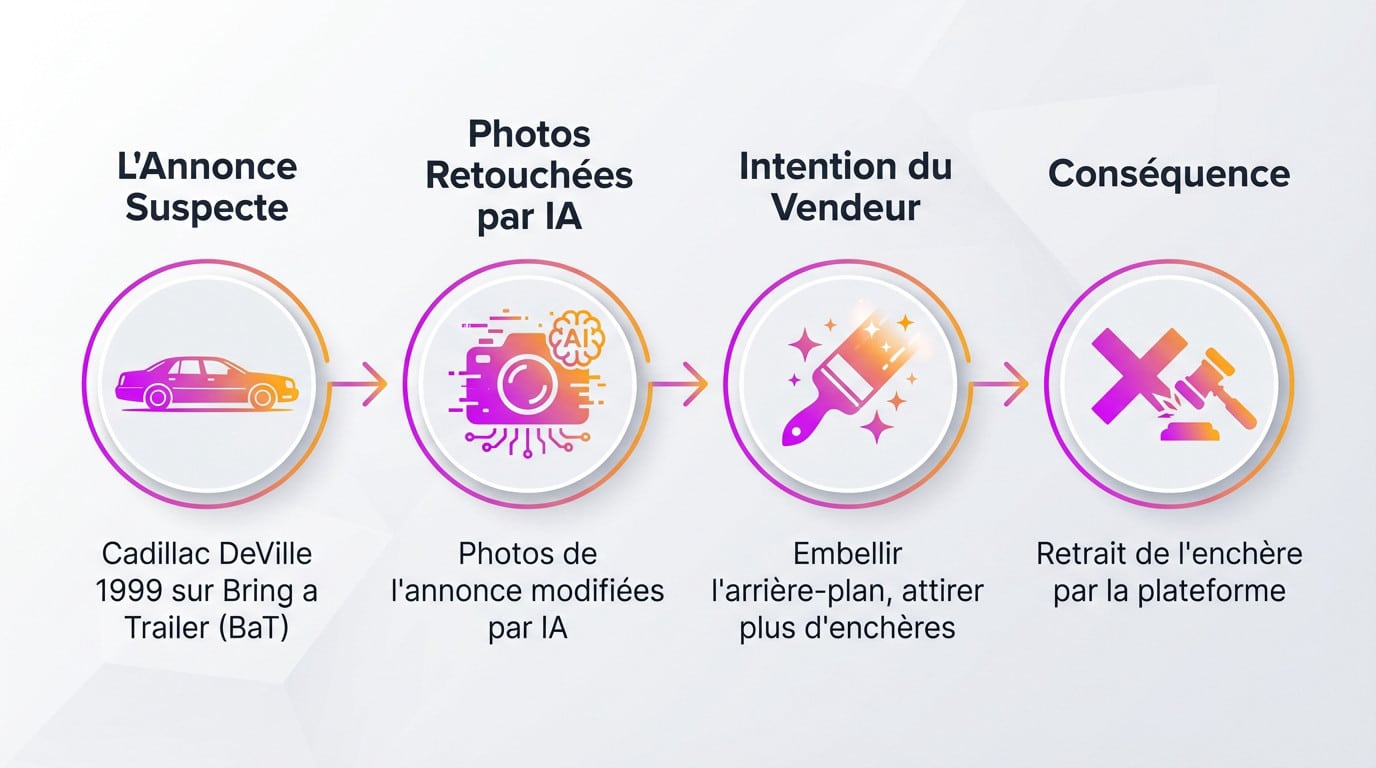
The Bring a Trailer Cadillac AI case concerns a 1999 Cadillac DeVille listed online. The listing was quickly withdrawn. The reason is quite surprising.
The car’s photos were not authentic. They had been visibly retouched by artificial intelligence.
AI-Generated Images to Enhance Reality
It wasn’t about hiding major flaws on the car. The seller likely wanted to create a more appealing background. The goal was to attract more bids.
| Item | Description |
|---|---|
| Vehicle | 1999 Cadillac DeVille (81,000 miles) |
| Platform | Bring A Trailer (BaT) |
| Problem | Listing photos modified by AI |
| Result | Auction withdrawn by the platform |
The Community Is Vigilant, the Platform Reacts
Enthusiasts’ Keen Eye Is Unforgiving
BaT regulars have a keen eye and don’t miss a thing. They immediately spotted glaring anomalies in the presented photos. Comments quickly flooded the listing.
These visual inconsistencies were far too obvious to be ignored by the community. The Bring a Trailer Cadillac AI incident could not be overlooked.
Bring a Trailer Issues a Mea Culpa
After a brief hesitation, the platform decided to end the auction. They publicly acknowledged their error in the face of user discontent.
Howard Swig called the incident a “big mistake” involving “multiple points of failure” in their verification process.
BaT insisted on the “very human” nature of its current vetting process. They thus admit a troubling flaw in their curation system.
When AI Enters Auctions, Trust Takes a Hit
This admission of guilt from the site opens the door to much broader questions about the future of these platforms.
A Precedent That Undermines Credibility
For a major player like BaT, trust weighs more than gold. Buyers sign checks based on pixels, not on physical inspection. The Bring a Trailer Cadillac AI incident therefore leaves an indelible stain on their reputation.
- The authenticity of listings constitutes the absolute foundation of the business model.
- Total reliance on visuals makes these platforms technically vulnerable.
- A reputation takes years to build, but a second to collapse.
The New Challenge for Online Platforms
This blunder is just the tip of the iceberg. With the rapid advancements of AI image generators, the risk of seeing fraudulent listings will explode. Platforms must adapt immediately, as fraudsters won’t wait for them. The battle promises to be tough.
Learning to detect AI texts is one thing, but spotting pixel-perfect retouched images becomes a real headache.
This Cadillac incident reminds us that artificial intelligence is infiltrating everywhere, sometimes awkwardly. While the platform was able to react, caution remains essential for enthusiasts. In the future, keep your eyes open: we want to buy real mechanics, not a pretty computer-generated digital mirage!